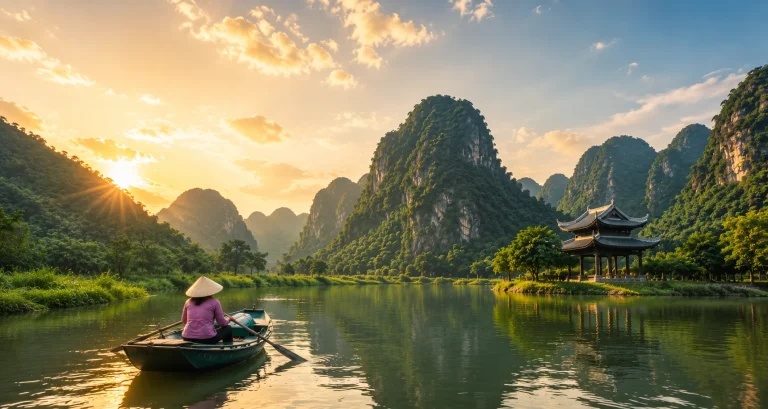
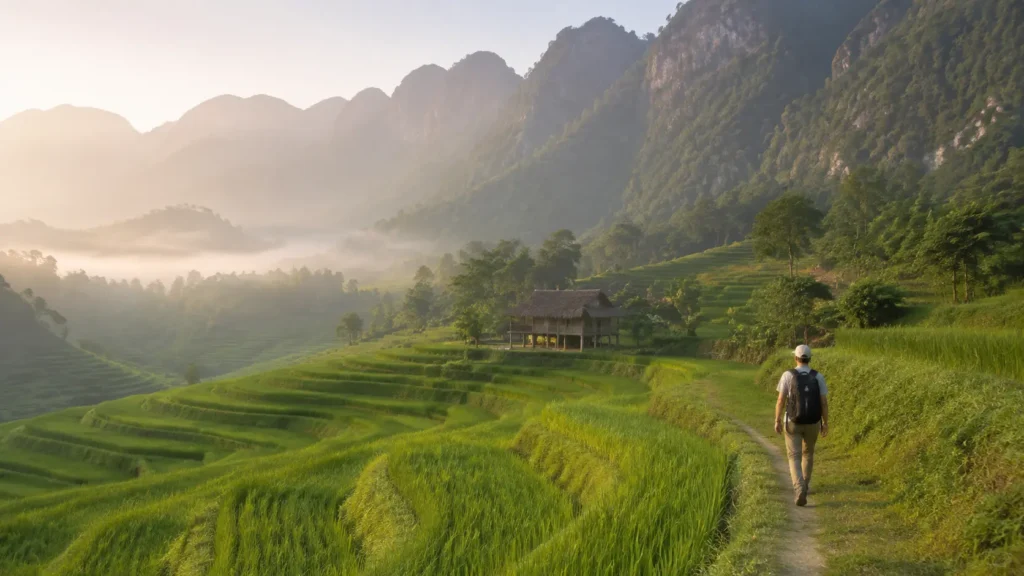
Vietnam’s famous highlights deserve their reputation, but they are only part of the story. Beyond the busy streets of Hanoi, the lantern lanes of Hoi An and the cruise routes of Ha Long Bay, there are mountain valleys, coastal towns and islands where the pace feels gentler and daily life remains close at hand.
This guide introduces 15 quieter places to visit in Vietnam. They are not secret or completely tourist-free, especially during weekends and national holidays, but they generally offer more space and a slower rhythm than the country’s best-known stops. From northern rice terraces to remote southern islands, each destination gives you a different way to experience Vietnam without following the busiest route.
At a glance: where to go for a quieter Vietnam trip
- Mountains and rice terraces: Cao Bang, Ba Be, Hoang Su Phi, Mu Cang Chai and Pu Luong
- Culture and countryside: Moc Chau, Mang Den, Dak Lak and Chau Doc
- Caves and national parks: Phong Nha
- Quiet coastlines and islands: Quy Nhon, Phu Yen, Ninh Thuan, Ly Son and Con Dao
1. Cao Bang
In Vietnam’s far northeast, Cao Bang combines limestone mountains, clear rivers and winding roads with a distinctly local atmosphere. The region’s best-known sight is Ban Gioc Waterfall on the border with China, but the journey is just as memorable. Rice fields, stone villages and steep green valleys unfold between the provincial capital and the falls.
Allow at least two or three nights so you can visit Nguom Ngao Cave, Truc Lam Ban Gioc Pagoda and rural communities without rushing. Ban Gioc is livelier around midday, so staying nearby lets you arrive early in the morning. The dry months from October to April are comfortable for road travel, while the waterfall is usually fuller during the wetter season.
2. Ba Be National Park
Ba Be is a peaceful alternative for travellers who want forests and water rather than a packed sightseeing schedule. The national park is centred on a large freshwater lake surrounded by limestone cliffs, caves and Tay villages. Boat trips pass quiet coves, Puong Cave and the Nang River, with plenty of time to watch local life along the banks.
Base yourself in a family-run homestay in Pac Ngoi or Coc Toc village. Two nights are enough for a boat journey, a short walk or bicycle ride and an unhurried evening by the lake. Bring cash and expect simple facilities; the slower infrastructure is part of what keeps Ba Be relaxed.
3. Hoang Su Phi
Ha Giang’s famous loop has become much busier, but Hoang Su Phi in the province’s west still offers a quieter mountain experience. Its rice terraces curve around high valleys and ethnic minority villages, creating some of northern Vietnam’s most dramatic landscapes. Roads are challenging in places, yet the reward is a strong sense of remoteness.
The terraces are vivid green from roughly June to August and turn gold around September or early October, depending on the harvest. Stay in a lodge or community homestay for two or three nights, hire an experienced local driver if you are not confident on mountain roads, and build extra time into your itinerary for weather changes.
4. Mu Cang Chai
Mu Cang Chai is known for steep rice terraces shaped over generations by Hmong communities. Although photographers arrive during the harvest, the area remains much calmer than Sapa for most of the year. La Pan Tan, Che Cu Nha and De Xu Phinh offer layered valley views, while village roads reveal a more rural side of the northwest.
Visit on weekdays and spend at least two nights rather than treating it as a quick photo stop. The main rice season generally runs from late spring to early autumn, with golden fields often appearing in September. Outside the harvest period, the quieter roads and misty mountains still make the journey worthwhile.
5. Pu Luong Nature Reserve
Pu Luong provides terraced fields, forested hills and traditional stilt-house villages within reach of Hanoi. It is increasingly popular, but it still feels gentle away from weekend resort clusters. Walking routes connect villages such as Kho Muong, while Hieu Waterfall and the reserve’s bamboo water wheels add variety to the landscape.
Choose a small homestay or lodge overlooking the valley and stay for two or three nights. March to May and September to November often bring pleasant conditions and attractive fields. Ask before photographing residents, use local guides for village walks and avoid leaving litter on narrow agricultural paths.
6. Moc Chau
Moc Chau is a highland plateau of tea fields, fruit orchards, dairy farms and flower valleys. It is a refreshing stop between Hanoi and the northwest, especially for travellers who prefer gentle countryside exploration to demanding trekking. Tea plantations and small villages spread across a broad area, making independent transport or a local driver useful.
The plateau changes with the seasons: plum and peach blossoms brighten the early months, while tea hills remain a signature sight through much of the year. Weekends and blossom festivals draw domestic visitors, so come midweek if quiet is your priority. Two nights give you enough time to explore without racing between viewpoints.
7. Phong Nha
Phong Nha is famous among adventure travellers, yet the riverside town remains far more laid-back than Vietnam’s major cities and beach resorts. The surrounding national park protects an extraordinary limestone landscape filled with caves, jungle and underground rivers. Easy outings include Phong Nha Cave and Paradise Cave, while guided expeditions reach more remote systems.
Stay three nights if you want time for both caves and countryside. Cycle through Bong Lai Valley, take a boat on the Son River or join a responsible small-group trek. Some cave routes close during heavy rain, so check seasonal conditions and book specialist expeditions only with licensed operators.
8. Quy Nhon
Quy Nhon offers a long urban beach, excellent seafood and easy access to small coves without the intensity of Nha Trang or Da Nang. The city has developed quickly, but its seafront still feels local in the early morning when residents exercise and fishing boats return. Beyond the centre, Ky Co, Eo Gio and quiet stretches south of the city show off the rugged coast.
Two or three nights work well for a relaxed beach break. Visit popular viewpoints early, then spend the afternoon at a less-developed beach or explore the region’s Cham towers. The driest beach weather is commonly found from around March to August, although summer weekends can be busy.
9. Phu Yen
North of Nha Trang, Phu Yen pairs a rural coastline with fishing villages, green fields and distinctive rock formations. Ganh Da Dia’s geometric basalt columns are the headline sight, but places such as Bai Xep, Vung Ro Bay and Mui Dien make the province rewarding as a slow road trip rather than a single stop.
Base yourself in Tuy Hoa for two or three nights and arrange a car or motorbike with a confident driver. Distances are longer than they appear, so group nearby sights together. Sunrise is especially beautiful along this east-facing coast, and an early start also helps you enjoy key locations before day visitors arrive.
10. Ninh Thuan
Ninh Thuan has one of Vietnam’s driest climates and a landscape unlike the tropical image many visitors expect. Vineyards, salt fields, sandy bays and rugged hills surround Phan Rang. The province is also an important centre of Cham culture, with Po Klong Garai towers and traditional craft villages offering a deeper cultural dimension.
Explore Vinh Hy Bay, Nui Chua National Park and the coastal road at an unhurried pace. Two or three nights are ideal. The sun and wind can be strong, so carry water and protection, and dress respectfully at religious sites. Hiring a knowledgeable local guide will make Cham heritage visits more meaningful.
11. Ly Son Island
Ly Son is a volcanic island off central Vietnam, known for garlic farms, coastal cliffs and clear blue water. Its compact size makes it easy to explore by scooter or electric vehicle. Hang Cau, To Vo Gate and viewpoints around Thoi Loi reveal the island’s volcanic geology, while nearby Be Island offers small beaches and a slower village atmosphere.
Stay at least two nights so your trip is not dependent on a single ferry crossing. Seas are generally calmer in the drier months, but schedules can change with weather. Avoid public holidays, confirm the return boat locally and reduce single-use plastic because waste management is more difficult on small islands.
12. Mang Den
Set among pine forests in Kon Tum Province, Mang Den is a cool highland retreat with lakes, waterfalls and farms. It has gained attention among Vietnamese travellers, yet outside peak weekends it remains a calm base for nature and café stops. The air is cooler than the lowlands, and mist often settles across the hills in the morning.
Spend two nights exploring Pa Sy Waterfall, forest roads and local villages with a guide. Development is increasing, so choose locally owned stays and experiences where possible. Rain can arrive quickly in the highlands; pack a light jacket and allow flexibility rather than filling every hour.
13. Dak Lak
Dak Lak is the heart of Vietnam’s coffee country. Buon Ma Thuot provides museums, markets and an energetic café culture, while the wider province offers waterfalls, forests and lakes. Lak Lake and Yok Don National Park are good starting points for learning about local landscapes and the cultures of Ede and M’nong communities.
Plan two or three nights and choose wildlife activities carefully. Ethical observation should keep a respectful distance and never involve elephant riding. A local guide can help interpret village customs, coffee production and the ecology of the dry forest while ensuring more of your spending stays within the community.
14. Chau Doc
Near the Cambodian border, Chau Doc is a fascinating Mekong Delta town shaped by Vietnamese, Khmer, Cham and Chinese influences. Markets, temples and riverside communities make it culturally rich without the big-city pace. Sam Mountain offers broad views over rice fields and canals, particularly around sunset.
Stay two nights to visit religious sites, explore the Tra Su cajuput forest and enjoy the town’s distinctive food. Dress modestly in temples and ask permission before taking close photographs. Chau Doc also fits naturally into an overland journey between southern Vietnam and Phnom Penh.
15. Con Dao
Con Dao combines forested hills, quiet beaches and powerful historical sites in a remote southern archipelago. Con Son, the main island, has a small town and scenic coastal roads, while much of the surrounding land and sea falls within a national park. The former prison complex and memorials require time and respect; they are central to understanding the island.
Stay three or four nights to balance history, nature and rest. Beach and boat conditions vary by season, and wildlife experiences such as turtle watching should be arranged through authorised conservation programmes. Con Dao is no longer unknown, but careful timing and its limited scale still make it feel calmer than Vietnam’s largest resort islands.
How to avoid crowds in Vietnam
- Travel midweek: Many nature destinations receive most domestic visitors from Friday evening to Sunday.
- Avoid major holidays: Tet and the Reunification Day-Labour Day period can bring heavy demand, closures and higher prices.
- Stay overnight: Early mornings and late afternoons are often peaceful after day-trippers leave.
- Slow down: Spending two or three nights in one place reduces travel fatigue and supports local businesses.
- Use local expertise: Guides can suggest suitable routes, explain community customs and adjust plans for weather.
- Respect fragile places: Carry reusable water bottles where refills are available, take rubbish out and keep to marked paths.
Best time to visit quieter places in Vietnam
Vietnam stretches across several climate zones, so there is no single perfect month for every destination. Northern mountain travel is often most comfortable in spring and autumn, but rice-terrace colours depend on local planting and harvest schedules. Central coastal areas generally have their best beach conditions during the drier part of the year, while highland and cave plans may be affected by seasonal rain. Southern islands have their own wind and sea patterns.
Check conditions for each region shortly before travelling, especially when your plan includes ferries, remote roads, caves or trekking. A flexible extra day is often more valuable than adding another destination.
Frequently asked questions
Is Vietnam overcrowded?
No. Crowds are concentrated in famous attractions, busy city centres and peak holiday periods. Many provinces and rural districts remain peaceful, particularly when you travel midweek, stay overnight and explore beyond the main viewpoint.
Which quiet place in Vietnam is best for first-time visitors?
Pu Luong and Phong Nha are practical choices because they combine beautiful scenery with a useful range of accommodation and organised activities. Quy Nhon is a good option for travellers who prefer a relaxed coast and easy city comforts.
Can I visit these destinations without a motorbike?
Yes. Trains, buses and flights connect the main gateways, while local cars, drivers and guided tours can cover the final distance. In remote mountain regions, hiring an experienced driver is often safer and more relaxing than riding independently.
A quieter journey, not a checklist
The best way to experience Vietnam without the crowds is not to chase all 15 places. Choose two or three that fit naturally into your route, stay longer and leave room for local recommendations. A quiet market breakfast, a village walk or an unscheduled afternoon by the river may become more memorable than another rushed landmark.