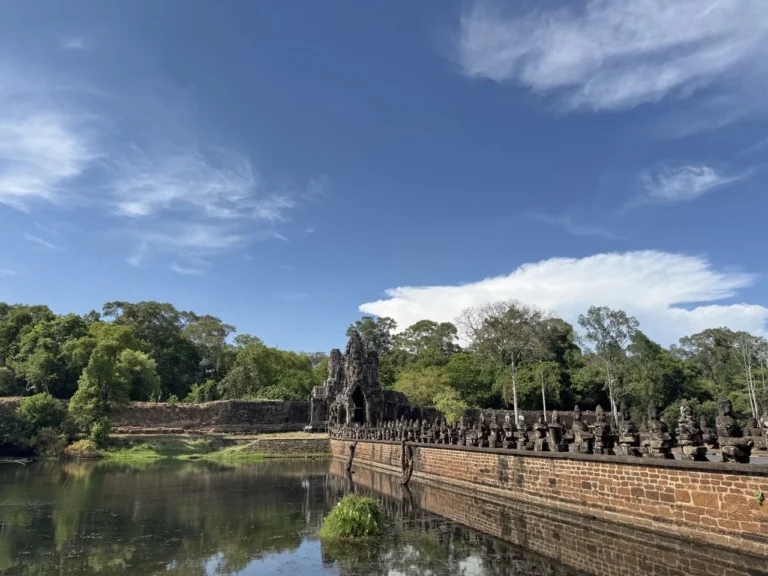
Ankor Wat at sunrise, floating villages on the Tonlé Sap, and some of the friendliest street food stalls in Southeast Asia are waiting — but Cambodia’s entry process now involves two separate online steps, and mixing them up is the easiest way to get stuck at check-in. Here’s exactly what you need, in the right order.
Why Cambodia Belongs on Your 2026 Itinerary
Cambodia offers a rare combination: world-class ancient ruins, a coastline that’s still refreshingly uncrowded compared to its neighbors, and a cost of living that stretches a travel budget further than almost anywhere else in the region. With the new Techo International Airport near Phnom Penh (opened 2025) and the upgraded Siem Reap Angkor International Airport, getting in and around the country has never been easier — as long as your paperwork is sorted first.
The Two Documents You Need (and They’re Not the Same Thing)
This trips up more travelers than any other part of planning a Cambodia trip, so it’s worth getting straight from the start.
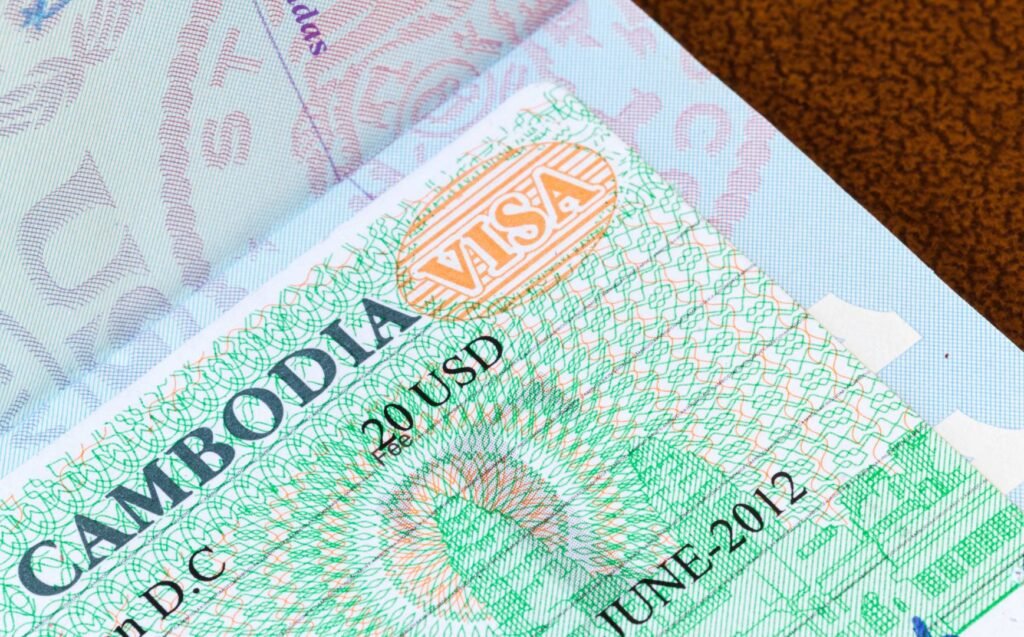
- The e-Visa is your actual permission to enter the country. It costs $36 USD, covers a single entry for 30 days, and is issued as a PDF you present on arrival.
- The e-Arrival Card is a separate, completely free mandatory immigration and customs form — it is not a visa, and having one does not replace the need for a visa if your nationality requires one.
- You may need both. Most travelers by air will complete an e-Visa (or arrange a Visa on Arrival) and the e-Arrival Card before flying.
Step 1: Confirm Your Visa Requirement
- Citizens of several ASEAN neighbors — including Indonesia, Malaysia, the Philippines, Singapore, Thailand, Brunei, Vietnam, Laos, and Myanmar — can enter Cambodia visa-free for tourism, though final approval always rests with the immigration officer at the border.
- Chinese citizens benefit from a trial 14-day visa exemption running from June 15 to October 15, 2026, with no application fee, though the e-Arrival Card is still required.
- Most other nationalities need either an e-Visa or a Visa on Arrival.
Step 2: Choose e-Visa or Visa on Arrival
- e-Visa: Apply online in advance for $36 USD, valid for single entry, 30 days. Apply at least a few business days before departure, and note that the visa itself is valid for 3 months from issuance, so don’t apply too far ahead of your trip.
- Visa on Arrival (VOA): Available at major airports and land borders for $30 USD (tourist “T visa”) or $35 USD (ordinary “E visa”). Bring exact change in US dollars — Cambodian riel is also accepted, but dollars are the norm for this fee.
- Our take: the e-Visa costs a bit more but skips the arrival queue entirely, which matters most if you’re landing during peak season (December-February) when VOA lines can run long.
- Not every land border accepts e-Visas — reconfirm your specific entry point supports e-Visa clearance before relying on it, especially for overland crossings from Thailand, Vietnam, or Laos.
Step 3: Complete the e-Arrival Card
- Go to the official portal at arrival.gov.kh — this replaced the old paper immigration form, health declaration, and customs form with one combined online step.
- Every air traveler must submit this, regardless of nationality or visa exemption status.
- Submit it within 7 days before your flight — there’s more flexibility here than Thailand’s tighter 72-hour TDAC window, but don’t leave it for the departure lounge.
- You’ll need: a valid passport, a digital passport-style photo, flight details, accommodation address, and your visa information (if applicable).
- Processing is typically near-instant, and you’ll receive a confirmation to present (digitally) on arrival — air arrivals in 2026 no longer receive a physical passport stamp, only the email confirmation.
Practical Requirements Before You Fly
- Passport validity: at least 6 months remaining, with a minimum of one blank page.
- Onward or return ticket: required for all foreign visitors.
- Some nationalities may be asked for additional supporting documents — full flight itinerary, hotel booking, or proof of funds — so check your specific country’s requirements a few weeks out rather than assuming the minimal version applies.
Insider tip: Because the e-Visa and e-Arrival Card are run through entirely separate systems, save both confirmations (PDF and email) in an offline folder on your phone before you fly. Airport Wi-Fi in Cambodia can be inconsistent, and immigration officers will want to see your confirmations regardless of your signal strength.
FAQ
Do I need both an e-Visa and an e-Arrival Card? If your nationality requires a visa, yes — the e-Visa gets you permission to enter, and the free e-Arrival Card is a separate mandatory immigration/customs form required of all air travelers.
Is the Cambodia e-Arrival Card free? Yes, completely free. If your nationality also requires a visa, that’s a separate paid step ($36 for e-Visa, or $30-35 for Visa on Arrival).
How far in advance should I apply for my Cambodia e-Visa? A few business days is typically enough, but since the e-Visa is valid for 3 months from issuance, applying within about 30 days of departure keeps your timing simple.
Will I get a passport stamp when I arrive by air? As of 2026, air arrivals generally receive an email confirmation instead of a physical stamp — keep that confirmation accessible for any future visa extensions or exit requirements.
Start Your Cambodia Trip Off Right
Cambodia’s entry process is straightforward once you know it’s really two separate steps rather than one — confirm your visa route, then complete the e-Arrival Card within the week before you fly. Get both sorted before departure day and you’ll walk straight through immigration instead of scrambling at the counter. Bookmark this guide, and subscribe for more Southeast Asia travel essentials before your next border crossing.