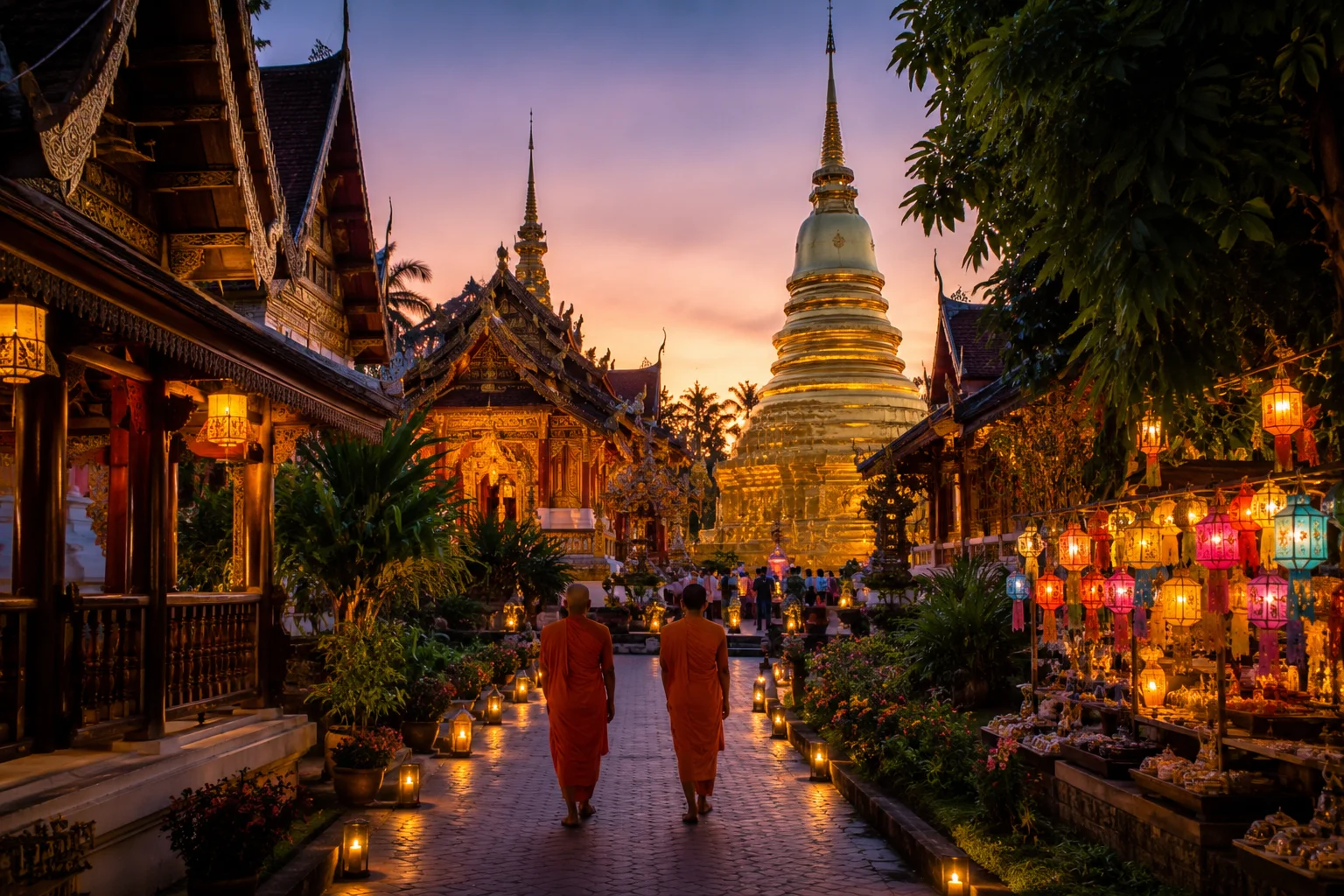
There’s a particular hush that settles over Chiang Mai’s old city just after a temple bell rings at dusk, the sound carrying over red-brick walls and a moat that’s ringed the same square kilometer of streets since the 13th century. Novice monks sweep courtyards in the fading light, a night market vendor lights the first string of bulbs over a table of hand-dyed textiles, and somewhere a motorbike idles outside a teak-house cafe that’s been serving the same khao soi recipe for three generations. Chiang Mai moves at a different pace than Bangkok, shaped by its history as the capital of the independent Lanna kingdom for over 600 years before it was absorbed into Siam. Most visitors give it two or three days on a Thailand loop; the surrounding mountains, temples, and craft traditions reward a slower, longer stay.
Temples and Chiang Mai’s Landmark Sites
Chiang Mai’s Old City alone holds over 30 temples within its moated square, alongside a scattering of significant sites in the surrounding hills.
- Wat Phra That Doi Suthep — A gold-topped temple perched on a mountainside overlooking the city, reached by a steep 300-step naga staircase or a funicular, and the most significant pilgrimage site in northern Thailand.
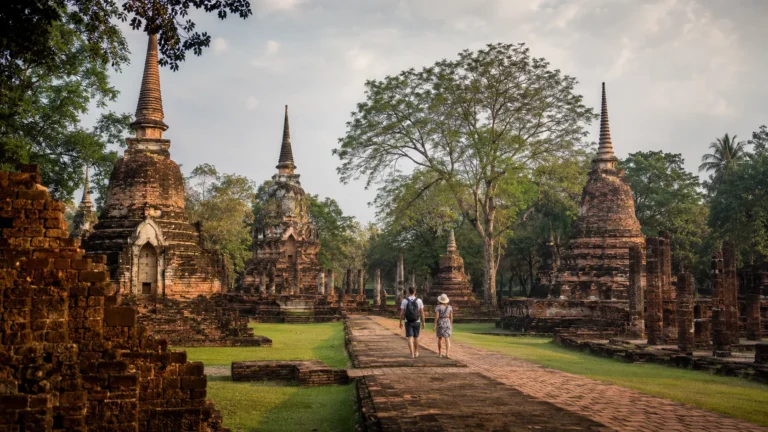
- Wat Chedi Luang — A partially ruined 14th-century stupa at the center of the Old City, once among the tallest structures in the region before earthquake damage and a Burmese invasion left it in its current, still-imposing state.
- Wat Phra Singh — Home to the Phra Singh Buddha image, one of the most revered in northern Thailand, with a viharn covered in intricate gold stencil work considered a high point of classic Lanna architecture.
- Chiang Mai Old City walls and moat — The still-visible boundary of the original walled city, with brick gate remnants at each cardinal point, best explored slowly on foot or by rented bicycle.
- Elephant Nature Park — An ethical elephant sanctuary about an hour outside the city, focused on rescue and rehabilitation rather than riding or performance-based tourism.
Two to three days covers the Old City’s core temples comfortably; visiting Doi Suthep in the early morning avoids both the afternoon heat and the heaviest tour bus crowds.
Beyond the Temples: A City Finding Its Own Voice
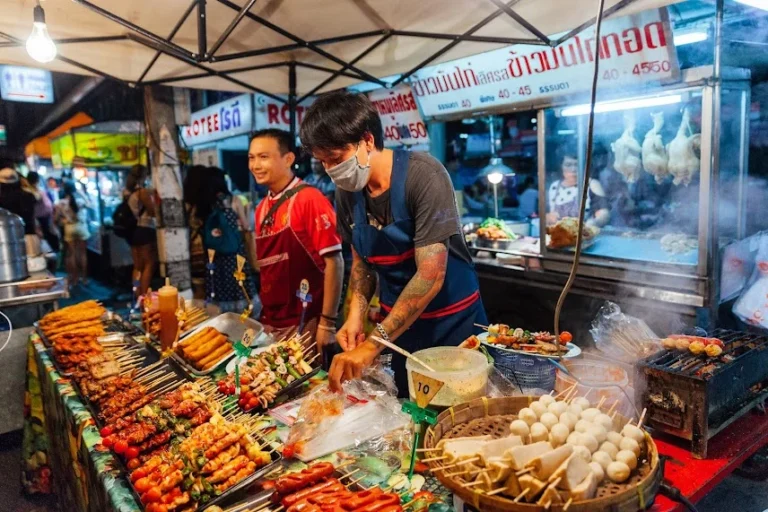
The Sunday Walking Street market, which closes off Ratchadamnoen Road through the heart of the Old City each week, remains the clearest expression of Chiang Mai’s craft traditions, with stalls selling hand-carved wood, woven textiles, and silverwork made by the same families who’ve sold at the market for generations.
For the city’s newer creative energy, the Nimmanhaemin (Nimman) neighborhood west of the moat has developed into a concentrated hub of independent coffee shops, design boutiques, and co-working spaces, drawing a younger, more design-conscious crowd distinct from the Old City’s temple-focused pace.
For a cultural experience with depth, the Chiang Mai Night Safari or, for a more traditional option, a performance of Khantoke dinner theater, featuring northern Thai dance accompanied by a set regional meal, offers a structured introduction to Lanna culture beyond what a temple visit alone conveys.
Where to Eat in Chiang Mai
Northern Thai food, distinct from the cuisine of Bangkok or the south, draws on Lanna traditions shared with parts of Laos and Myanmar’s Shan State, favoring milder, herb-forward flavors over the fish sauce and sugar balance found further south.
Dishes to look for:
- Khao soi — a coconut curry noodle soup topped with crispy fried noodles, considered the signature dish of Chiang Mai and northern Thailand more broadly.
- Sai oua — a herb-packed grilled sausage seasoned with lemongrass, galangal, and kaffir lime leaf, sold widely at markets throughout the city.
- Nam prik ong — a tomato and minced pork chili dip served with steamed vegetables and sticky rice, a staple of northern Thai home cooking.
- Khao kan jin — a Shan-influenced dish of rice cooked with pork blood and spices, less commonly found outside the north.
Fine dining: David’s Kitchen offers a modern French-Thai tasting menu in an elegant setting, popular for special-occasion dinners. Ginger & Kafe, set within a restored colonial-era building, blends northern Thai and international dishes in a stylish courtyard space.
Mid-range and social-enterprise spots: Anchan Vegetarian Restaurant serves a well-regarded plant-based take on northern Thai dishes. Free Bird Cafe supports a local children’s rights organization while serving a solid Thai and international menu.
Street food and markets: Chiang Mai Gate Market and the food stalls around Warorot Market are reliable spots for khao soi, sai oua, and other northern staples at local prices. The Sunday Walking Street food stalls offer a similarly good, if more crowded, alternative on weekend evenings.
Coffee and cafes: Northern Thailand’s coffee-growing hills have fueled a genuinely serious specialty coffee scene, with Ristr8to widely credited as one of the pioneers of Chiang Mai’s cafe culture. Graph Cafe in Nimman is known for its minimalist design and careful sourcing.
Where to Stay in Chiang Mai
Luxury: 137 Pillars House, built around a restored 19th-century teak mansion, offers one of the city’s most distinctive luxury stays. Four Seasons Resort Chiang Mai, set in a rice paddy valley outside the city, pairs traditional Lanna architecture with a full resort experience.
Boutique and mid-range: Tamarind Village, located inside the Old City walls, offers a quieter, garden-courtyard stay built around traditional northern Thai design. Several well-reviewed boutique hotels cluster around Nimman for travelers prioritizing cafes and nightlife over Old City proximity.
Budget: Guesthouses and hostels are widely available throughout the Old City, often family-run and within walking distance of the main temples and night markets.
Where to base yourself: The Old City puts you closest to the temples and Sunday Walking Street, while Nimman suits travelers wanting a livelier cafe and nightlife scene with easy access back into the historic core.
What to Do Beyond the Temples
- Elephant Nature Park visit — A half-day or full-day visit to an ethical sanctuary focused on rescued elephants, with feeding and bathing activities rather than riding.
- Thai cooking class — Several schools around the city teach khao soi, sai oua, and other northern dishes, often starting with a local market tour.
- Doi Inthanon National Park day trip — Thailand’s highest peak, about two hours from the city, with waterfalls, hiking trails, and noticeably cooler mountain air.
- Traditional Thai massage course — Chiang Mai is a recognized center for traditional Thai massage instruction, with schools offering both short introductory classes and multi-day certification courses.
- Mae Kampong village homestay — A small mountain village a couple of hours from the city, known for a slower pace, waterfall walks, and locally grown coffee.
- Muay Thai training — Numerous gyms around the city offer drop-in classes or multi-week training programs for visitors at all experience levels.
- Chiang Mai Night Safari — A nighttime zoo experience with tram rides through habitats designed to showcase nocturnal animal behavior, popular with families.
- Umbrella and craft village visit (Bo Sang) — A village just outside the city specializing in hand-painted paper umbrellas and other traditional crafts, with workshops open to visitors.
When to Go: Chiang Mai Travel Guide Seasons
- November to February — The cool, dry season and generally the most comfortable window for visiting, with noticeably cooler evenings than the rest of the year, though also the busiest and most expensive.
- March to April — Burning season in the region, when agricultural burning contributes to significant air quality issues; this window is worth avoiding or approaching with caution, particularly for travelers with respiratory sensitivities.
- May to October — The hot and wet seasons, with the wet season bringing regular but usually short afternoon downpours and noticeably clearer air quality than the March-April burning period.
Practical Notes for the Trip
- Getting there: Chiang Mai International Airport has direct connections to Bangkok and a number of regional international routes; overnight trains and buses from Bangkok are also common, if considerably slower.
- Getting around: Songthaews (shared red trucks) cover most of the city at low cost; scooter rental is popular for reaching sights outside the Old City, though it requires an international driving permit and caution given local road conditions.
- Visas: Many nationalities can enter Thailand visa-free for tourism up to a set number of days; requirements vary by nationality and change periodically, so check current rules before booking.
- Dress code and etiquette: Modest dress covering shoulders and knees is expected at temples, with shoes removed before entering temple buildings; a respectful, unhurried pace suits Chiang Mai’s overall tone better than a rushed Bangkok-style itinerary.
- Currency: Thai baht is standard; cards are accepted at hotels and larger restaurants, while cash remains preferred at markets and smaller local shops.
A Final Thought
Chiang Mai carries its 600 years as an independent kingdom’s capital without much need to prove it — the temples, the craft markets, and the slower daily rhythm all continue largely on their own terms, tourism or not. Spend a few unhurried days moving between the Old City’s moated streets and the surrounding hills, and the city’s real appeal becomes less about any single temple and more about how consistently it has resisted being rushed.