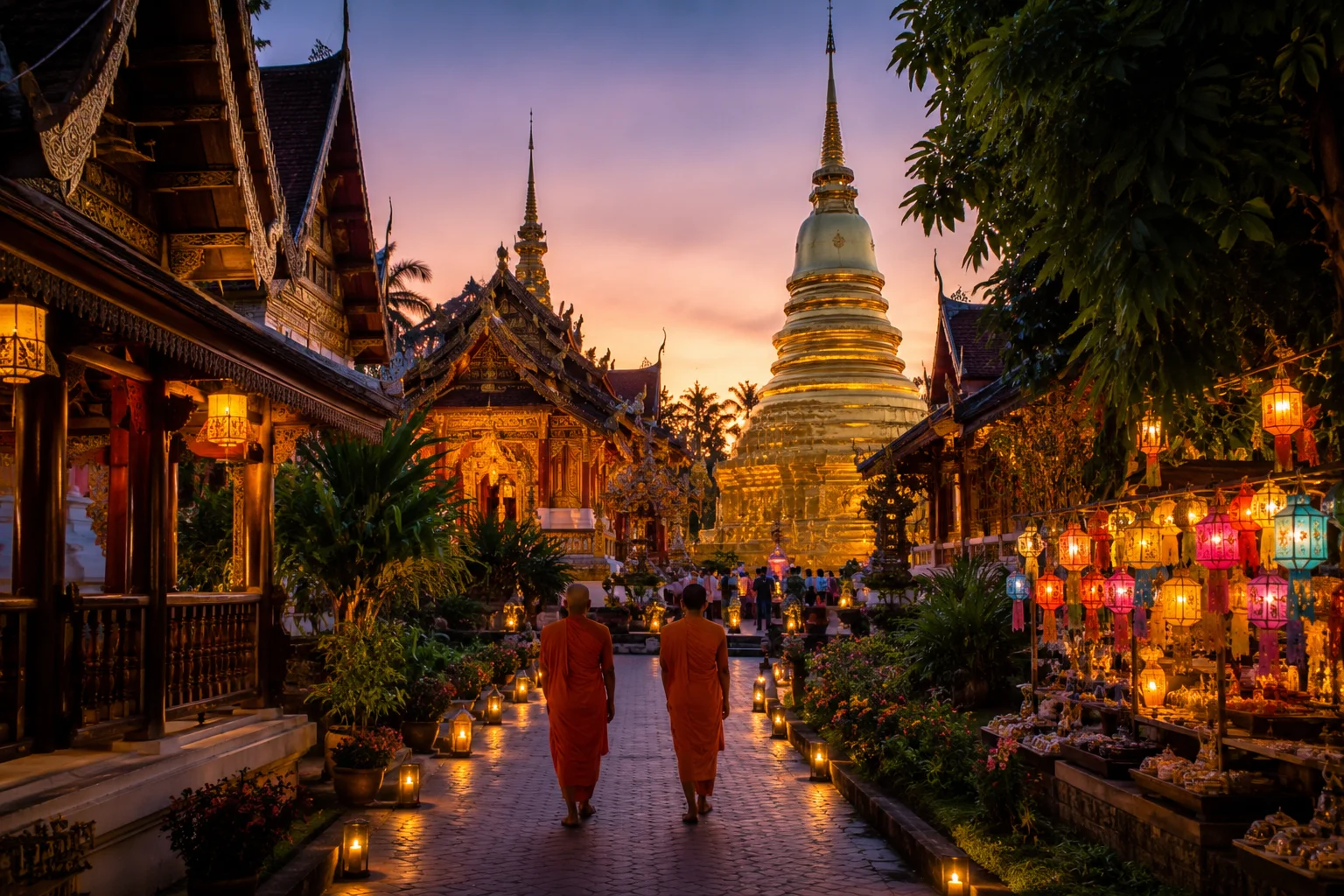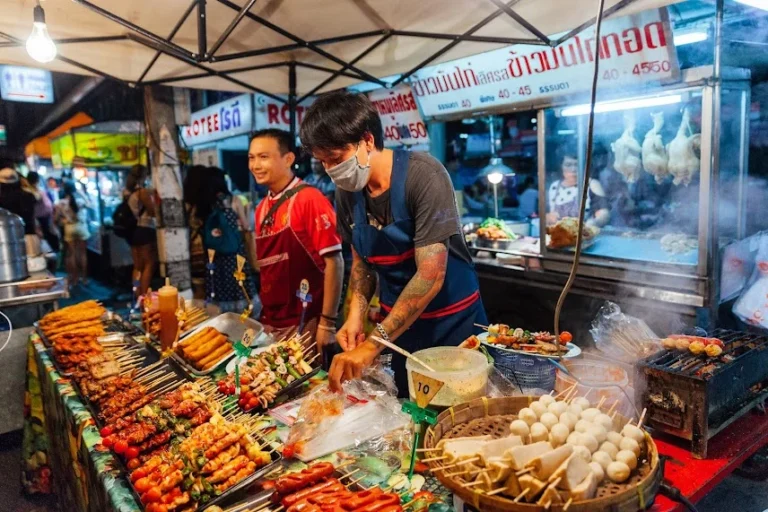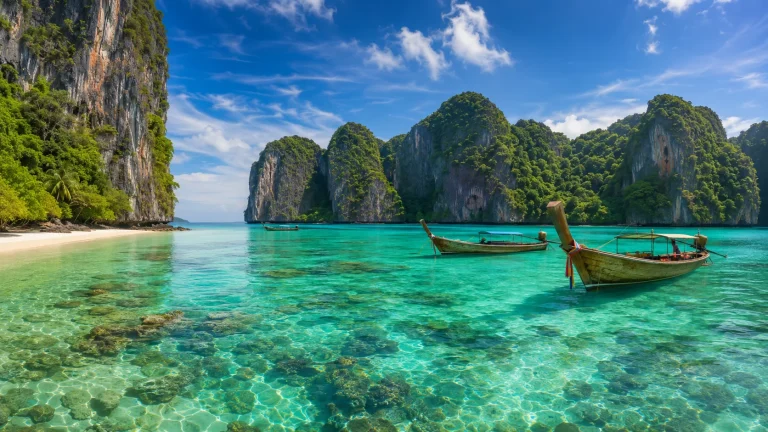
There’s a particular jolt to stepping off a Bangkok longtail boat onto a quiet klong-side pier, engine noise still ringing in your ears, only to walk two minutes and find yourself under the glass towers of a rooftop bar with a skyline view stretching to the horizon. A monk in saffron robes collects morning alms a few streets from a 24-hour night market selling grilled skewers to a crowd that hasn’t gone to sleep yet. Bangkok holds these contrasts without much friction — ancient temple complexes, a canal-based old city, and one of the most relentless modern skylines in Southeast Asia, all operating within the same few square kilometers. Most travelers treat it as a one- or two-night stopover before the islands or northern Thailand; the city has enough depth in its temples, food, and neighborhoods to easily fill four or five days on its own terms.
Temples and Bangkok’s Landmark Sites
Bangkok’s most significant sights cluster around the old royal district of Rattanakosin, along the Chao Phraya River, tracing the city’s founding as the Thai capital in 1782.
- Wat Phra Kaew and the Grand Palace — The former royal residence and home to the Emerald Buddha, Thailand’s most sacred Buddhist image, carved from a single block of jade and dressed in seasonal robes changed by the king three times a year.
- Wat Pho — Home to a 46-meter reclining Buddha covered in gold leaf, and the birthplace of traditional Thai massage, with an on-site school still teaching the practice today.
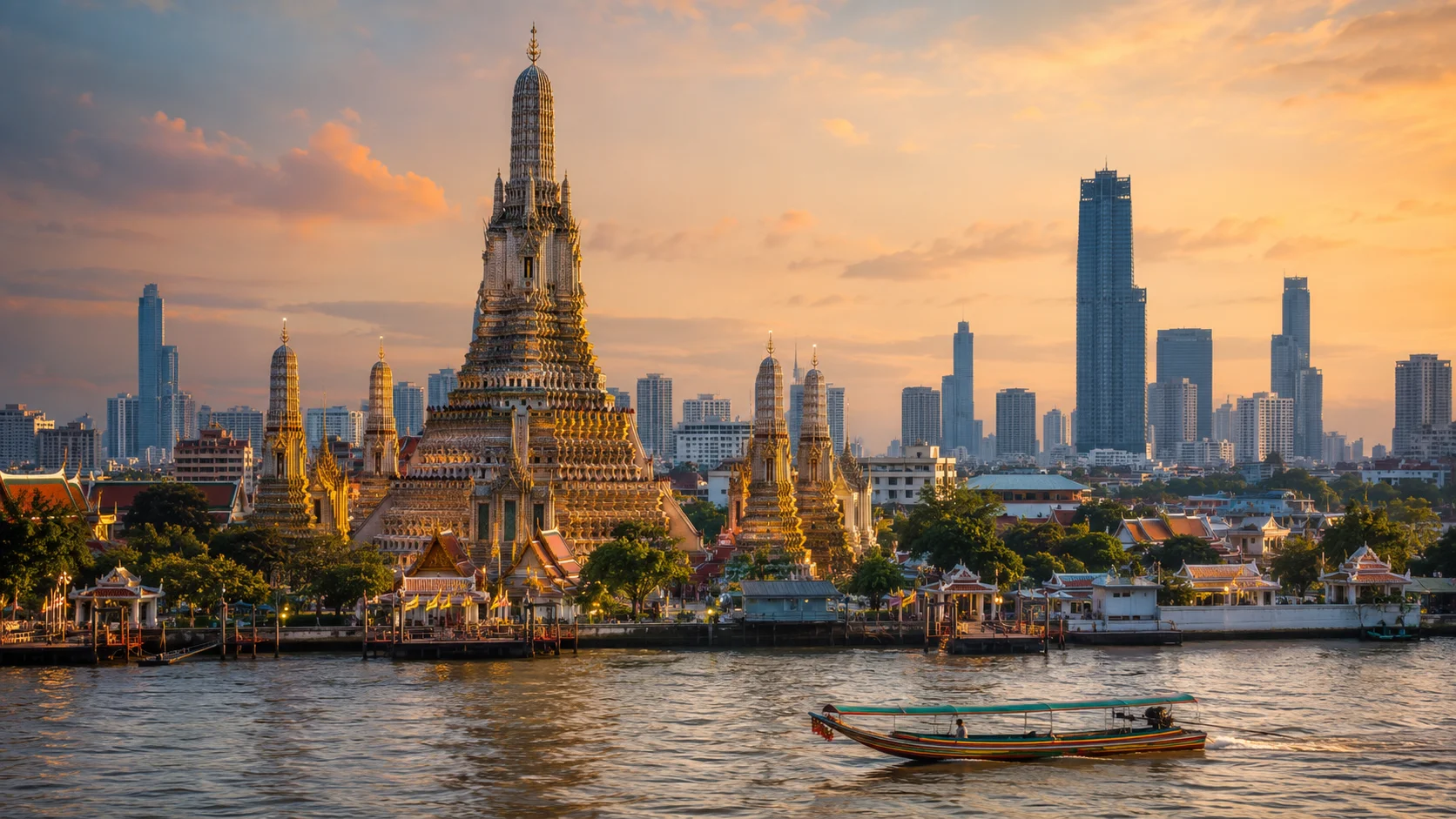
- Wat Arun (Temple of Dawn) — A riverside temple encrusted with colorful porcelain shards, best viewed from across the Chao Phraya at sunset, with a steep central prang that can be climbed for a river view.
- Chatuchak Weekend Market — One of the largest markets in the world, with over 8,000 stalls spread across a sprawling site, selling everything from vintage clothing to exotic plants.
- Jim Thompson House — The teak home of an American silk entrepreneur who mysteriously disappeared in 1967, now a museum showcasing traditional Thai architecture and his personal art collection.
Two to three days covers Bangkok’s core temples and markets comfortably; visiting the Grand Palace and Wat Pho on the same morning works well since they’re within walking distance of each other, though a strict dress code applies at both.
Beyond the Temples: A City Finding Its Own Voice
Chinatown (Yaowarat) runs at its own pace day and night, its gold shops and traditional medicine halls giving way after dark to one of the city’s most concentrated street food scenes, with vendors setting up along the main road as soon as the shops close.
For the city’s newer creative energy, Charoenkrung Road and pockets of Ari have developed a concentrated scene of independent cafes, design studios, and small galleries occupying converted shophouses and warehouses, distinct from the mall-heavy retail of Siam and Sukhumvit.
For a cultural experience with real depth, a performance of khon, Thailand’s traditional masked dance-drama depicting scenes from the Ramakien epic, held periodically at venues like the Thailand Cultural Centre, offers a formal counterpoint to the city’s more commercial cultural offerings like standard dinner-show performances.
Where to Eat in Bangkok
Bangkok’s food scene draws from across Thailand’s regional cuisines, concentrated into a single city with a street food culture recognized by UNESCO for its intangible cultural heritage.
Dishes to look for:
- Pad kra pao — stir-fried minced meat with holy basil and chili, typically served over rice with a fried egg, one of the most common everyday dishes in the city.
- Tom yum goong — a hot and sour prawn soup flavored with lemongrass, galangal, and kaffir lime leaf, considered one of Thailand’s defining dishes internationally.
- Boat noodles (kuay teow reua) — a dark, intensely flavored noodle soup traditionally sold from boats along Bangkok’s canals, now served from dedicated stalls in small bowls meant to be ordered several at a time.
- Mango sticky rice — sweet sticky rice served with fresh mango and coconut cream, a common dessert found from street carts to hotel restaurants.
Fine dining: Gaggan Anand, though relocated from its original Bangkok address, helped establish the city’s reputation for progressive Indian-influenced tasting menus; Sorn focuses on refined Southern Thai cuisine and has earned significant international recognition. Le Du reworks Thai regional dishes through a modern technique in a stylish downtown setting.
Mid-range and social-enterprise spots: Cabbages & Condoms, run by a Thai NGO focused on family planning and rural development, serves a solid Thai menu in a quirky, condom-decorated setting that funds its parent organization’s work. Jay Fai, a Michelin-starred street stall known for crab omelets cooked over charcoal, sits at an unusual intersection of street food and fine dining prestige.
Street food and markets: The stalls along Yaowarat Road in Chinatown are reliable for boat noodles, grilled seafood, and roast duck after dark. Or Tor Kor Market near Chatuchak offers a more upscale, air-conditioned take on Thai market food and produce.
Coffee and cafes: Rocket Coffeebar has multiple locations known for serious specialty coffee and brunch. Casa Lapin in the Ari and Thonglor areas is popular for its design-forward space and reliable coffee alongside a full food menu.
Where to Stay in Bangkok
Luxury: The Peninsula Bangkok and Mandarin Oriental Bangkok both sit directly on the Chao Phraya River, offering classic five-star service with private boat transfers to nearby piers. The Siam occupies a quieter riverside compound further from the main tourist strip, known for its Art Deco-meets-traditional-Thai design.
Boutique and mid-range: Chakrabongse Villas, set within a royal-era riverside estate near the Grand Palace, offers a small number of distinctive rooms at a mid-range price point. Several well-reviewed boutique hotels cluster around Thonglor and Ari for travelers prioritizing neighborhood character over proximity to the main temples.
Budget: The Khao San Road area remains the city’s backpacker hub, with hostels and budget guesthouses at every price point, alongside the most concentrated nightlife for that traveler segment.
Where to base yourself: Sukhumvit offers the best base for BTS Skytrain access, shopping, and dining variety; Rattanakosin (the old city) puts you closest to the Grand Palace and river temples, while Ari or Thonglor suit travelers wanting a quieter, more local base with strong cafes.
What to Do Beyond the Temples
- Chao Phraya river and canal tour — A longtail boat trip through Thonburi’s canals, offering a look at riverside houses and temples well off the main tourist path.
- Thai cooking class — Several schools around the city teach pad kra pao, tom yum, and other staples, often starting with a market tour to select ingredients.
- Muay Thai match at Rajadamnern or Lumpinee Stadium — Live traditional Thai boxing matches held regularly, offering an authentic look at the sport’s ceremonial and competitive sides.
- Ayutthaya day trip — The ruins of Thailand’s former capital before Bangkok, about 90 minutes north by road or a scenic train ride, with UNESCO-listed temple ruins spread across a river island.
- Traditional Thai massage — Widely available across the city, with Wat Pho’s on-site school offering one of the most historically rooted options.
- Rooftop bar circuit — Bangkok’s skyline has one of the highest concentrations of rooftop bars in the world, with options ranging from the iconic Sky Bar to quieter, less crowded alternatives.
- Damnoen Saduak or Amphawa floating market — A day trip to a traditional floating market, with Amphawa generally considered a more local, less touristed alternative to the more famous Damnoen Saduak.
- Bangkok Art and Culture Centre (BACC) — A rotating collection of contemporary Thai and international art, a useful counterpoint to the city’s historical temple sights.
When to Go: Bangkok Travel Guide Seasons
- November to February — The cool, dry season and generally the most comfortable window for walking the city, with lower humidity than the rest of the year, though also the busiest and most expensive.
- March to May — Hot season, with temperatures regularly climbing above 35°C (95°F) and high humidity, generally the least comfortable window for extended outdoor sightseeing.
- June to October — The wet season, with short, heavy afternoon downpours common rather than all-day rain; September and October tend to bring the heaviest rainfall and occasional localized flooding.
Practical Notes for the Trip
- Getting there: Suvarnabhumi and Don Mueang International Airports both serve Bangkok, with Suvarnabhumi handling most long-haul international flights and Don Mueang serving many budget carriers.
- Getting around: The BTS Skytrain and MRT subway cover most major tourist areas efficiently and avoid Bangkok’s notorious road traffic; river ferries along the Chao Phraya are both practical and scenic for reaching the old city.
- Visas: Many nationalities can enter Thailand visa-free for tourism up to a set number of days; requirements vary by nationality and change periodically, so check current rules before booking.
- Dress code and etiquette: Modest dress covering shoulders and knees is strictly enforced at the Grand Palace and Wat Pho, with rental sarongs available on-site for those who arrive underdressed; shoes are removed before entering temple buildings.
- Currency: Thai baht is standard; cards are widely accepted at malls, hotels, and larger restaurants, while cash remains preferred at street food stalls and local markets.
A Final Thought
Bangkok rarely settles into a single identity long enough to be summarized by one temple or one skyline photo. It’s a city that keeps its canal-side wooden houses, its centuries-old royal temples, and its rooftop bars operating within walking distance of each other, each drawing a different crowd at a different hour. Spend a few days moving between them rather than rushing toward the next stop on a Thailand itinerary, and the city stops feeling like a gateway and starts feeling like the destination it always was.