
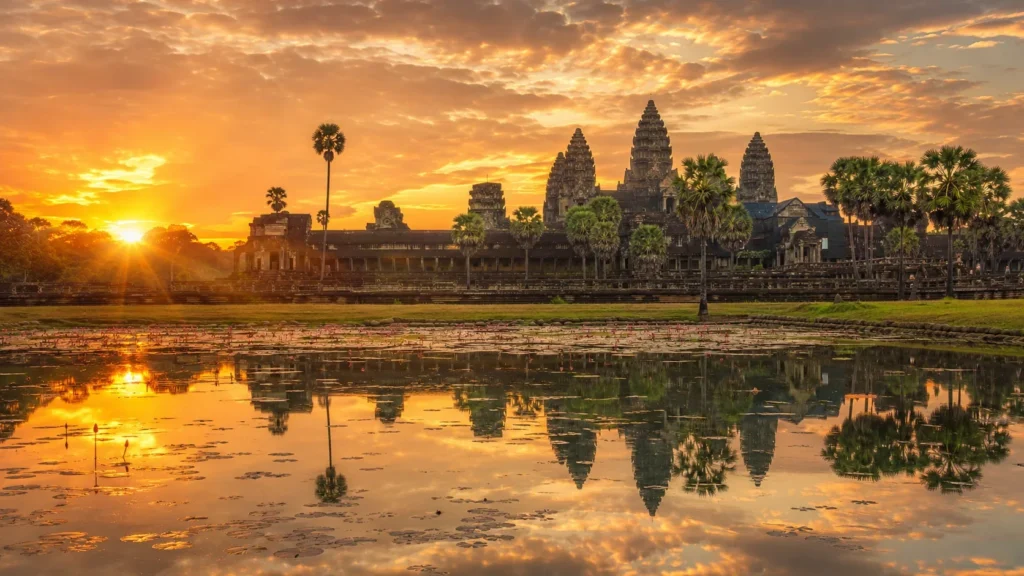
Choosing the best time to visit Cambodia depends on where you plan to go and what you want from the journey. The country’s tropical monsoon climate creates three useful travel windows: a cooler dry season, a hotter dry season and a lush rainy season. Angkor’s temples, Phnom Penh, the southern islands and the northeastern highlands do not all experience those seasons in quite the same way.
This guide explains Cambodia’s weather month by month and region by region, with practical advice for temple touring, beach time, wildlife, road trips and travel during the green season. For broader planning help, see our complete Cambodia travel guide.
Best Time to Visit Cambodia: The Quick Answer
For most first-time visitors, November to February is the easiest period. Rain is limited, humidity is more manageable and daytime conditions suit long hours at Angkor, city walks and overland travel. December and January usually offer the most comfortable all-round weather, but they are also popular months, so book well ahead.
March and April are generally dry but very hot. May to October is the southwest monsoon, often called the wet or green season. Rain usually arrives in intense showers rather than continuing all day, although the coast and the Cardamom Mountains can receive prolonged downpours. Travellers who accept flexible plans are rewarded with vivid landscapes, fuller waterways and fewer visitors at many sights.
- Best overall weather: November to February
- Best for the southern coast and islands: December to March
- Best for green scenery and lighter crowds: June to August and October
- Hottest period: March to May, especially April
- Wettest national period: August and September, with strong regional variation
Understanding Cambodia’s Seasons
Cooler dry season: November to February
Northeast monsoon winds bring Cambodia’s driest and comparatively coolest conditions. Mornings can feel pleasantly fresh, especially in rural areas and the highlands, while afternoons remain warm. This is the most reliable season for a classic itinerary combining Siem Reap, Phnom Penh and the coast. The trade-off is stronger demand for flights, hotels and guides around Christmas, New Year and Lunar New Year.
Hot dry season: March to early May
Temperatures rise steadily through March and commonly reach the high 30s Celsius in April. Temple courtyards and city streets feel hottest from late morning to mid-afternoon. Travel is still practical if you begin early, rest during peak heat, drink frequently and choose accommodation with good cooling. Cambodia’s Khmer New Year falls in mid-April, bringing lively celebrations as well as domestic travel demand and some business closures.
Wet or green season: May to October
The southwest monsoon supplies most of Cambodia’s annual rainfall. Showers often build in the afternoon or evening, cooling the air after a humid day. September is commonly among the wettest months on the central plains, while the southwest coast and mountain slopes receive heavier and more persistent rain. Roads in remote areas may become muddy, but the rice fields turn luminous green and Angkor’s moats and reservoirs fill.
Cambodia Weather by Region
Siem Reap, Angkor and the northwest
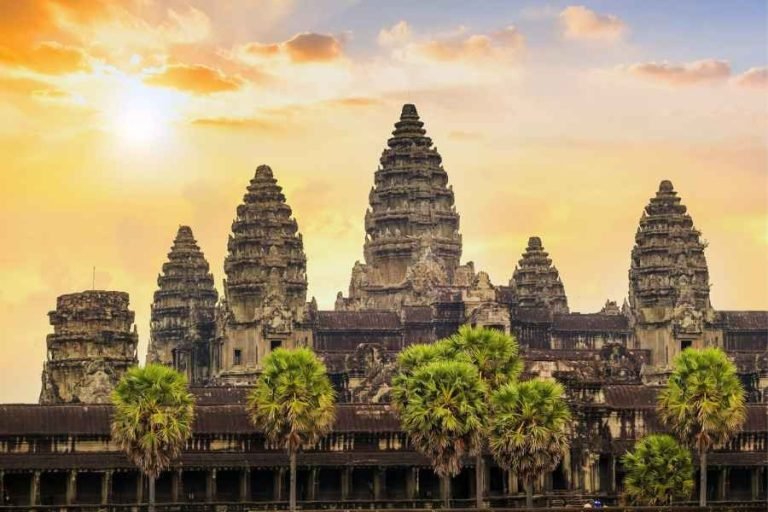
Siem Reap follows the central lowland pattern: mostly dry from November through April and rainy from May through October. November to February is ideal for cycling and long temple days. March and April bring harsh midday heat, so plan sunrise visits, shaded ruins and a hotel break after lunch.
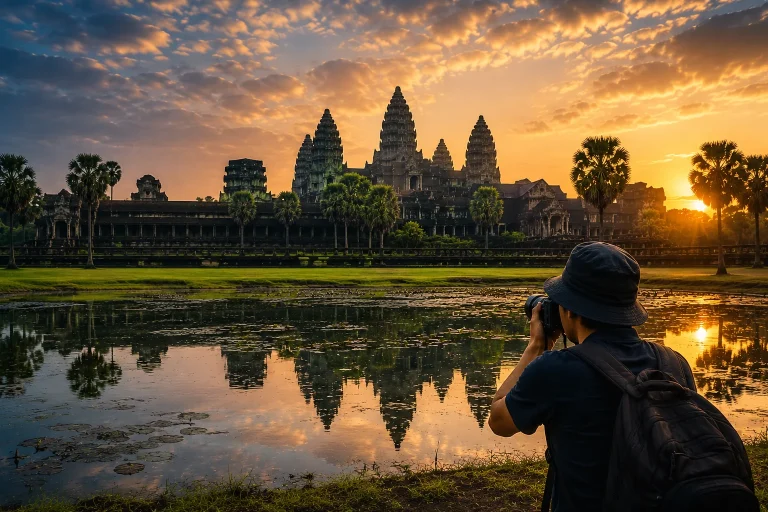
The green season can be beautiful at Angkor. Moss deepens on stone, forest vegetation flourishes and reflections return to temple pools. June and July often provide a workable balance between greenery and manageable rain. In September and October, showers are heavier and some rural roads can flood, but the landscape is at its most dramatic.
Phnom Penh, Battambang and the central plains
The capital and surrounding lowlands are hot throughout the year. December and January usually bring the most comfortable combination of lower humidity and limited rain. By April, reflected heat from paved streets can make daytime sightseeing tiring. During the wet season, thunderstorms may briefly overwhelm city drainage, and low-lying routes can hold standing water.
Battambang and rural plains follow a similar rhythm. The countryside is dusty and golden late in the dry season, then changes quickly after the first dependable rains. Travelling in October or November can pair green fields with improving road conditions.
Kampot, Kep, Sihanoukville and the islands
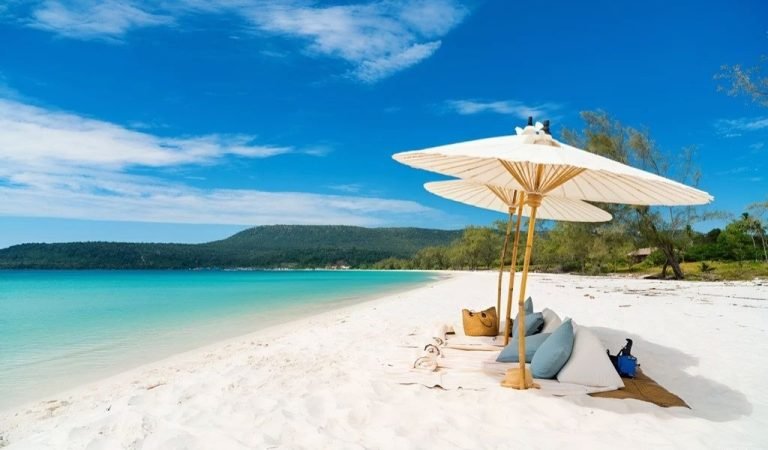
Cambodia’s southern coast receives much more monsoon rain than the central plains. December to March is the most dependable window for calm seas, island transfers and beach days. April can still be attractive, although it is very hot and humidity rises before the monsoon.
From June through September, heavy rain, wind and rough water can disrupt boats to Koh Rong and other islands. Ferries still operate, but schedules may change for safety. Some small resorts reduce services in the quietest months. If the coast is central to your trip, build in a spare day and confirm transport shortly before departure.
Mondulkiri and Ratanakiri
The northeastern highlands are elevated and can feel cooler at night than Phnom Penh or Siem Reap, particularly from November to February. This dry window is best for forest walks, village visits and unsealed roads. March and April become hot and dusty, though evenings may remain more comfortable than on the plains.
Rain from May to October revives forests and waterfalls, but access can be difficult. Later in the wet season, red-earth roads may be slippery or impassable after storms. Choose an experienced local operator, allow extra travel time and avoid crossing fast-moving water.
Cardamom Mountains and Koh Kong
The southwest-facing Cardamom Mountains are among Cambodia’s wettest areas. For trekking and wildlife-focused stays, November to March usually offers the safest and most comfortable conditions. June to September can bring sustained rain, swollen rivers, leeches and difficult trails. Green-season visits are possible with specialist guides, but itineraries need more flexibility than elsewhere.
Cambodia Weather Month by Month
January: cool, dry and popular
January is one of Cambodia’s best all-round months. Skies are often clear, humidity is relatively low and mornings suit Angkor exploration. The coast is usually calm. Reserve popular hotels and guides early, particularly around New Year.
February: dry with rising heat
February remains dry across most of the country, with warmer afternoons than January. It is excellent for a multi-region journey and still dependable for island time. Begin outdoor activities early as the month progresses.
March: sunny and increasingly hot
Rain is limited, but heat becomes the main planning factor. Schedule temples before 10 a.m. and after 3 p.m., use sun protection and carry water. Sea conditions are generally favourable, making the south coast a sensible place to slow down.
April: the hottest month
April is typically intensely hot, often with afternoon temperatures in the high 30s Celsius. Khmer New Year adds joyful water play and celebrations in mid-month. Confirm transport and hotel availability, and expect some locally owned businesses to close for family holidays.
May: a changeable transition
May brings building humidity and the first regular monsoon storms. Rain is still variable, so a week may include brilliant sun and sudden evening downpours. Visitor numbers fall and the countryside starts to turn green.
June: green landscapes and workable showers
June is a good-value green-season choice for Angkor and the central plains. Showers are frequent but often brief enough to plan around. Coastal rain is heavier, so keep beach expectations flexible.
July: wetter, especially in the southwest
Humidity is high and rain becomes more established. Temples and rice fields photograph beautifully between storms. The coast, Cardamoms and remote dirt roads require extra caution, while city and main-road travel remains generally straightforward.
August: lush scenery and frequent rain
August is wet nationwide and particularly rainy in southwestern Cambodia. It can still suit cultural travellers who prefer fewer crowds and do not mind carrying a light rain jacket. Allow time for transport delays and protect electronics.
September: peak monsoon conditions
September is commonly among the wettest months. Flooding may affect rural areas, and storms can complicate island plans. It is also a rewarding time for full waterways, saturated green landscapes and quieter monuments. Keep the itinerary simple and avoid tight connections.
October: rain eases and water levels stay high
Rain gradually decreases, although early October can remain very wet. Tonle Sap and the Mekong system are generally full, supporting boat journeys and flooded-forest scenery where local conditions permit. Late October often offers an appealing shoulder-season balance.
November: dry season returns
November is one of the strongest months for an extended trip. Rainfall drops, temperatures become more comfortable and the countryside remains green. Water levels are still useful for many Tonle Sap excursions, while trekking conditions improve.
December: reliable weather across Cambodia
December brings dry, pleasantly warm conditions to most regions. It is excellent for temples, cities, highlands and beaches in one itinerary. Demand rises sharply over the festive period, so plan early and expect premium rates at popular resorts.
When to Visit for Different Travel Goals
- Angkor temples: November to February for comfort; June or July for greenery and lighter crowds.
- Southern beaches and islands: December to March for the best chance of calm, clear conditions.
- Tonle Sap: September to November for higher water and broader boat access, subject to local conditions.
- Highland trekking: November to February for cooler air and firmer trails.
- Lower prices: May to October, excluding major festivals; compare likely savings in our Cambodia trip cost guide.
- Photography: November to February for clearer skies, or the green season for saturated landscapes and reflective temple pools.
If you want to combine Cambodia’s headline sights efficiently, adapt our 10-day Cambodia itinerary to the season. In wet months, reduce long road transfers; in hot months, add midday rest time.
Practical Tips for Cambodia’s Heat and Rain
- Start early. Sunrise and morning visits are cooler and often quieter, especially from March to May.
- Pack breathable layers. Light clothing, a hat and a compact rain shell work better than heavy waterproof gear in humid conditions.
- Respect temple dress codes. Carry a light scarf or suitable layer that covers shoulders and knees.
- Protect valuables. Use a dry bag or sealed pouch for phones, passports and cameras during boat trips and storms.
- Build in flexibility. Do not place an island ferry immediately before an international flight during the monsoon.
- Monitor local advice. Weather varies year to year. Ask guides and accommodation staff about road, river and ferry conditions before remote journeys.
- Use safe drinking water. Refill from filtered-water stations where available and replace fluids regularly in hot weather.
Explore destinations and trip ideas on our Cambodia travel page, then choose dates that fit your priorities rather than searching for a single perfect month.
Frequently Asked Questions
What is the best month to visit Cambodia?
January is often the best single month for comfortable temperatures, low rainfall and reliable access across the country. December and February are close alternatives, with similarly good conditions but strong demand.
Is Cambodia worth visiting in the rainy season?
Yes. The rainy season offers greener scenery, fewer visitors and often better-value accommodation. Choose a flexible itinerary, expect afternoon showers and be cautious with coastal ferries, remote roads and mountain trekking from July to September.
Does it rain all day in Cambodia during monsoon season?
Not usually on the central plains. Rain often falls in concentrated afternoon or evening storms, with usable dry periods before or after. The coast and southwest mountains can experience longer spells of rain.
When is the best time to visit Angkor Wat?
November to February is most comfortable for long temple days. June and July are appealing alternatives if you value greener grounds and fewer crowds. In March and April, visit at sunrise and late afternoon to avoid peak heat.
When should I avoid Cambodia’s islands?
There is no absolute no-go period, but July through September carries the highest risk of rough seas, ferry changes and extended rain. Travellers focused on beaches should favour December through March.
Plan Around the Experience You Want
The best time to visit Cambodia is November to February for the broadest range of comfortable experiences. Yet the green season can be equally memorable when dramatic skies, quieter temples and lush countryside matter more than guaranteed sunshine. Match the month to your route, leave room for weather changes and Cambodia remains rewarding throughout the year.