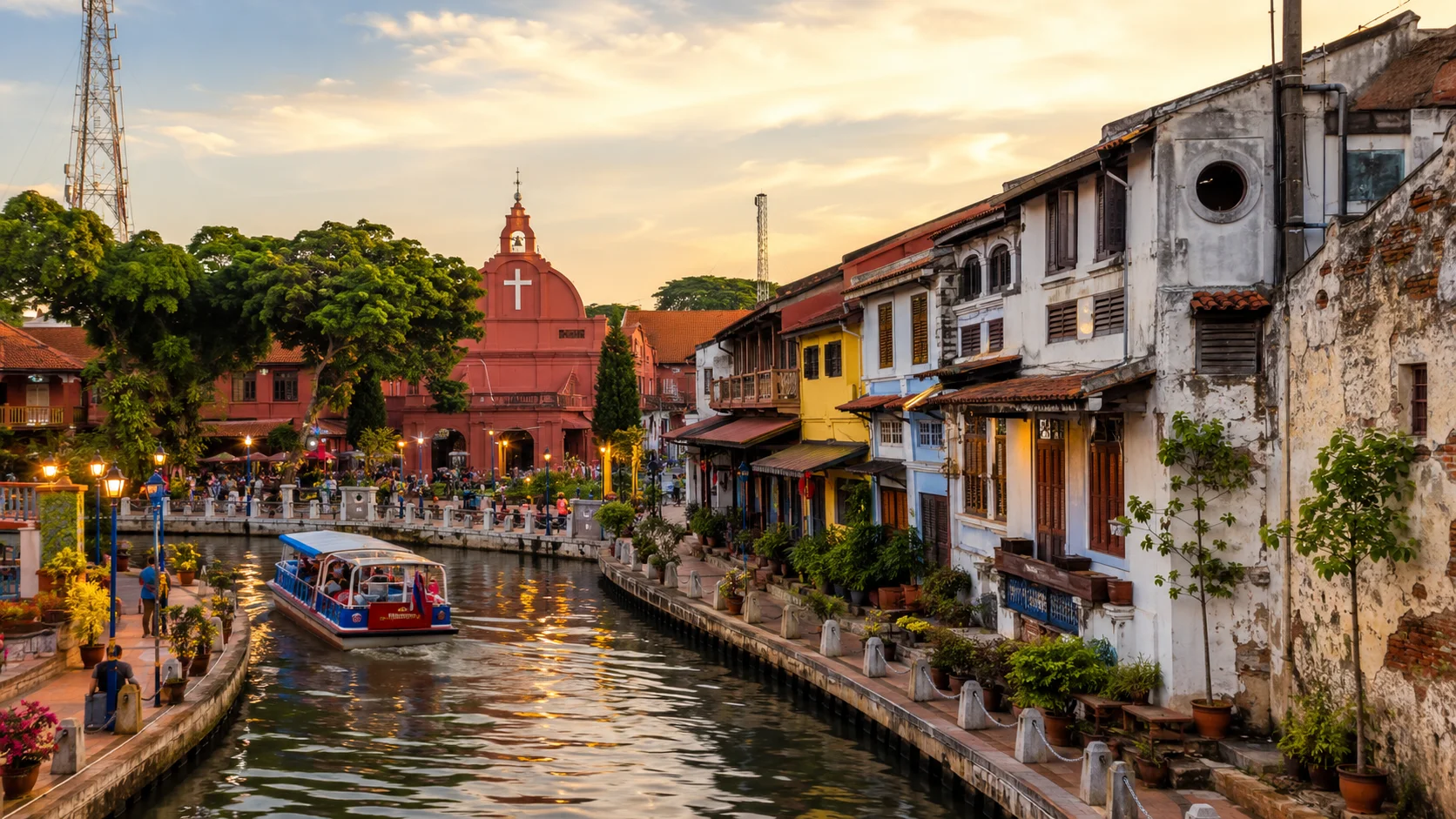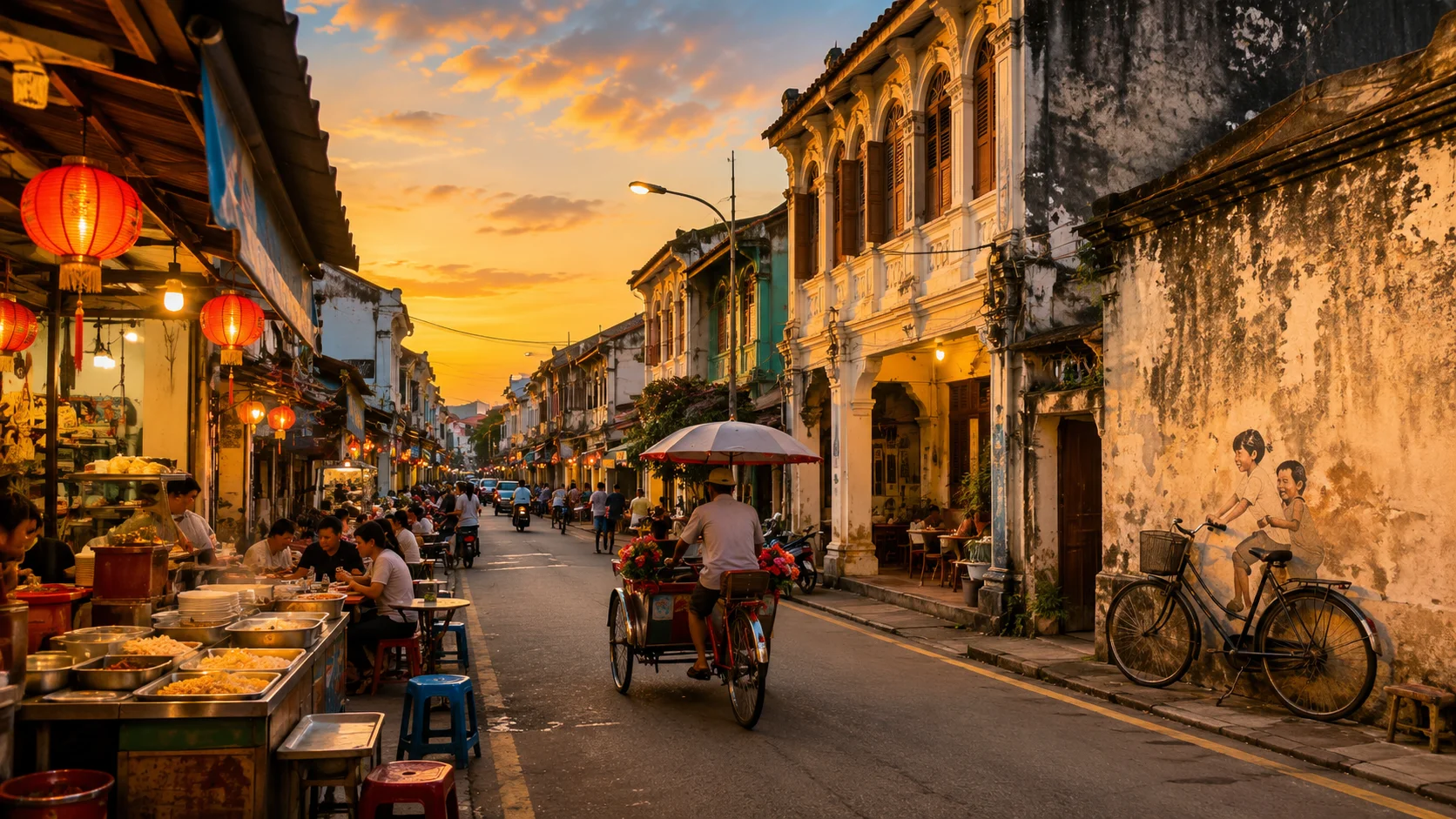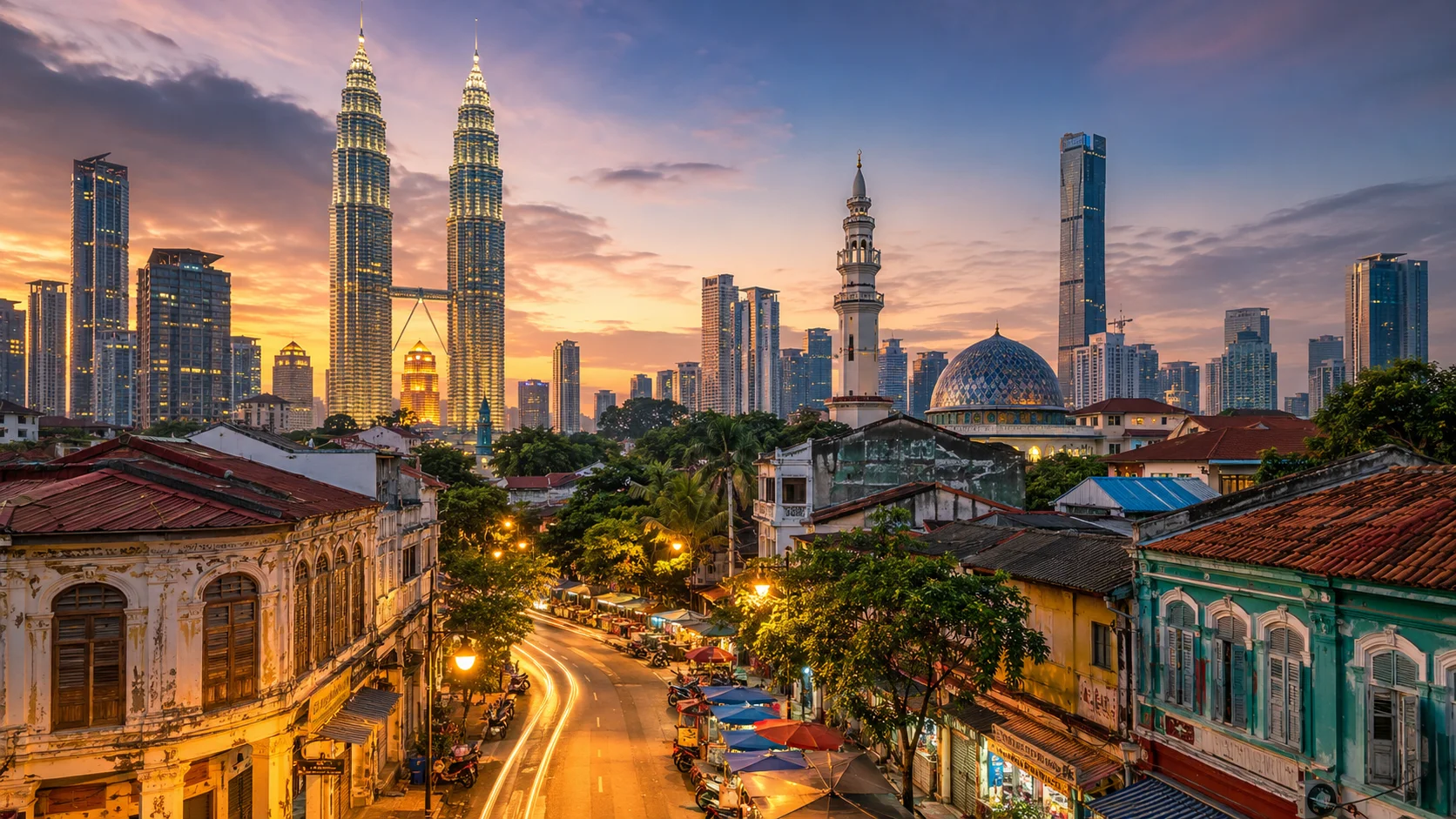
There’s a moment just before sunset on Jalan Alor when the street’s daytime quiet breaks open — plastic stools scrape onto the pavement, woks fire up in a row down the block, and the smell of charcoal-grilled stingray and frying oyster omelets drifts out over a soundtrack of Cantonese, Malay, and Tamil overlapping from different tables. A few streets away, the Petronas Towers catch the last light and turn the color of brushed steel, framed against a mosque’s call to prayer drifting in from somewhere nearby. Kuala Lumpur rarely gets the reverence of Southeast Asia’s more photogenic capitals, and it’s often treated as a one-night stopover between flights. That undersells a city built almost entirely on overlap — Malay, Chinese, Indian, and colonial British influences stacked into the same blocks, producing a food scene and street-level culture with few real equivalents in the region.
Skyline and Kuala Lumpur’s Landmark Sites
KL’s most photographed sights sit within a fairly compact core, though the city’s sprawl means a few worthwhile stops require a short trip out.
- Petronas Twin Towers — Once the tallest buildings in the world, connected by a skybridge on the 41st floor, with a separate observation deck higher up offering a full view over the city’s low-rise sprawl.
- Batu Caves — A limestone hill temple complex just outside the city center, reached via a steep flight of brightly painted stairs guarded by a towering gold statue of Murugan, and one of the most significant Hindu pilgrimage sites outside India.
- Merdeka Square and Sultan Abdul Samad Building — The historic heart of colonial-era KL, where Malaysia‘s independence was declared in 1957, framed by Moorish-revival architecture built by the British.
- Central Market and Kasturi Walk — A restored Art Deco market building turned crafts and souvenir hub, connected to a covered street food walk that’s a useful entry point into KL’s mixed food culture.
- KL Bird Park and Perdana Botanical Gardens — One of the world’s largest covered bird parks, set within a broader green space that offers a genuine break from the city’s density.
Two to three days covers KL’s core sights without rushing; buying a combined ticket for the Petronas Towers observation deck and skybridge in advance is worth it, as same-day tickets sell out early, particularly in peak season.
Beyond the Skyline: A City Finding Its Own Voice
Petaling Street, KL’s historic Chinatown, still holds its wet market energy despite heavy tourist foot traffic, with traditional medicine shops, textile stalls, and a night market that runs late into the evening.
For the city’s newer creative identity, Bangsar and Bukit Bintang’s back streets have developed a concentrated scene of independent cafes, design boutiques, and art spaces, distinct from the mall-heavy retail that dominates the city’s main tourist corridor.
For a cultural experience with real depth, a performance at Panggung Bandaraya or a visit to the Islamic Arts Museum Malaysia, one of the most significant collections of Islamic art and artifacts in Southeast Asia, offers a different lens on the city than its shopping malls and skyline views.
Where to Eat in Kuala Lumpur
KL’s food culture reflects its Malay, Chinese, and Indian communities more directly than almost anywhere else in the region, often within the same hawker center.
Dishes to look for:
- Nasi lemak — coconut rice served with sambal, fried anchovies, peanuts, and a boiled or fried egg, considered Malaysia’s national dish and eaten at any hour of the day.
- Char kway teow — flat rice noodles stir-fried with prawns, egg, bean sprouts, and Chinese sausage over high heat, a KL and Penang staple with passionate local opinions on the “correct” version.
- Banana leaf rice — a South Indian meal served on a banana leaf with rice, vegetable curries, and a choice of meat or fish, eaten by hand at dedicated restaurants across the city.
- Roti canai — a flaky, pan-fried flatbread served with dhal or curry sauce for dipping, a common breakfast dish at Indian-Muslim (mamak) restaurants open late into the night.
Fine dining: Dewakan has built an international reputation for a tasting menu built around foraged and lesser-known Malaysian ingredients, reworked through a modern technique. Enak KL offers a more accessible but still elevated take on Malaysian classics in a stylish setting.
Mid-range and social-enterprise spots: Rebung by Chef Ismail, a buffet-style restaurant, focuses specifically on Malay heritage dishes that are becoming harder to find elsewhere. Several mamak restaurants across the city function as de facto community hubs, open 24 hours and popular with a cross-section of KL residents.
Street food and markets: Jalan Alor is the most concentrated and famous street food stretch in the city, running the length of a single block with competing stalls for grilled seafood, noodles, and skewers. Petaling Street’s night market food stalls offer a more Chinese-leaning counterpart.
Coffee and cafes: VCR in Bukit Bintang was among the early wave of specialty coffee shops that shaped KL’s current cafe culture. PULP by Papa Palheta and similar spots in Bangsar cater to a design-conscious crowd with serious sourcing behind the menu.
Where to Stay in Kuala Lumpur
Luxury: The Ritz-Carlton, Kuala Lumpur and Four Seasons Hotel Kuala Lumpur both sit within walking distance of the Petronas Towers, offering polished service and skyline views. The RuMa Hotel and Residences leans into a more design-forward, contemporary Malaysian aesthetic.
Boutique and mid-range: Sekeping Sin Chew Kee offers a distinctive, design-focused stay in a converted heritage shophouse near Chinatown, a departure from KL’s more conventional mid-range hotel stock. Several well-reviewed boutique properties cluster around Bukit Bintang for easy access to shopping and nightlife.
Budget: Reggae Mansion and similar hostels in the Chinatown and Bukit Bintang areas offer social common spaces and dorm or private rooms at low prices, close to major sightseeing.
Where to base yourself: KLCC (around the Petronas Towers) puts you closest to the skyline and shopping, while Bukit Bintang offers the densest concentration of food, nightlife, and budget-to-mid-range accommodation; Bangsar suits travelers wanting a quieter, more residential base with strong cafes.
What to Do Beyond the Skyline
- Batu Caves temple visit — Beyond the main cave, a smaller “Dark Cave” tour offers a guided look at the site’s unique cave ecosystem, including species found nowhere else.
- Cameron Highlands day or overnight trip — A few hours from KL by road, known for tea plantations, strawberry farms, and noticeably cooler mountain air.
- Malaysian cooking class — Several schools around the city teach nasi lemak, rendang, and other regional staples, often paired with a market visit.
- KL Forest Eco Park canopy walk — A patch of primary rainforest preserved within the city center, with an elevated canopy walkway a short walk from the KL Tower.
- Thean Hou Temple — A large, multi-tiered Chinese temple on a hill just outside the city center, offering panoramic views and elaborate seasonal lantern displays.
- Royal Selangor pewter workshop — A hands-on visit to Malaysia’s best-known pewter manufacturer, with a factory tour and the option to try basic pewter-crafting techniques.
- Genting Highlands day trip — A hill resort about an hour from KL, reached by cable car, known for its cooler climate, theme parks, and casino.
- Islamic Arts Museum Malaysia — One of the region’s most significant collections of Islamic art, architecture models, and manuscripts, a useful cultural counterpoint to the city’s modern skyline.
When to Go: Kuala Lumpur Travel Guide Seasons
- December to February — Generally drier with lower humidity, though KL sits close enough to the equator that rain is possible year-round; this window also overlaps with a busier travel season around the holidays.
- March to May and July to August — Intermonsoon periods with a mix of sun and short afternoon downpours, generally manageable for sightseeing if plans stay flexible.
- October to November — The wetter end of the year, with the northeast monsoon bringing heavier and more frequent rain, though KL is less directly affected than Malaysia’s east coast.
Practical Notes for the Trip
- Getting there: Kuala Lumpur International Airport (KLIA) is one of Southeast Asia’s major hub airports, with extensive regional and long-haul international connections, plus a dedicated express train into the city center.
- Getting around: The KL Monorail, LRT, and MRT lines cover most major tourist areas efficiently; ride-hailing apps (Grab) are widely used for routes not well served by rail.
- Visas: Many nationalities can enter Malaysia visa-free for tourism up to a set number of days; requirements vary by nationality and change periodically, so check current rules before booking.
- Dress code and etiquette: Modest dress is expected at mosques and temples, including covered shoulders and knees, with headscarves available on loan at some mosques; shoes are removed before entering religious sites.
- Currency: Malaysian ringgit is standard; cards are widely accepted in malls, hotels, and larger restaurants, while cash remains common at hawker stalls and smaller shops.
A Final Thought
Kuala Lumpur doesn’t ask to be admired the way a single historic old town does — it’s a city built from overlapping neighborhoods, languages, and cuisines that rarely resolve into one clean narrative. Spend a few days moving between Batu Caves, Petaling Street’s night market, and a Jalan Alor dinner that runs late, and the city’s real character comes through: not a skyline photo, but a place where three or four distinct food and religious traditions have shared the same streets for generations without flattening into each other.