There’s a particular hour along the Tonlé Sap riverfront — just past 5pm, when the heat breaks and the sky over the confluence of the Mekong and Tonlé Sap rivers turns the color of unripe mango — when Phnom Penh reveals itself. Monks in saffron robes walk past food carts selling grilled bananas, families spread mats on the grass for an evening picnic, and the gold spires of the Royal Palace catch the last light. Most travelers treat Phnom Penh as a one-night stopover between the airport and Siem Reap’s temples, but that does the city a disservice. Phnom Penh is where modern Cambodia is actually being written — a capital still working through a brutal chapter of its history while building something unmistakably its own, one riverside café and reclaimed colonial villa at a time.
Royal Palace and the City’s Landmark Sites
Phnom Penh’s core sights sit close enough together to cover on foot or by a short tuk-tuk hop, and together they trace the arc of the city’s history from royal grandeur to genocide to recovery.
- Royal Palace and Silver Pagoda — The official residence of the King, with a floor in the pagoda laid with over 5,000 silver tiles (mostly covered by carpet now, though a corner is left exposed for visitors to see).
- National Museum of Cambodia — A terracotta-red building holding one of the world’s finest collections of Khmer sculpture, including pieces recovered from Angkor-era sites long before mass tourism reached them.
- Tuol Sleng Genocide Museum (S-21) — A former high school turned Khmer Rouge prison, left largely as it was found. It’s a heavy visit, but a necessary one for understanding the Cambodia that exists today.
- Choeung Ek Killing Fields — Located about 40 minutes outside the city center, with an audio guide that lets you move through at your own pace and in your own silence.
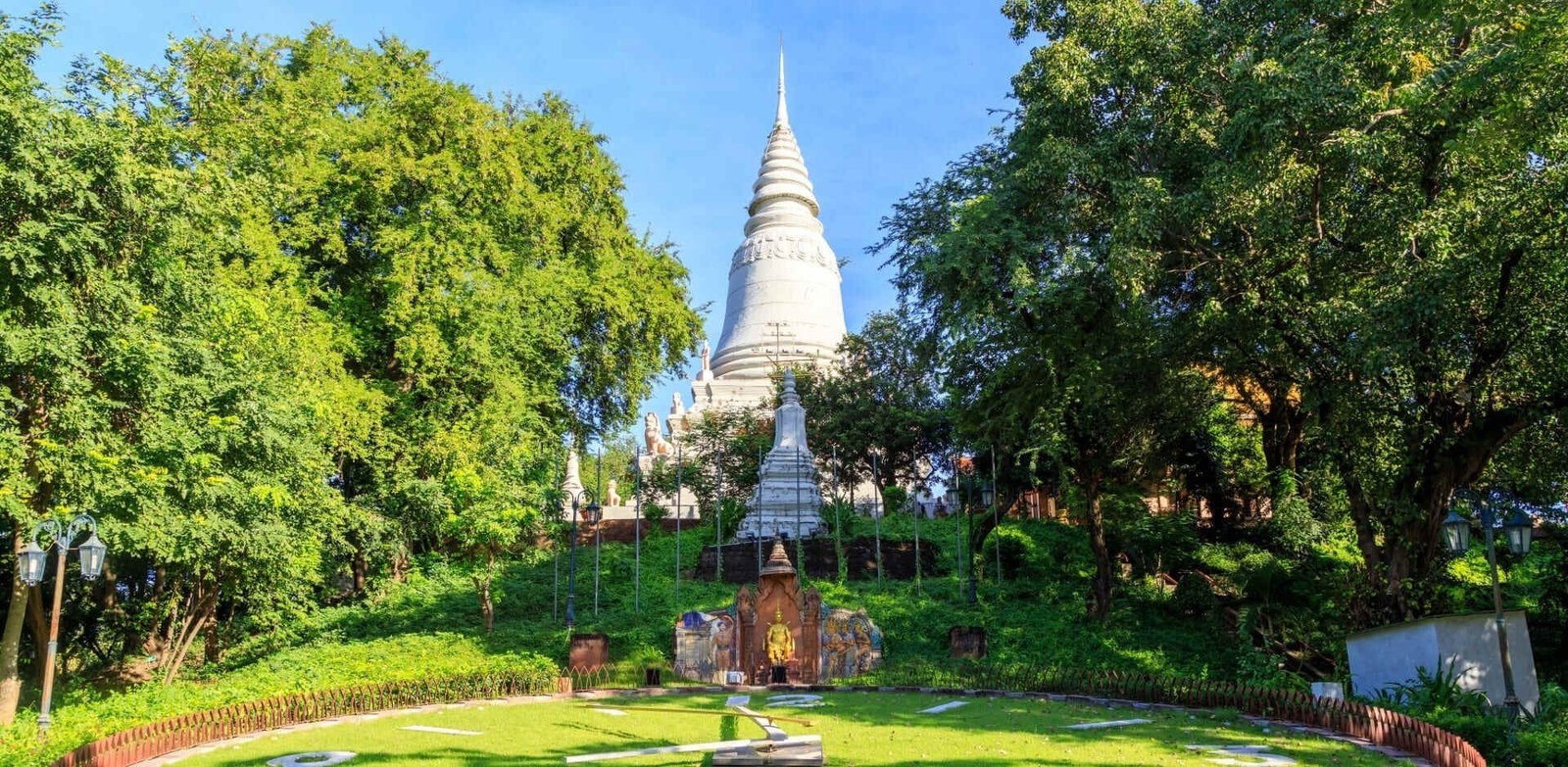
- Wat Phnom — The hilltop temple the city is named after, small in scale but a good orientation point and quietly active with local worshippers.
Two full days is enough to cover these sites without rushing, though pairing the Genocide Museum and Killing Fields on the same morning, followed by something lighter in the afternoon, tends to sit better emotionally than saving them both for one heavy day.
Beyond the Landmarks: A City Finding Its Own Voice
Phnom Penh’s Central Market (Phsar Thmey), an Art Deco building shaped like a yellow-domed cross, is where the city’s daily commerce plays out — gold jewelry stalls under the dome, clothing and electronics in the wings, and a lower level that turns into a proper wet market by mid-morning.
The riverside strip along Sisowath Quay has long been the tourist-facing face of the city, but the more interesting shift has happened a few streets back, around Street 240 and the BKK1 neighborhood, where French colonial shophouses have been converted into independent boutiques, design studios, and small galleries run largely by young Cambodian entrepreneurs rather than the NGO-adjacent shops that once defined the scene.
For an evening that captures the city’s cultural resilience, catch a performance at Sovanna Phum Arts Association, where traditional Cambodian shadow puppetry (sbek thom) and dance are kept alive by artists who are often direct successors of performers who survived the Khmer Rouge period — the puppetry alone, carved from cowhide and lit against a screen, is unlike anything else in the region.
Where to Eat in Phnom Penh
Phnom Penh’s food scene punches well above what its reputation suggests, blending Khmer staples with a wave of ambitious new kitchens.
Dishes to look for:
- Kuy teav — a pork or beef broth noodle soup, usually eaten for breakfast, topped with bean sprouts, herbs, and fried garlic.
- Bai sach chrouk — grilled pork over broken rice, served with pickled vegetables and a light ginger-vinegar broth, sold from carts every morning across the city.
- Prahok ktis — a dip made from fermented fish paste, coconut milk, and minced pork, eaten with raw vegetables and rice — an acquired taste that rewards the adventurous.
- Num ansom chek — sticky rice and banana steamed in banana leaf, a common street snack and a good introduction to Khmer desserts.
Fine dining: Malis serves refined, plated versions of Khmer classics in a garden courtyard setting and is often the first stop for visitors wanting an elevated introduction to the cuisine. Topaz leans French-Cambodian, popular for special occasions.
Mid-range and social-enterprise spots: Friends the Restaurant, run by the same organization behind Siem Reap’s Marum and Haven, trains marginalized youth in hospitality while serving a globally-inflected tapas menu. Romdeng, its sister restaurant, is known for a menu that includes deep-fried tarantula — a genuine Cambodian delicacy, not a gimmick.
Street food and markets: The stalls around Central Market and along Street 174 near the riverside are reliable for kuy teav and bai sach chrouk at local prices. The night market near the riverfront is a good option for grilled skewers and fresh coconut.
Coffee and cafes: Feel Good Coffee and Brown Coffee (a homegrown Cambodian chain) are dependable for a proper espresso and workspace, while Sisters Kitchen near the riverside is popular for all-day breakfast alongside its coffee.
Where to Stay in Phnom Penh
Luxury: Rosewood Phnom Penh, occupying the top floors of the city’s tallest building, pairs sweeping river views with a design language rooted in Khmer craftsmanship. Raffles Hotel Le Royal is the historic choice — a 1920s colonial-era property with a storied guest list and a famously good “Femme Fatale” cocktail bar.
Boutique and mid-range: Plantation – Urban Resort & Spa offers a quiet, palm-shaded courtyard escape close to the riverside without the price tag of the five-star towers. Villa Langka is well-located in BKK1, within walking distance of the neighborhood’s better restaurants and cafes.
Budget: Onederz Phnom Penh and Mad Monkey Phnom Penh cater to the backpacker crowd with pools and social common areas. Smaller guesthouses around Street 172 offer simple, clean rooms at low cost, close to the riverside action.
Where to base yourself: BKK1 is the best base for restaurants, cafes, and a quieter residential feel, while the riverside/Sisowath Quay area keeps you closer to the main historical sites and nightlife, at the cost of more noise and tourist density.
What to Do in Phnom Penh
- Sunset river cruise — A slow boat along the Tonlé Sap and Mekong confluence at dusk, with the Royal Palace and riverside skyline lit up behind you.
- Koh Dach (Silk Island) — A short ferry ride from the city center to a rural island still home to traditional silk-weaving villages.
- Cambodian cooking class — Several schools in the city teach kuy teav, prahok ktis, and other dishes rarely found on tourist-focused menus elsewhere in the country.
- Cyclo tour of the old French quarter — A slower way to see the colonial-era architecture around Wat Phnom and the riverside, led by local cyclo drivers.
- Traditional Khmer massage — Widely available and inexpensive throughout the city, a good way to recover after a day of walking between sites.
- Sovanna Phum shadow puppet performance — A living connection to a Cambodian art form that nearly disappeared during the Khmer Rouge period.
- Day trip to Udong — The former royal capital before Phnom Penh, with hilltop stupas and a much quieter, more rural version of Cambodian religious life.
- Rooftop bar hopping — The city’s skyline has grown quickly in the past decade, and a handful of rooftop bars now offer views that didn’t exist a few years ago.
When to Go to Phnom Penh
- November to February — Cool(er) and dry, the most comfortable window for walking between sites. Also the busiest tourist season.
- March to May — Hot season, with temperatures regularly climbing above 35°C (95°F) and high humidity. Fewer crowds, but plan around the heat with early starts.
- June to October — Wet season, with rain generally arriving in short afternoon bursts rather than lasting all day. The Mekong swells dramatically, and the countryside around the city turns a deep green.
Practical Notes for the Trip
- Getting there: Phnom Penh International Airport connects to regional hubs including Bangkok, Singapore, Kuala Lumpur, and Ho Chi Minh City, with a growing number of direct international routes.
- Getting around: Tuk-tuks and ride-hailing apps like Grab are the easiest way to move around the spread-out city; walking is workable within neighborhoods like BKK1 or the riverside but less practical between them.
- Visas: Most nationalities can obtain a Cambodian e-visa online in advance or a visa on arrival at the airport — check current requirements before travel.
- Dress code and etiquette: Modest dress (shoulders and knees covered) is expected at the Royal Palace and temples; a respectful, quiet demeanor is appropriate at Tuol Sleng and Choeung Ek.
- Currency: US dollars are widely accepted and often quoted directly for larger purchases; Cambodian riel is used for small change.
A Final Thought
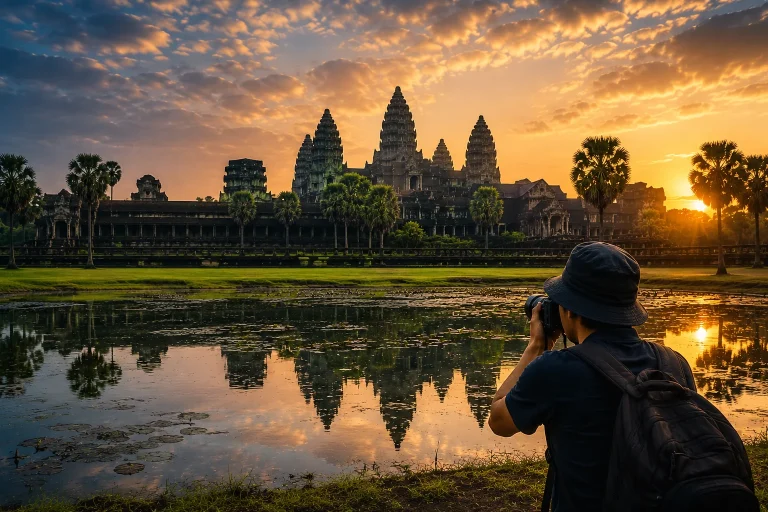
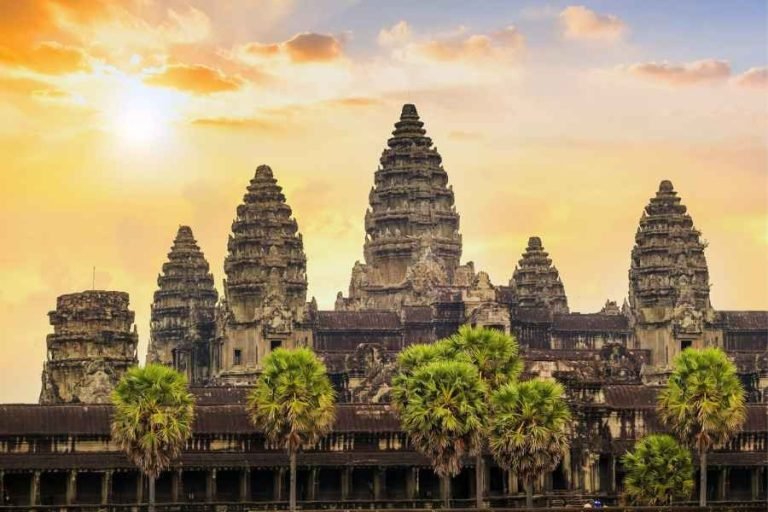
Phnom Penh doesn’t offer the immediate, postcard clarity of Angkor’s temples, and it isn’t trying to. It’s a city still in the process of becoming — carrying its history openly rather than smoothing it over, while a new generation builds galleries, restaurants, and design studios in the spaces between. Spend a couple of unhurried days here, and the city stops feeling like a layover and starts feeling like the place where Cambodia’s next chapter is actually being written.