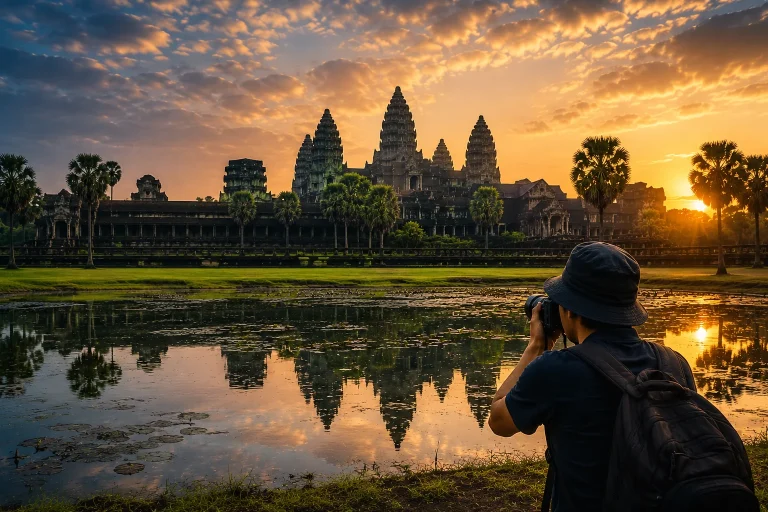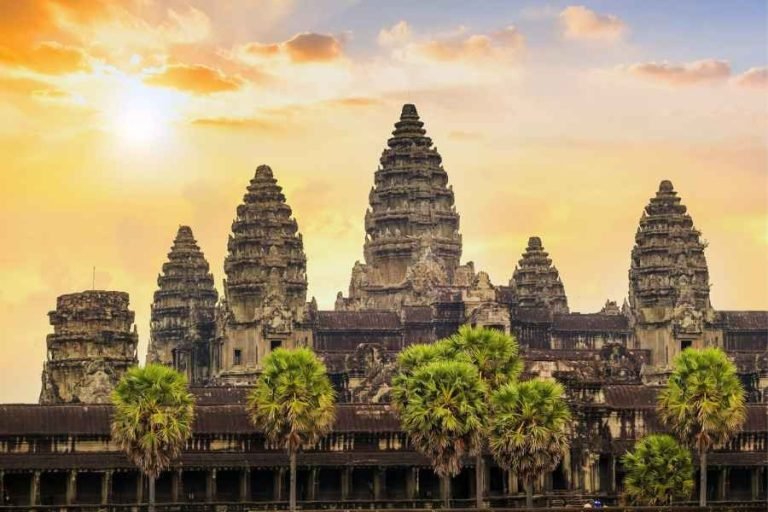
There’s a moment every visitor to Siem Reap remembers — standing before the five lotus-bud towers of Angkor Wat as the sky turns from black to violet to gold. It’s the reason most people book a ticket here. But stay a few days longer, and you’ll find that Siem Reap is far more than a doorway to ancient ruins. It’s a city that has quietly become one of Southeast Asia’s most compelling — a place where thousand-year-old sandstone sits beside contemporary Khmer art galleries, and where a bowl of amok curry can taste as memorable as anything carved into a temple wall.
The Temples: More Than Just Angkor Wat
Angkor Wat deserves its fame — it’s the largest religious monument on Earth, and its bas-reliefs alone could occupy a full day of unhurried looking. But the Angkor Archaeological Park spans over 400 square kilometers and holds hundreds of temples, each with its own character.
- Angkor Wat — Go at sunrise, yes, but also consider a late-afternoon visit when the crowds thin and the light turns the stone amber.
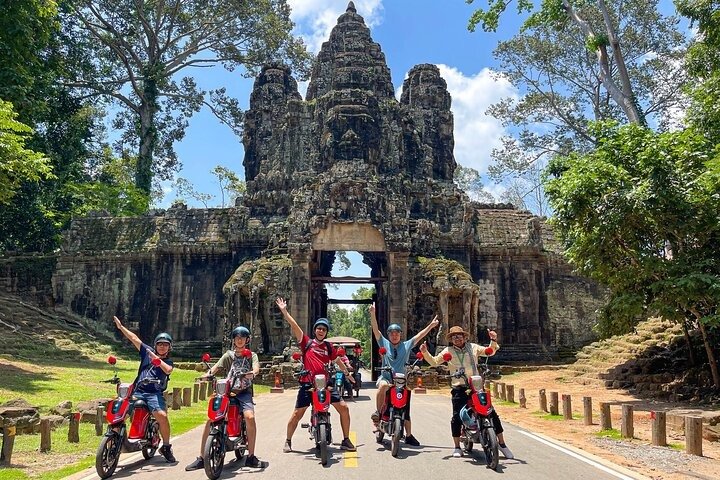
- Bayon — The temple of the 216 enigmatic stone faces, each wearing a faint, knowing smile. Wandering its narrow corridors feels like being watched by an entire dynasty.
- Ta Prohm — The “Tomb Raider temple,” where silk-cotton and strangler fig trees have grown through the stonework over centuries, roots cascading over doorways like something out of a fever dream.
- Banteay Srei — A 25-kilometer detour from the main circuit, but worth it for its pink sandstone carvings, so intricate they look almost embroidered rather than chiseled.
- Beng Mealea — For travelers who want the “lost temple” experience without the restoration work — half-collapsed, jungle-swallowed, and largely free of crowds.
A three-day Angkor Pass is the sweet spot for most travelers: enough time to see the highlights without templex fatigue setting in.
Beyond the Ruins: A City Finding Its Own Voice
Siem Reap town itself has grown into something worth exploring on its own terms.
Phsar Chas (Old Market) is the sensory heart of the city — stalls of dried fish, silver jewelry, hand-woven scarves, and the fragrant chaos of a Cambodian wet market. Nearby, Pub Street is unapologetically touristy, but a walk through it after dark, past $2 draft beer stands and fish-spa tanks, is part of the Siem Reap rite of passage.
For a different pace, head to the Kandal Village and Hap Guan Street areas, where a wave of Cambodian designers and social enterprises have opened boutiques selling handmade leather goods, natural textiles, and contemporary homeware — many run by organizations that train and employ vulnerable youth and survivors of trafficking.
Where to Eat in Siem Reap
Cambodian food lives in the shadow of its neighbors — Thai and Vietnamese cuisine get more international airtime — but it deserves its own spotlight.
Dishes to look for:
- Fish amok — a steamed curry-custard, usually made with snakehead fish, coconut milk, and kroeung (Khmer spice paste), served in a banana leaf bowl.
- Khmer red curry — milder and earthier than its Thai cousin, often with beef, eggplant, and lemongrass.
- Nom banh chok — rice noodles with a fermented fish-based green curry, traditionally a breakfast dish.
- Lok lak — stir-fried marinated beef over lettuce and tomato, with a lime-pepper dipping sauce that Cambodians will tell you no restaurant gets quite right except their grandmother.
Fine dining: Cuisine Wat Damnak runs a tasting menu built entirely around seasonal Cambodian ingredients and has earned a reputation as one of the best restaurants in the country — book ahead, it’s a small room. Embassy Restaurant is its close rival, with a similarly ingredient-driven approach to modern Khmer cooking.
Mid-range and social-enterprise spots: Haven and Marum train at-risk and disadvantaged youth in hospitality — the food is excellent on its own merits, and every meal supports the program directly. Sugar Palm is a long-standing favorite for approachable, well-executed Khmer classics in a relaxed setting.
Street food and markets: The night market stalls around Phsar Chas (Old Market) are the place for a plate of noodles or grilled skewers under $2. For breakfast, look for a bowl of nom banh chok from a market vendor — it’s rarely on restaurant menus but everywhere on the street before 10am.
Coffee and cafes: Siem Reap’s cafe scene has grown fast — Little Red Fox Espresso and The Little Red Fox Coffee Shop are reliable stops for a proper flat white and workspace, while Jomno Coffee roasts its own Cambodian-grown beans.
Where to Stay in Siem Reap
Siem Reap’s accommodation scene ranges from backpacker dorms to some of the finest boutique hotels in Southeast Asia, and most areas are a short tuk-tuk ride from both the temples and the town center.
Luxury: Amansara, built into King Sihanouk’s former guesthouse, is understated and exclusive, with a pool villa design that draws on 1960s Khmer architecture. Shinta Mani Angkor and its “Bensley Collection” pool suites are known for design-forward rooms and a foundation that funds local community projects. Raffles Grand Hotel d’Angkor is the colonial-era classic — a slower, more formal kind of luxury, popular for its afternoon tea and history.
Boutique and mid-range: Templation Hotel and Viroth’s Hotel both offer stylish, well-reviewed rooms at a fraction of five-star prices, usually with a small pool and an easy walk into town. Maison Polanka is a quieter option tucked away from the main tourist strip, good for travelers who want a calmer base.
Budget: Onederz Hostel and Mad Monkey Siem Reap are the social hubs of the backpacker scene, both with pools and organized activities. For a quieter budget stay, look at smaller family-run guesthouses around the Wat Bo area, which tend to be cheaper and closer to local restaurants than the central tourist zone.
Where to base yourself: Staying near Wat Bo Road or Kandal Village puts you within easy walking distance of good restaurants and a short tuk-tuk ride from both Pub Street and the temples — a better balance than the noisier central strip.
What to Do in Siem Reap
Beyond the temple circuit, Siem Reap has enough to fill several more days.
- Tonlé Sap Lake and floating villages — Southeast Asia’s largest freshwater lake is home to entire floating communities. Kompong Phluk and Kompong Khleang are the two most-visited villages; Kompong Khleang tends to feel less staged and more like an actual working community.
- Cooking classes — Several schools around town teach fish amok, lok lak, and other Khmer staples, usually starting with a guided walk through a local market to pick ingredients.
- Angkor National Museum — A well-curated introduction to Khmer history and religious iconography, useful to visit before the temples if you want context for what you’re seeing.
- Phare, The Cambodian Circus — Part performance, part social mission, telling stories of Cambodian history and folklore through acrobatics, live music, and theater. One of the most moving evenings you can spend in the city.
- Hot air balloon ride — A tethered balloon near Angkor Wat rises a few hundred meters for a wide view over the temple and surrounding jungle canopy — worth it for photographers.
- Quad biking or countryside cycling — Rides through nearby rice paddies and villages, usually timed for sunset, give a look at rural Cambodian life away from the temple crowds.
- Spa and wellness — After a day of temple-hopping, a traditional Khmer massage or a fish spa along Pub Street is practically a local tradition in itself.
- Kulen Mountain — A day trip (about 90 minutes from town) to a waterfall, a river carved with ancient Hindu carvings, and the site many historians consider the birthplace of the Khmer Empire.
When to Go to Siem Reap
- November to February — Cool(er), dry season. Peak crowds, peak comfort.
- March to May — Hot season, temperatures can climb past 38°C (100°F). Fewer tourists, longer shadows for photos, but bring serious sun protection.
- June to October — Wet season. Rains tend to arrive in short, dramatic bursts rather than all-day downpours. The moats fill, the rice paddies turn brilliant green, and Ta Prohm’s jungle canopy looks its most cinematic.
Practical Notes for the Trip
- Getting there: Siem Reap International Airport connects to major regional hubs like Bangkok, Singapore, Hanoi, and Kuala Lumpur.
- Getting around: Tuk-tuks are the classic way to reach the temples — negotiate a day rate with a driver (many hotels can arrange a trusted one). Bicycles are a lovely, quieter option for the closer temples.
- Angkor Pass: Available as 1-day, 3-day, or 7-day passes, purchased at the official ticket center (bring your passport, and a photo is taken on-site).
- Dress code: Shoulders and knees covered when entering temple interiors, especially Angkor Wat’s central sanctuary.
- Currency: US dollars are used interchangeably with Cambodian riel — riel mostly appears as small change.
A Final Thought
Siem Reap asks for patience. The heat is real, the tuk-tuk rides are long, and the crowds at sunrise can test anyone’s Zen. But give it three or four unhurried days, and something shifts — you stop just photographing the temples and start feeling the weight of what they represent: a civilization that built cities of stone to reach toward the divine, and a modern Cambodia rebuilding itself with quiet, determined grace. That combination — ancient wonder and living resilience — is what makes Siem Reap unforgettable long after you’ve left.