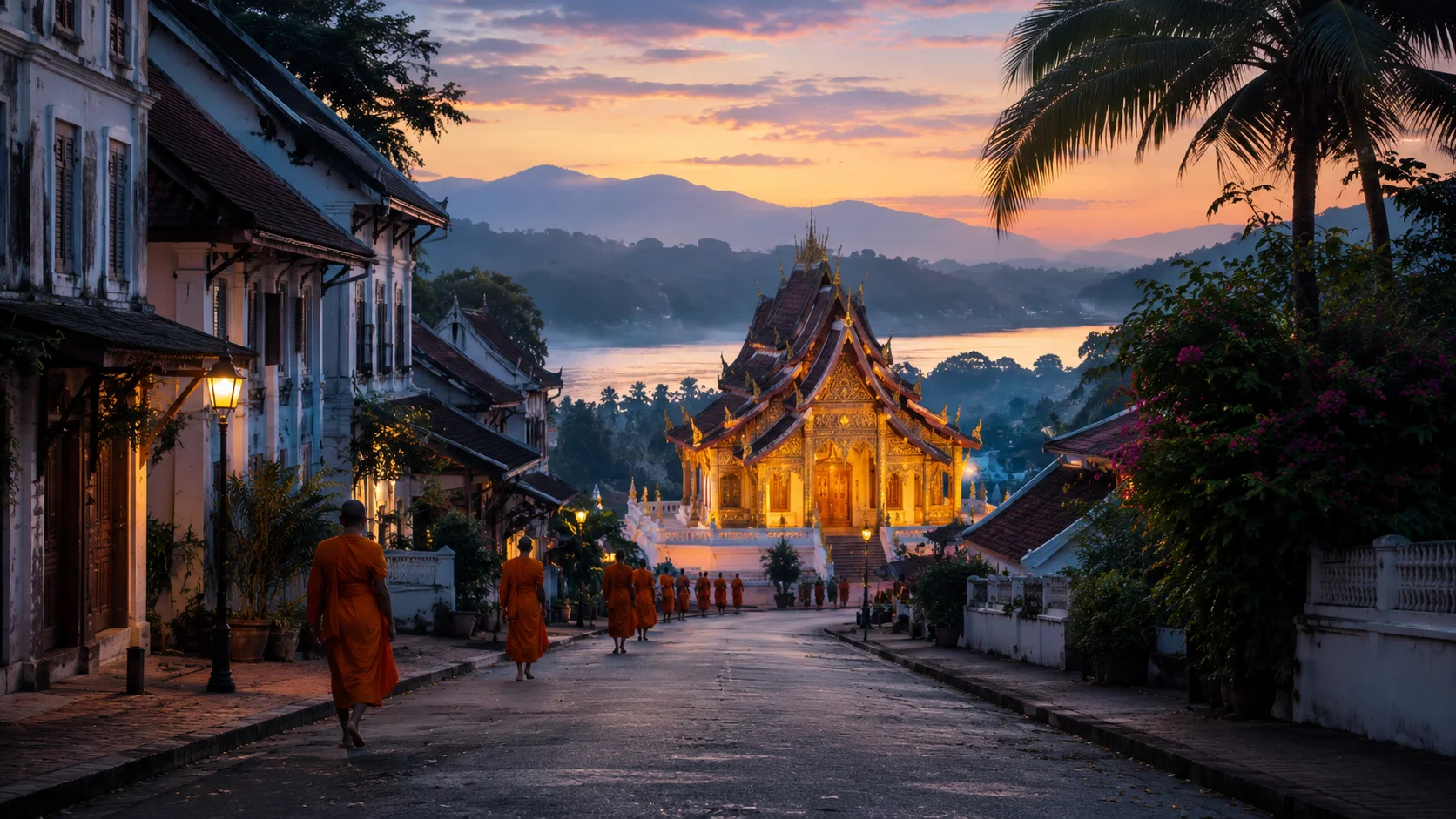
There’s a particular calm to Vientiane at sunset, when the Mekong runs low against its sandbanks and a strip of riverside food stalls sets up along the promenade, grilling skewers of sticky rice and fish while groups of Lao families spread mats out for an evening picnic across the river from Thailand’s lit-up shoreline. There’s no rush to it — no honking traffic jam, no crush of vendors pulling at sleeves. Vientiane is often called the world’s most laid-back capital, and after a few hours it’s easy to see why: wide, tree-lined boulevards, gilded stupas that go largely unphotographed, and a French colonial quarter that feels lived-in rather than curated for visitors. Most travelers pass through for a single night en route to Luang Prabang or Vang Vieng, but Vientiane rewards a slower pace precisely because it doesn’t demand one.
Temples and Vientiane’s Landmark Sites
Vientiane’s core sights are spread across a walkable, low-rise city center, blending Buddhist religious architecture with French colonial-era planning.
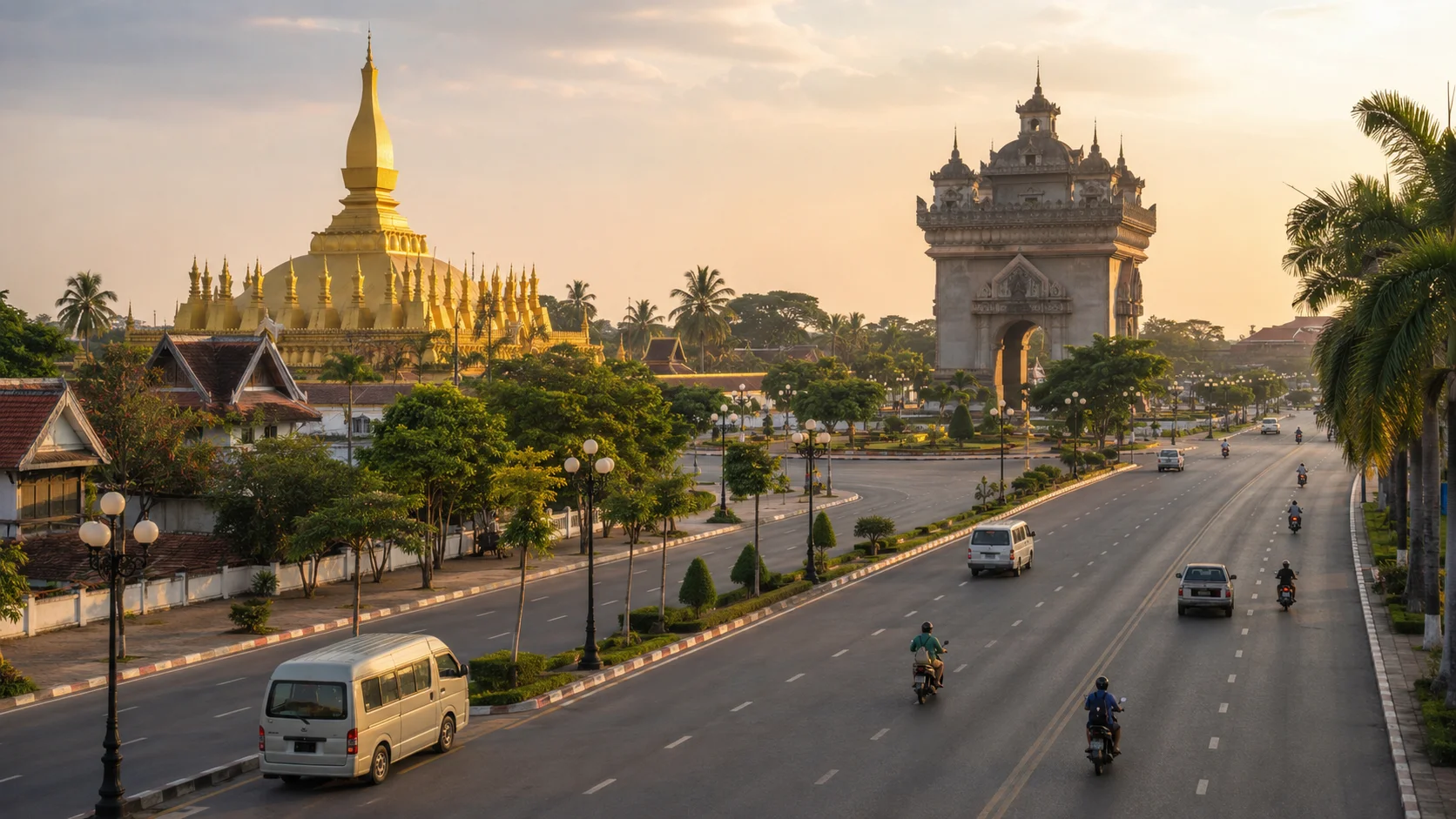
- Pha That Luang — Laos‘s national symbol, a large gold-covered stupa believed to enshrine a relic of the Buddha, rebuilt several times after invasions and colonial-era damage, most recently in the mid-20th century.
- Wat Sisaket — Vientiane’s oldest surviving temple, notable for a cloistered courtyard wall lined with thousands of small Buddha statues in niches, largely untouched by the Siamese invasion that destroyed much of the rest of the city in 1828.
- Patuxai — A concrete triumphal arch modeled loosely on the Arc de Triomphe, built with cement partly donated by the United States for a runway that was never completed, with a viewing platform at the top over the city.
- Wat Ho Phra Keo — Once home to the Emerald Buddha before it was taken to Bangkok, now a museum of Lao Buddhist art and religious artifacts housed in a former royal temple.
- COPE Visitor Centre — Not a temple, but an essential stop covering the ongoing impact of unexploded ordnance from the Vietnam War-era bombing of Laos, and the prosthetics and rehabilitation work being done in response.
A single day covers Vientiane’s core sights comfortably given how compact the center is, though pairing it with an overnight stay allows time for the COPE Centre and a proper riverside evening without rushing.
Beyond the Temples: A City Finding Its Own Voice
The Chao Anouvong Park riverside promenade and its evening food market have become the city’s default gathering spot, where the pace of the whole city seems to slow further as the heat breaks and vendors set up along the Mekong.
For the city’s newer identity, the streets around Setthathirath Road and the French Quarter have developed a small but growing concentration of specialty coffee shops, boutique galleries, and restored colonial shophouses now serving as independent boutiques, a quieter counterpart to the markets further from the river.
For a cultural experience with more weight, COPE Visitor Centre, mentioned above, doubles as a genuine cultural touchpoint — its exhibits on Laos’s status as the most heavily bombed country per capita in history offer a sober but necessary counterpoint to the city’s relaxed surface.
Where to Eat in Vientiane
Vientiane shares much of its food culture with Luang Prabang and the wider Lao interior, though the capital’s larger size and French colonial legacy give it a slightly wider range of dining options.
Dishes to look for:
- Laap (larb) — a minced meat or fish salad tossed with toasted rice powder, herbs, lime, and chili, widely considered close to Laos’s national dish.
- Tam mak hoong (Lao papaya salad) — a spicier, more fermented-fish-forward cousin of Thai som tam, typically pounded to order in a large mortar.
- Khao piak sen — a thick rice noodle soup in a light broth with chicken or pork, a common breakfast dish across Vientiane.
- Sai oua — a herb-packed grilled Lao sausage, seasoned with lemongrass, galangal, and kaffir lime leaf, sold widely at the evening riverside market.
Fine dining: Kualao Restaurant occupies a colonial-era villa and serves an elevated menu of traditional Lao dishes alongside occasional traditional dance performances. Doi Ka Noi is a small, well-regarded spot known for its refined take on Lao home cooking.
Mid-range and social-enterprise spots: Makphet, run by the same organization behind Friends restaurants elsewhere in the region, trains at-risk youth in hospitality while serving a modern Lao menu. Common Grounds supports a coffee cooperative and offers a relaxed setting for a full meal.
Street food and markets: The evening food stalls along the Mekong riverside promenade near Chao Anouvong Park are the most atmospheric spot for grilled skewers, sai oua, and tam mak hoong. Talat Sao (Morning Market) offers a more local, workaday look at Lao produce and ready-to-eat food away from the tourist strip.
Coffee and cafes: Saffron Coffee, sourcing from small-scale Lao growers, has a Vientiane branch alongside its Luang Prabang original. Toh Ounta Coffee near the riverside is a solid, relaxed option for a proper coffee break between sightseeing stops.
Where to Stay in Vientiane
Luxury: Salana Boutique Hotel and the Settha Palace Hotel, the latter a restored French colonial-era property, offer the city’s most polished stays, with Settha Palace in particular known for its old-world atmosphere and pool courtyard.
Boutique and mid-range: Ansara Hotel, set in a converted colonial-era compound, and Vayakorn Inn both offer comfortable, well-located mid-range rooms within walking distance of the temples and riverside.
Budget: Numerous guesthouses cluster around Setthathirath Road and the streets near Talat Sao, offering simple rooms at low prices within easy walking distance of the city’s main sights.
Where to base yourself: Staying near the riverside or within the French Quarter puts you within walking distance of nearly all the main sights and the evening food market, which matters more here than in most Southeast Asian capitals given how compact and walkable central Vientiane actually is.
What to Do Beyond the Temples
- Buddha Park (Xieng Khuan) day trip — A sculpture park about 25 kilometers outside the city, filled with concrete Buddhist and Hindu statues built by a self-taught monk in the late 1950s.
- COPE Visitor Centre — An educational stop on Laos’s unexploded ordnance legacy and the ongoing rehabilitation work supporting affected communities, one of the more meaningful cultural experiences in the city.
- Lao cooking class — Several schools around the city teach laap, tam mak hoong, and other regional staples, often paired with a market visit.
- Vang Vieng day or overnight trip — A few hours north of Vientiane by road, known for karst limestone scenery, tubing on the Nam Song River, and cave exploration.
- Wat Sok Pa Luang meditation sessions — A forest temple on the city’s outskirts offering periodic meditation instruction for visitors, a quieter cultural experience than the more visited temples downtown.
- Cycling the Mekong riverside path — A flat, low-traffic route running along the river, a good way to see the city’s pace up close.
- Lao textile shopping at Talat Sao — The morning market’s upper floor holds a concentrated selection of traditional Lao weaving and silk, useful for comparing quality and pricing before buying elsewhere in the country.
- Nam Ngum Reservoir day trip — A large man-made lake north of the city offering boat trips and a quieter, more rural contrast to the capital.
When to Go: Vientiane Travel Guide Seasons
- November to February — The cool, dry season and generally the most comfortable time to visit, with mild temperatures well suited to walking between sights.
- March to May — Hot season, with temperatures climbing significantly and periodic regional haze from agricultural burning, worth checking conditions before booking.
- June to October — The wet season, with the Mekong running high and short, heavy afternoon downpours common, though rarely severe enough to derail a full day of sightseeing in the compact city center.
Practical Notes for the Trip
- Getting there: Wattay International Airport connects Vientiane to Bangkok, Hanoi, Siem Reap, and a handful of other regional hubs; overland travel from northern Thailand via the Friendship Bridge is also common.
- Getting around: The city center is walkable for its core sights; tuk-tuks and ride-hailing apps cover longer distances, and bicycle rental is a pleasant option for the flat riverside routes.
- Visas: Most nationalities can obtain a Lao visa on arrival at the airport or land border, or apply for an e-visa in advance; requirements change periodically, so check current rules before booking.
- Dress code and etiquette: Modest dress is expected at temples, including covered shoulders and knees; a calm, unhurried pace fits the city’s overall tone better than a rushed sightseeing schedule.
- Currency: Lao kip is standard for local purchases; Thai baht and US dollars are also widely accepted for hotels, tours, and larger transactions.
A Final Thought
Vientiane doesn’t compete for attention the way Luang Prabang’s temples or Vang Vieng’s karsts do, and that’s largely the point. It’s a capital that has kept its scale small and its pace unhurried, even as the rest of the region races to build bigger and faster. Spend a day longer here than your itinerary suggests, and the city’s real appeal comes through — not in a single landmark, but in an evening spent doing exactly what its own residents do: sitting by the river, waiting for the heat to break, in no particular hurry to be anywhere else.