
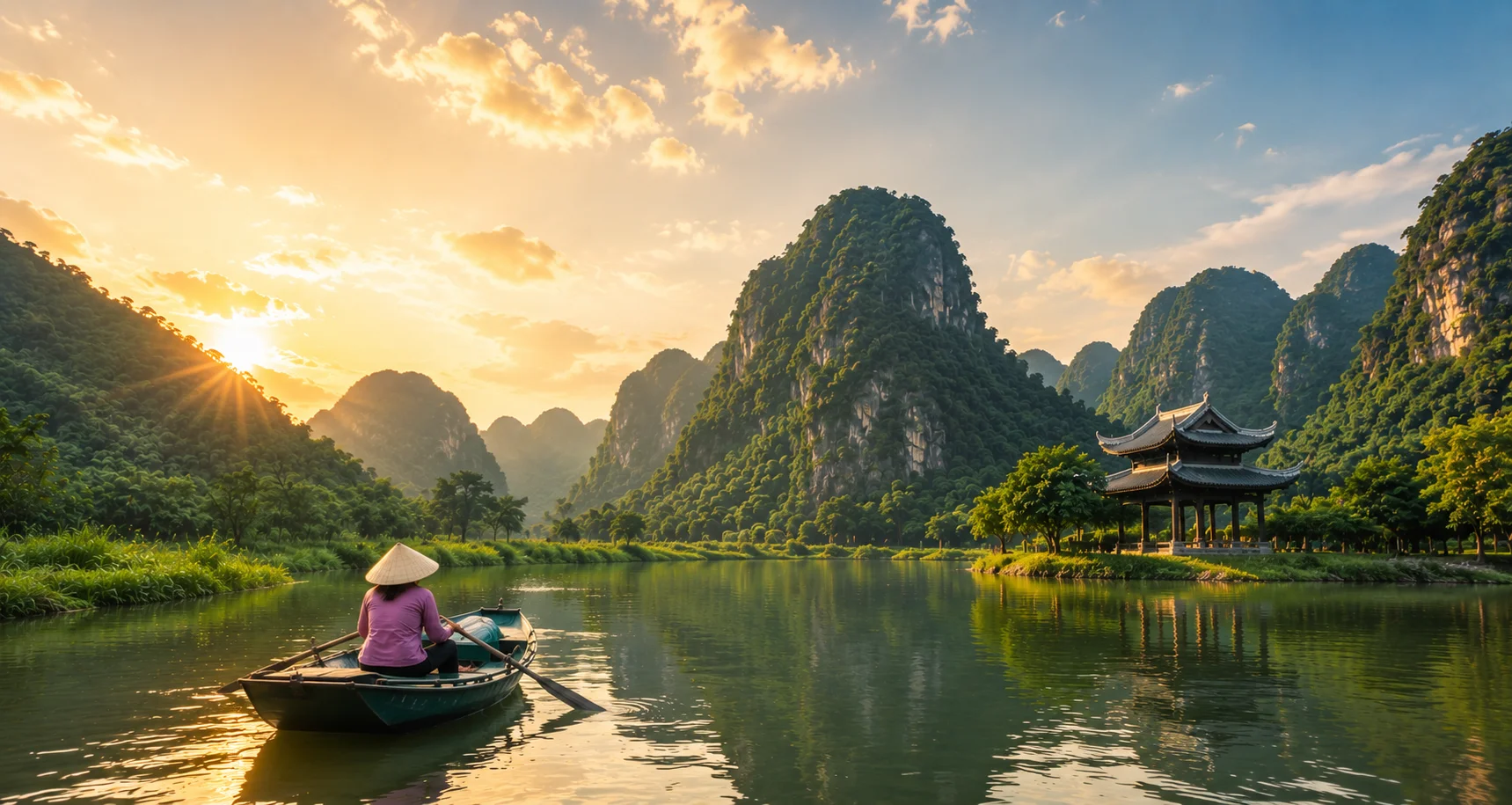
Best Time to Visit Vietnam: A Season-by-Season Guide for First-Time Travelers

Vietnam stretches over 1,600 kilometers from north to south, which means one simple truth catches almost every first-time visitor off guard: there’s no single “best season” for the whole country. While Hanoi might be wrapped in a chilly winter mist, Ho Chi Minh City could be basking in dry, sunny heat — and Da Nang, right in the middle, might be dealing with its own weather pattern entirely.

If you’re planning your first trip to Vietnam, understanding these regional differences is the key to packing right, avoiding downpours, and catching the country at its most beautiful. Here’s your month-by-month, region-by-region breakdown.

Why Vietnam Doesn’t Have Just One “Season”

Vietnam is divided into three main climate zones:

  • The North (Hanoi, Ha Long Bay, Sapa) has four distinct seasons, similar to what you’d expect in parts of East Asia — a genuinely cold winter, a hot and humid summer, and short, pleasant spring and autumn shoulder seasons.
  • Central Vietnam (Hue, Da Nang, Hoi An) runs on a different rhythm, with a hot, dry season for most of the year and a concentrated rainy season that can bring heavy downpours and occasional typhoons.
  • The South (Ho Chi Minh City, the Mekong Delta, Phu Quoc) has a simpler tropical pattern: just two seasons, dry and wet, with warm temperatures year-round.

Because of this, the “best” time to visit really depends on which part of Vietnam is on your itinerary — and for a first trip covering multiple regions, it often comes down to picking the best compromise.

The Best Overall Window: November to April

For travelers hoping to visit both the north and south in one trip (a very common first-timer route), November through April is generally considered the sweet spot. During these months:

  • The North enjoys cool, dry weather, especially from November to January, making it ideal for sightseeing in Hanoi and cruising Ha Long Bay without the summer humidity.
  • Central Vietnam dries out after its rainy season, so Hoi An’s lantern-lit streets and Da Nang’s beaches are far more pleasant.
  • The South is in its dry season, meaning sunny days across Ho Chi Minh City, the Mekong Delta, and island getaways like Phu Quoc.

This window also lines up with Tet (Vietnamese Lunar New Year), typically falling in late January or February — a fascinating time to visit, though it’s worth noting many local businesses close for several days around the holiday itself.

Season-by-Season Breakdown

North Vietnam (Hanoi, Ha Long Bay, Sapa)

  • Spring (Feb–Apr): Mild temperatures and blooming flowers, especially in Sapa’s terraced valleys. A lovely, comfortable time to explore.
  • Summer (May–Aug): Hot, humid, and the peak of the rainy season. Ha Long Bay is still cruise-worthy, but expect sudden showers.
  • Autumn (Sep–Nov): Widely regarded as the most beautiful season — clear skies, comfortable temperatures, and golden rice terraces in Sapa.
  • Winter (Dec–Jan): Cold and often gray, with temperatures dropping enough that a jacket is essential, especially in the evenings.

Central Vietnam (Hue, Da Nang, Hoi An)

  • Dry season (Feb–Aug): Hot and sunny, peaking in June and July. Great for beach time in Da Nang.
  • Wet season (Sep–Jan): Heavier rainfall, with October and November carrying the highest risk of storms. Hoi An’s Old Town can experience street flooding during peak rains, which — while atmospheric for photos — can also disrupt plans.

South Vietnam (Ho Chi Minh City, Mekong Delta, Phu Quoc)

  • Dry season (Dec–Apr): Warm, sunny, and humidity-friendly — the most popular stretch for visitors.
  • Wet season (May–Nov): Expect short, intense afternoon downpours rather than all-day rain, followed by clear skies. Many travelers find this season still very workable, just with an umbrella on hand.

Special Considerations for First-Timers

Traveling during Tet (Lunar New Year): This is one of Vietnam’s most culturally rich times to visit, but it also means major transportation and hotel demand spikes, and many family-run restaurants and shops close for several days. If your trip overlaps with Tet, book accommodations and transport well in advance.

Chasing Sapa’s rice terraces: If terraced rice fields are on your must-see list, timing matters a lot. The fields are lush and green from May to June (planting season) and turn a striking gold from September to early October (harvest season).

Avoiding typhoon season in the Center: If your itinerary includes Hoi An or Da Nang, try to steer clear of October and November, when the risk of tropical storms is highest along the central coast.

Quick Reference: Best Months by Region

RegionBest MonthsWhy
North (Hanoi, Ha Long Bay, Sapa)Sept–Nov, Mar–AprCool, dry, clear skies
Central (Hue, Da Nang, Hoi An)Feb–AugHot, sunny, low rain risk
South (Ho Chi Minh City, Mekong Delta, Phu Quoc)Dec–AprDry season, warm and sunny
Whole-country tripNov–AprBest overall balance across regions

Final Tip

No matter when you go, Vietnam’s weather can shift quickly, especially in the mountains and along the coast. Pack layers, bring a compact rain jacket regardless of season, and check regional forecasts a few days before each leg of your trip rather than relying on general seasonal averages alone.

With the right timing, you’ll get to experience Vietnam at its best — whether that’s misty mornings over Ha Long Bay, golden rice terraces in Sapa, or sun-soaked afternoons on Phu Quoc’s beaches.
Cambodia Temple Landscape Photography: Where to Go and When to Shoot

Angkor isn’t one temple — it’s an archaeological park roughly the size of a small city, and different corners of it photograph completely differently depending on the hour, the season, and how far you’re willing to walk from the parking lot. This guide covers where the light is actually worth chasing, and the practical details that make the difference between a decent photo and one worth printing.

Why Angkor Rewards Photographers Specifically

Most travel destinations have one or two iconic angles. Angkor has dozens, spread across temples built over several centuries in noticeably different styles — the geometric grandeur of Angkor Wat itself, the enormous carved faces of the Bayon, the tree roots swallowing Ta Prohm’s stone walls, and the pink sandstone carvings at Banteay Srei. A single sunrise-to-sunset day can move through more visual variety here than most countries offer in a week.

The Essential Shots

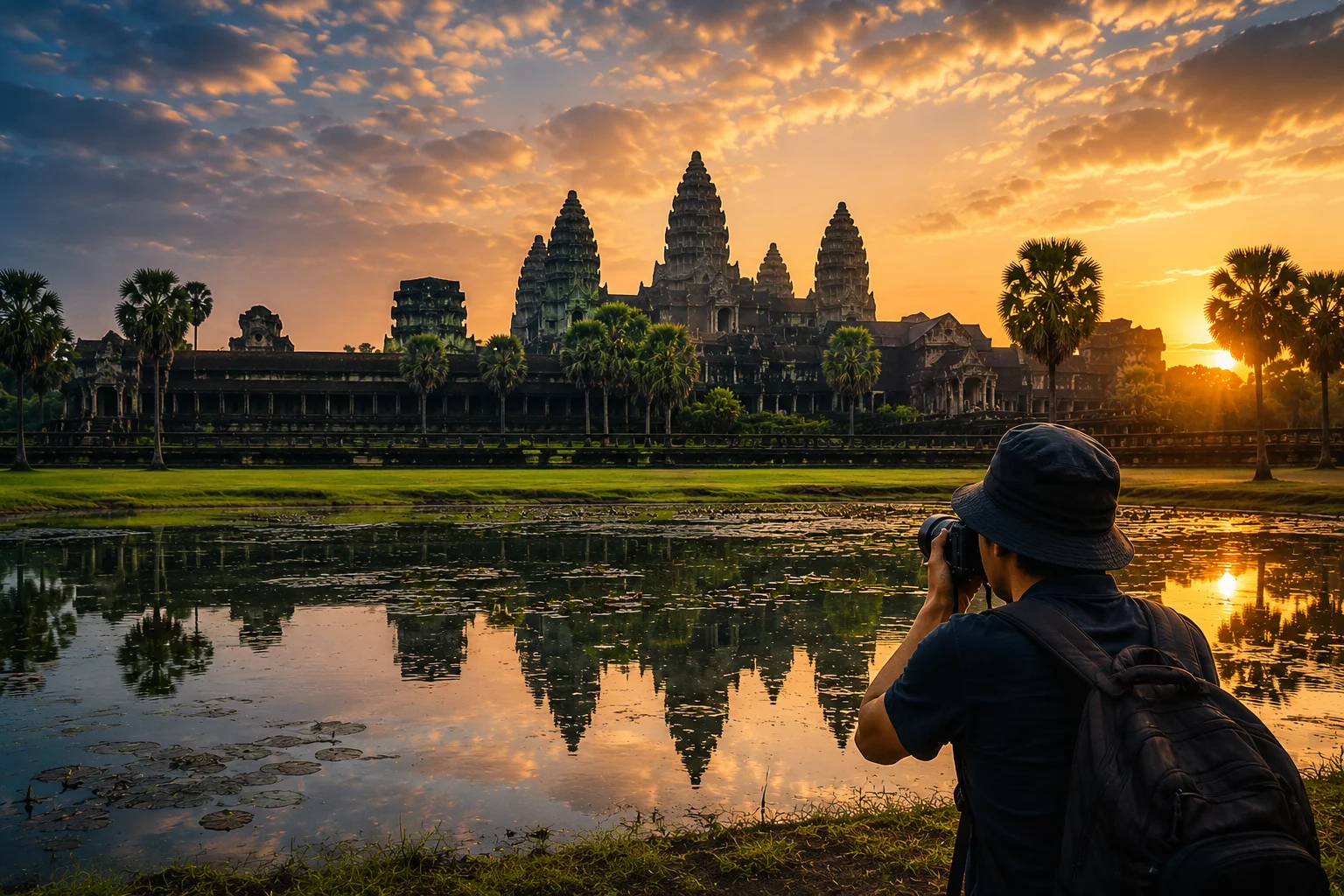
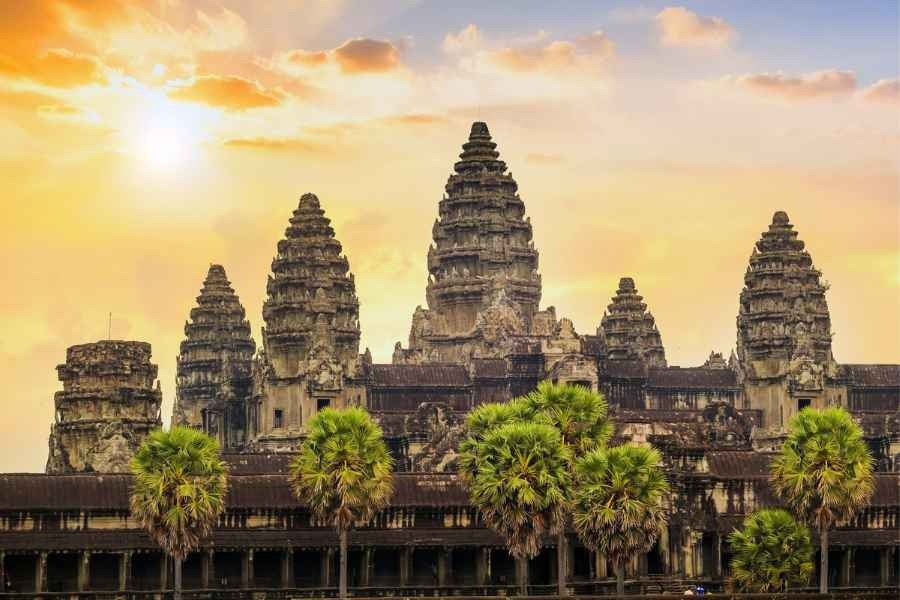
Angkor Wat at sunrise, from the reflecting pools — The classic shot, and it’s classic for a reason: the five towers silhouetted against a rising sun, mirrored in the water in front of the western entrance. Arrive at least 45 minutes before sunrise to claim a spot at the pool on the left side, which tends to be less crowded than the main causeway pond.

The Bayon’s carved faces, mid-morning — The Bayon’s 200-plus serene stone faces photograph best when side-lighting rakes across the carvings, which usually means mid-morning rather than midday. Look for the narrow galleries where a single face frames against the sky.

Ta Prohm’s tree roots, filtered light — Ta Prohm is intentionally left half-reclaimed by jungle, with silk-cotton tree roots wrapped through the stonework. Overcast conditions or dappled shade actually help here more than harsh sun, softening the contrast between root and stone.

Banteay Srei’s pink sandstone carvings, late afternoon — Smaller and further out than the main complex, Banteay Srei is known for the finest, most intricate carving of any Angkor-era temple. Late afternoon light warms the sandstone’s natural pink tone and brings out the depth of the relief work.

Preah Khan’s quiet corridors, any overcast day — Less visited than Angkor Wat or Ta Prohm, Preah Khan’s long, empty colonnades photograph well precisely because they’re usually empty of other visitors.

Timing: Light Matters More Than the Calendar

  • Sunrise (5:00–6:30am): Best for Angkor Wat’s silhouette shot and for beating the crowds at every major temple.
  • Mid-morning (7:00–10:00am): Good side-lighting for carved detail work at the Bayon and similar temples, before the midday sun flattens everything.
  • Midday (11:00am–2:00pm): Generally the toughest window — harsh, flat light and the peak heat of the day. Worth using for temple interiors and shaded corridors instead.
  • Late afternoon (3:30–5:30pm): Warm, angled light suits sandstone carvings and wide temple facades, particularly at Banteay Srei and Angkor Wat’s eastern side.

Season matters too: the November–February dry season gives the clearest skies and best visibility for sunrise shots, while the wet season (June–October) brings dramatic cloud formations and a genuinely green landscape, at the cost of predictability.

Practical Notes for Photographers

  • Tripods are generally fine for personal photography but may require a permit for commercial shoots — check current rules with your guide before assuming.
  • Drones are heavily restricted around Angkor and typically require advance permits arranged through the Apsara Authority; don’t assume you can fly on arrival.
  • Modest dress is required at active temple sites, which affects how you move and shoot — plan clothing that covers shoulders and knees rather than fighting it on location.
  • Crowds build fast after sunrise at Angkor Wat specifically; if the reflecting-pool shot is your priority, everything else can wait until later in the day.
  • A wide lens and a longer lens both earn their place — wide for full temple facades and reflections, longer for isolating carved details and compressing the Bayon’s stacked faces.

A Suggested One-Day Photography Route

  1. Pre-dawn: Angkor Wat reflecting pools for sunrise.
  2. Mid-morning: The Bayon, for face carvings in raking light.
  3. Midday: Ta Prohm’s shaded, root-wrapped corridors, where the softer light works in your favor.
  4. Late afternoon: Banteay Srei, timed for warm light on the pink sandstone (note: it’s roughly 40 minutes outside the main complex, so budget travel time).

This is a full day, and a demanding one — most people don’t attempt to shoot all four locations properly in a single visit. Spreading it across two days gives each location the time it actually rewards.

Cambodia Travel Guide: Everything to Know Before You Go

Cambodia is often visited for one reason — Angkor Wat — and left with several more. Beyond the temples, it’s floating villages on the Tonlé Sap, a countryside bamboo train outside Battambang, a capital still finding its footing after a difficult modern history, and a pace of life that’s noticeably slower than its neighbors. This guide covers what to actually plan for: when to go, where to spend your time, how much it costs, and the practical details that don’t show up in a highlight reel.

At a Glance

  • Best time to visit: November to February (cool, dry season)
  • Typical trip length: 4–7 days for Cambodia alone; longer if combined with Laos or Vietnam
  • Currency: US Dollar (widely used); Cambodian Riel for small change
  • Language: Khmer; English is common in Siem Reap, Phnom Penh, and tourist areas
  • Visa: E-visa available online, or visa-on-arrival at major airports and land borders
  • Getting around: Private drivers between cities, tuk-tuks for short local trips

When to Go

Cambodia has three broad seasons, and they matter more than people expect:

  • November–February (cool, dry): The most comfortable window — lower humidity, little rain, and pleasant temperatures for full days at Angkor. This is also peak tourist season, so expect more visitors at major sites.
  • March–May (hot, dry): Temperatures climb sharply, often into the high 30s°C (upper 90s°F). Still dry, but midday temple-hopping gets uncomfortable fast.
  • June–October (wet): Rain arrives most days, usually in short, heavy bursts rather than all-day downpours. The countryside turns green and the Tonlé Sap swells, which is actually a good time to see the floating villages at their most dramatic — just plan around the rain.

If your dates are flexible, aim for November through February. If they’re not, each season has a version of Cambodia worth seeing — it just changes what you should prioritize.

Where to Go

Cambodia is compact enough to cover its highlights without feeling rushed.

Siem Reap & Angkor — The reason most people book the trip. Angkor Wat itself is one temple among hundreds in the wider archaeological park; the Bayon’s carved stone faces and Ta Prohm’s tree-swallowed ruins are just as worth the time. Siem Reap town has grown into a genuinely good small city around it, with a strong food and nightlife scene of its own.

Phnom Penh — The capital, and a different kind of visit. The riverside promenade and Royal Palace are the obvious stops, but the Tuol Sleng Genocide Museum and Choeung Ek (the Killing Fields) are the ones that stay with people — sobering, but an important part of understanding the country. Phnom Penh also has Cambodia’s best food scene.

Koh Rong & Koh Rong Samloem — Island time, usually saved for the end of a trip. Quiet beaches, warm water, and little to plan once you’re there — a deliberate contrast after several temple-heavy days.

Battambang — The slower, less-visited alternative to the main circuit. French colonial architecture, countryside scenery, and the bamboo train (a plank-on-wheels contraption that’s more fun than it sounds) draw travelers who want fewer crowds.

Kampot & Kep — Riverside pepper farms and a famous crab market, at a pace that’s slow even by Cambodian standards. A good closing stop before flying out or crossing into Vietnam.

A Sample 7-Day Route

  • Days 1–3: Siem Reap & Angkor — Sunrise at Angkor Wat, the Bayon, and Ta Prohm, spread across three unhurried days rather than rushed into one.
  • Day 4: Battambang — A scenic drive through the countryside, the bamboo train, and an evening in the old French quarter.
  • Days 5–6: Phnom Penh — The Royal Palace, the riverside, and a proper introduction to Khmer food away from tourist menus.
  • Day 7: Kampot, or onward — Extend south to Kampot for a slow finish, or connect into Vietnam or Laos if your trip continues.

This is a starting point rather than a fixed package — the order and pace should flex around your dates and how much downtime you actually want.

Getting Around

Cambodia doesn’t really have a self-drive culture for visitors, and most travelers don’t need one:

  • Between cities: Private drivers or shared minivans cover the main routes (Siem Reap–Phnom Penh–Battambang) comfortably in a few hours each.
  • Domestic flights: Worth considering if you’re short on time — Siem Reap to Phnom Penh is under an hour by air versus 5–6 hours by road.
  • Within cities: Tuk-tuks are the standard short-hop option and are inexpensive; agree on a price before getting in, or book through your hotel or guide to avoid haggling.

Food

Khmer food doesn’t get the international attention Thai or Vietnamese food does, which is part of the appeal — it hasn’t been simplified for anyone. A few things worth seeking out:

  • Amok — A mild, coconut-based curry, usually with fish, steamed in a banana leaf.
  • Kuy teav — A breakfast noodle soup, often with pork and offal, sold from small stalls in the early morning.
  • Bai sach chrouk — Grilled pork over rice, another classic breakfast dish.
  • Kampot pepper crab — Worth the trip to Kep on its own; fresh crab stir-fried with the region’s famous green peppercorns.

Budget

Cambodia is inexpensive relative to many parts of Southeast Asia, though prices in Siem Reap have risen with tourism:

  • Budget travelers: $25–40/day covering guesthouses, street food, and local transport
  • Mid-range: $60–120/day covering comfortable hotels, private drivers, and sit-down restaurants
  • Higher-end: $150+/day for boutique or luxury stays and fully arranged private touring

Angkor Archaeological Park tickets are a separate cost worth budgeting for: roughly $37 for one day, $62 for three days, or $72 for seven days (prices are periodically adjusted, so confirm current rates before booking).

Culture & Etiquette

  • Dress modestly at temples — shoulders and knees covered, for both men and women.
  • Remove shoes before entering homes and some temple buildings.
  • The head is considered the most sacred part of the body; avoid touching anyone’s head, including children’s.
  • Public displays of affection are uncommon and best kept low-key.
  • A small, genuine effort with basic Khmer greetings (“suosdey” for hello) is well received.

Practical Tips

  • Visa: Apply for the e-visa online a few days before travel to save time at the border; visa-on-arrival is also straightforward at major entry points but involves more queuing.
  • Money: ATMs are widely available in cities and dispense US Dollars. Carry small bills — change is often given in a mix of USD and Riel.
  • Health: Tap water isn’t safe to drink; bottled or filtered water is standard and cheap. Basic travel insurance is worth having, as is checking recommended vaccinations with a travel clinic before you go.
  • Connectivity: Local SIM cards are inexpensive and easy to buy on arrival at the airport or in town.
  • Angkor timing: Sunrise at Angkor Wat is popular for a reason, but the temple complex is large enough that visiting mid-morning or late afternoon at other temples avoids the biggest crowds.

Pairing Cambodia With Other Countries

Cambodia’s dry season overlaps closely with Laos, Thailand, and Myanmar, which makes any of those a natural addition to a longer trip without a seasonal conflict. Vietnam pairs well too, though its northern and southern halves run on slightly different weather patterns of their own — worth checking before combining a Cambodia–Vietnam route into a single itinerary.