
Thailand’s islands range from lively resort hubs with airports and international hotels to small marine-park islands reached only by seasonal boats. That variety makes island hopping exciting, but it also makes route planning more important than simply choosing a list of beautiful beaches. The right route depends on your month of travel, available time, comfort level and whether you prefer diving, nightlife, family facilities or quiet coastal villages.
This Thailand island-hopping guide 2026 explains the most practical routes through the Andaman Sea and Gulf of Thailand, realistic transport and daily costs, seasonal differences and the planning mistakes that cause rushed trips. Ferry timetables and sea conditions can change, so treat every journey time as a planning estimate and confirm departures shortly before travel.
Choose your coast before choosing your islands
Thailand’s most popular island regions sit on two different coasts. The Andaman Sea lies to the west and includes Phuket, the Phi Phi Islands, Koh Lanta, Koh Yao and Koh Lipe. The Gulf of Thailand lies to the east and includes Koh Samui, Koh Phangan and Koh Tao. Koh Chang and Koh Kood are also in the Gulf, but they sit far east near Trat and form a separate route.
Trying to combine the Andaman and Samui archipelago in one short holiday creates long transfer days. Travellers with fewer than 12 days should normally select one coast. If your holiday is longer, connect the regions by flight or a combined road-and-ferry transfer, leaving a generous buffer before any international departure.
Best seasons for Thailand island hopping in 2026
Andaman Sea: usually best from November to April
Phuket, Krabi, Koh Phi Phi, Koh Lanta and Koh Lipe generally have their most reliable beach conditions during the drier months from roughly November to April. December to February is popular because seas are often calmer and temperatures are more comfortable, but accommodation and boat trips cost more. March and April can still be suitable, although the weather becomes hotter.
From May into October, heavy rain, rough water and reduced ferry services are more likely. Some marine-park islands close seasonally for safety and environmental recovery. Larger islands such as Phuket remain active, but that does not mean every day trip or inter-island connection operates. Check current park notices and local forecasts rather than relying on an old timetable.
Samui, Phangan and Tao: a different rainfall pattern
The Samui archipelago often works well from about January through August, with February to April commonly offering favourable beach weather. The wettest and roughest period tends to arrive later than on the Andaman coast, particularly around October and November. Tropical weather is never guaranteed, so keep flexible plans even in a normally dry month.
The official Lomprayah 2026 timetable lists Gulf routes linking Koh Samui, Koh Phangan and Koh Tao. Recheck it near your travel date because operators may adjust departures for weather, demand or maintenance.
Route 1: Classic Andaman islands in 7–10 days
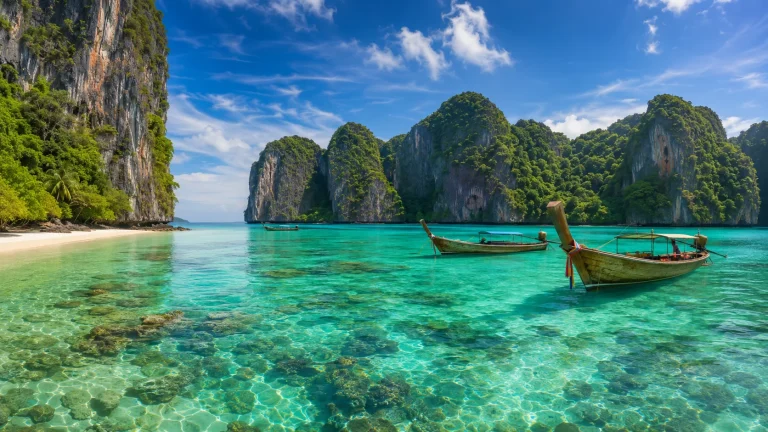
Suggested route: Phuket → Koh Phi Phi → Koh Lanta → Krabi. This is the easiest first-time route because Phuket and Krabi have airports, while the islands between them have established ferry connections during the main season.
- Phuket, 2–3 nights: recover from your flight, explore the old town and choose a beach area that suits your pace.
- Koh Phi Phi, 1–2 nights: stay overnight to experience mornings and evenings after many day visitors leave. The Tourism Authority of Thailand notes that the archipelago forms part of Hat Noppharat Thara–Mu Ko Phi Phi National Park.
- Koh Lanta, 3 nights: slow the trip down with longer beaches, a relaxed atmosphere and access to nearby islands in season.
- Krabi, 2 nights: finish with Railay, Ao Nang or a mainland stay before flying onward.
This route is popular, so it is not the best choice for complete solitude. Its advantage is simplicity: you can see dramatic limestone scenery without repeatedly returning to the same port. For a broader Thailand holiday, compare it with our 14-day Thailand itinerary.
Route 2: Southern Andaman journey in 10–14 days
Suggested route: Krabi or Trang → Koh Mook/Koh Ngai → Koh Lipe. This route suits travellers who value small islands, snorkelling and a slower rhythm. Connections are more seasonal than the classic Phuket route, so confirm the complete chain before booking non-refundable hotels.
Spend at least two nights on each small island and three or four nights on Koh Lipe. Avoid adding a new island every day. Check where the ferry arrives, whether your accommodation provides pier transfer and how luggage is handled during longtail-boat connections. When seas are rough, the most responsible choice is to accept a delay rather than pressure an operator to depart.
Route 3: Gulf islands in 7–10 days
Suggested route: Koh Samui → Koh Phangan → Koh Tao. Koh Samui is the main gateway, with an airport and extensive accommodation. Koh Phangan offers beaches, wellness stays and nightlife, while compact Koh Tao is best known for diving and snorkelling.
- Koh Samui, 2–3 nights: easiest for families, resort travellers and short stays.
- Koh Phangan, 2–3 nights: choose your coast carefully; areas away from Haad Rin can feel completely different from the party image.
- Koh Tao, 3 nights: allow time for a responsible dive or snorkelling day and a weather buffer.
Book popular sailings ahead during holidays and major events, but still recheck the departure pier and time. Koh Samui has several piers, and a transfer to the wrong one can cause a missed boat. Avoid booking a same-day international flight immediately after a long ferry connection.
How to book ferries and transfers
Direct operator websites are the best place to verify current schedules. Hotel desks and local agencies can also arrange tickets, sometimes including pickup. Compare the total journey rather than only the boat time: a ticket may include a minivan, pier check-in and another hotel transfer.
- Arrive at the pier 30–60 minutes early, following the operator’s instructions.
- Keep your passport, phone, medicines and valuables in a small waterproof day bag.
- Confirm luggage limits for speedboats and small ferries.
- Choose morning departures when possible; they preserve daylight for delays and hotel transfers.
- Build one flexible night before a long-haul flight, especially during transitional weather.
Realistic Thailand island-hopping costs
Costs vary sharply by island and season. Phuket and Koh Samui usually offer the widest range of accommodation but can be expensive in premium beach areas. Small islands may have fewer budget rooms because supplies and staff arrive by boat. A realistic mid-range budget is often THB 2,500–5,500 per person per day, excluding international flights, based on twin-share accommodation and a mix of local meals and organised activities.
- Accommodation: THB 1,200–3,500 per room for a comfortable mid-range stay; considerably more at beachfront resorts.
- Meals: THB 500–1,200 per person daily, depending on local restaurants versus resort dining.
- Ferries and transfers: allow THB 400–1,500 per travel day for common routes, with longer combined journeys costing more.
- Boat tours and activities: THB 1,000–3,500 per person for shared trips; private boats cost substantially more.
Prices change, so use these figures as planning ranges rather than quotes. Our detailed Thailand trip cost guide explains accommodation, transport and activity budgets across the country.
Safety, weather and responsible travel
Never assume a boat will operate because the sky looks clear at your hotel. Offshore wind and waves can be very different. Follow crew instructions, wear a life jacket when requested and avoid informal operators that overload boats or ignore closures. If you are prone to seasickness, take appropriate medication before departure after checking with a medical professional.
Protect the places you came to see. Do not stand on coral, feed fish, remove shells or buy coral souvenirs. Use reef-conscious sun protection, refill water where practical and choose tours that limit wildlife disturbance. National-park fees support protected areas; bring cash where electronic payment may not be available.
A balanced 10-day sample plan
For a first Andaman trip, spend two nights in Phuket, two on Koh Phi Phi, three on Koh Lanta and two in Krabi, leaving the final night near your departure airport. For the Gulf, spend three nights each on Samui, Phangan and Tao, then return to Samui or the mainland with a buffer. The goal is not to collect the highest number of islands; it is to enjoy each place without spending half the holiday checking out, waiting at piers and unpacking again.
Which route suits your travel style?
Families normally benefit from fewer moves and islands with good medical access, varied restaurants and reliable road transport. Phuket, Koh Samui and Koh Lanta are easier bases than a chain of very small islands. Choose accommodation near a calm beach, confirm child life jackets with boat operators and avoid late arrivals that require complicated transfers after dark.
Couples can combine an accessible gateway with a quieter island. For example, start in Phuket before continuing to Koh Yao, or begin on Samui before staying on the calmer northern side of Koh Phangan. Private transfers save time but should still be booked through licensed operators.
Divers and snorkellers should plan around local conditions rather than a national weather summary. Koh Tao is a practical Gulf base, while the Andaman offers many seasonal marine-park sites. Choose a dive centre that checks certification, explains safety procedures and does not promise wildlife encounters. Beginners should leave enough time between diving and flying according to professional guidance.
Common island-hopping mistakes to avoid
- Booking too many one-night stays: every transfer consumes time and adds another opportunity for delay.
- Ignoring different monsoons: good weather in Bangkok does not guarantee calm seas on either coast.
- Using an old ferry screenshot: always verify the operator, pier, date and baggage rules again.
- Connecting directly to an international flight: build a buffer before a flight you cannot afford to miss.
- Choosing accommodation only by island name: large islands can require long road transfers, so check the exact beach and pier.
- Underestimating peak dates: Christmas, New Year, Thai public holidays and major island events can reduce room and ferry availability.
What to pack
- Lightweight rain layer, even in the dry season
- Waterproof pouch for phone and documents
- Secure sandals or water shoes for wet piers
- Reusable bottle and small dry bag
- Modest clothing for temples and local communities
- Any essential medication, because small-island pharmacies may have limited stock
Final planning advice
The best Thailand island-hopping route is the one that matches the season and leaves room for the sea to change your plans. Select one coast, stay several nights in each base and verify ferries shortly before departure. If you want quieter alternatives to the most famous islands, see our guide to Thailand without the crowds. A slower route will usually feel more relaxing, cost less in transfers and create more meaningful time on the water.