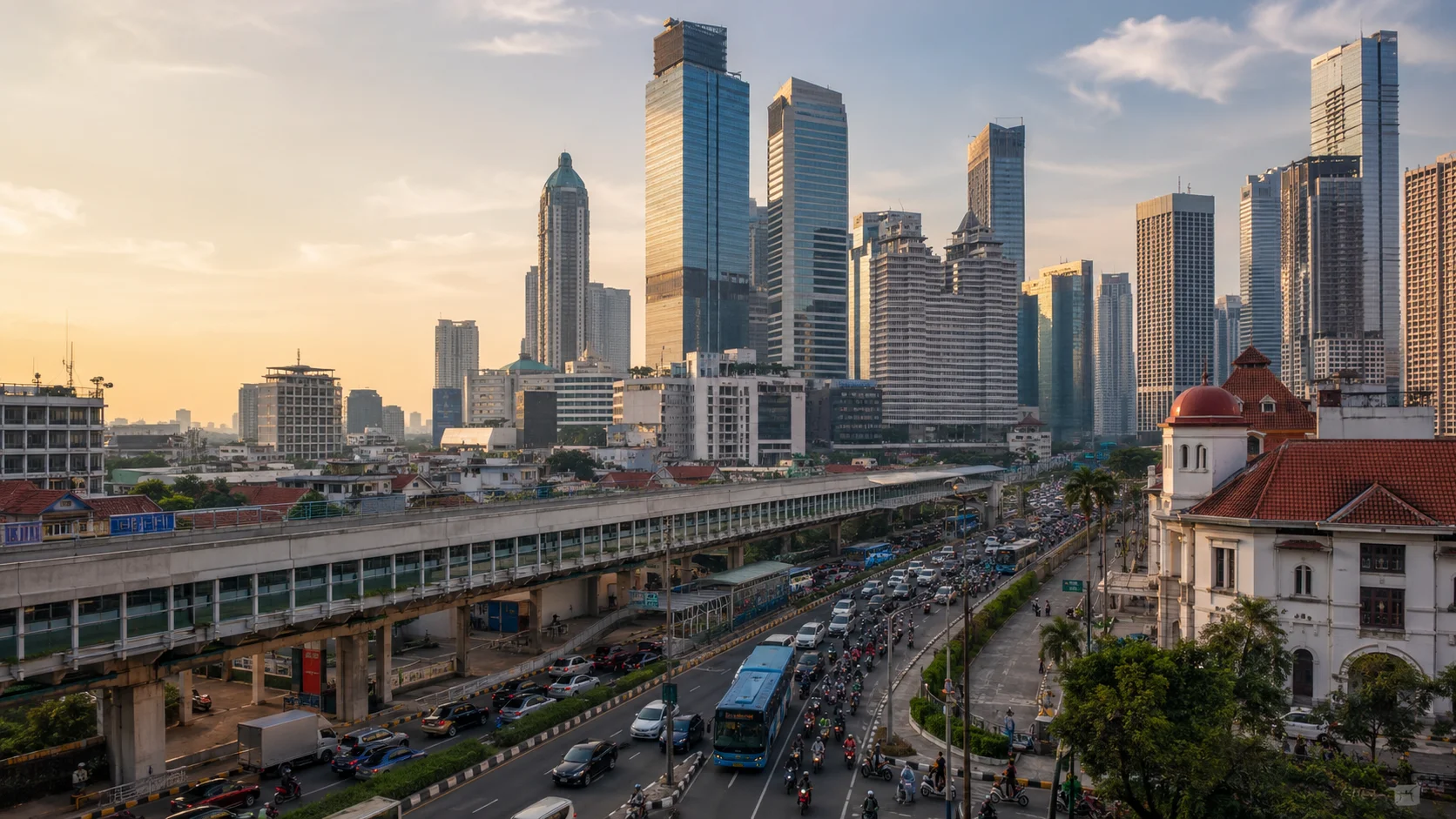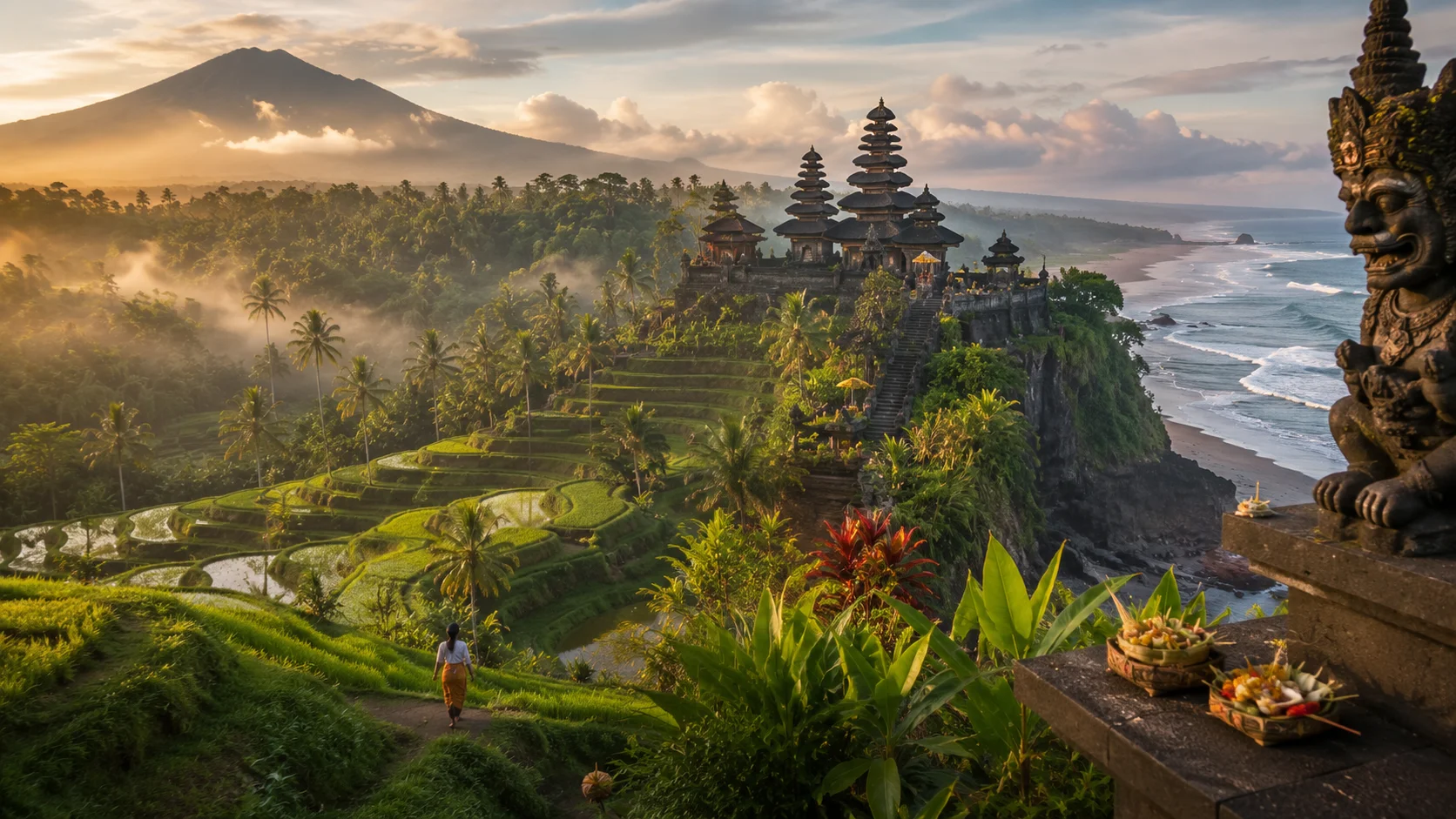
There’s a particular moment in Jakarta’s Kota Tua district, just as the afternoon heat starts to break, when the Dutch colonial facades around Fatahillah Square catch the low light and the square itself fills with vendors renting out brightly painted bicycles, food carts selling kerak telor, and street musicians playing for tips. A few kilometers away, the same hour looks completely different — glass towers in the CBD glow against a haze-softened sunset, and the call to prayer drifts out from a mosque wedged between two office blocks. Jakarta rarely appears on a Southeast Asia bucket list the way Bali or Bangkok do, and most travelers treat it as an unavoidable layover before flying elsewhere in Indonesia. That reputation undersells a city of over ten million people with a genuinely layered history and a food and arts scene that rewards anyone willing to spend more than one night.
Kota Tua and Jakarta’s Landmark Sites
Jakarta’s historical core and its scattered landmark sites trace the city’s path from a Dutch colonial trading post to the capital of the world’s fourth most populous country.
- Kota Tua (Old Town) — The former center of Dutch Batavia, anchored by Fatahillah Square and a cluster of preserved colonial-era buildings now housing museums, cafes, and galleries.
- Jakarta History Museum — Housed in the former Batavia city hall, with exhibits and colonial-era artifacts spanning the city’s founding through Indonesian independence.
- Istiqlal Mosque — Southeast Asia’s largest mosque, a stark, modernist concrete structure that can hold well over 100,000 worshippers, open to respectful non-Muslim visitors outside prayer times.
- National Monument (Monas) — A 132-meter obelisk in central Jakarta topped with a gold flame, with an observation deck offering a wide, hazy view over the sprawling city below.
- Sunda Kelapa Harbor — A still-active old port where traditional wooden pinisi schooners load and unload cargo much as they have for generations, a working counterpoint to Kota Tua’s more curated museums nearby.
Two to three days is enough to cover the core historical sites and get a first read on the city’s neighborhoods, though Jakarta’s traffic means factoring in significantly more travel time between sites than the distances alone would suggest.
Beyond Kota Tua: A City Finding Its Own Voice
Menteng, a leafy, planned residential district dating to the Dutch colonial period, has become a center for independent galleries, bookstores, and cafes housed in restored villas, offering a quieter, greener contrast to the density of central Jakarta.
For the city’s newer creative energy, Kemang and pockets of South Jakarta have developed a concentrated scene of design studios, live music venues, and restaurants run by a young, internationally influenced generation of Jakartans, distinct from both the historic core and the corporate CBD.
For a cultural experience with real depth, a performance of wayang kulit (shadow puppetry) or classical Javanese dance at venues like the Gedung Kesenian Jakarta, one of the city’s oldest theaters, connects the sprawling modern capital back to older Javanese storytelling traditions still actively performed rather than staged purely for tourists.
Where to Eat
Jakarta’s food scene draws from across the Indonesian archipelago, given how many people have migrated to the capital from other regions, making it one of the best places in the country to sample regional dishes side by side.
Dishes to look for:
- Soto Betawi — a rich, coconut-milk-based beef soup specific to Jakarta’s indigenous Betawi community, distinct from the clearer soto found elsewhere in Indonesia.
- Kerak telor — a Betawi street food of glutinous rice cooked with egg and topped with sweet, spiced shredded coconut, traditionally sold from carts at festivals and now a signature Jakarta snack.
- Gado-gado — a vegetable and boiled egg salad dressed in peanut sauce, a Jakarta staple found from street stalls to upscale restaurants.
- Nasi uduk — coconut milk-cooked rice served with a variety of side dishes, commonly eaten for breakfast across the city.
Fine dining: Kaum Jakarta serves an elevated, research-driven take on traditional Indonesian recipes gathered from across the archipelago. Namaaz Dining offers a theatrical, multi-course tasting menu built around Indonesian flavors in an intimate, reservation-only setting.
Mid-range and social-enterprise spots: Warung Daun and similar mid-range Indonesian restaurants around Menteng and South Jakarta serve well-executed regional dishes in comfortable, sit-down settings. Several social-enterprise cafes in South Jakarta support local farmers and small producers directly.
Street food and markets: The food stalls around Blok M and the night market scene in Kota Tua are reliable spots for soto Betawi, kerak telor, and satay at local prices, especially in the evening.
Coffee and cafes: Filosofi Kopi, inspired by the Indonesian film of the same name, is known for showcasing coffee from across the archipelago’s growing regions. Anomali Coffee, a homegrown Indonesian chain, is a dependable option throughout the city for a proper espresso and workspace.
Where to Stay
Luxury: The Dharmawangsa offers a quieter, more residential luxury experience in South Jakarta, known for personalized service and Indonesian-inflected design. Raffles Jakarta in the CBD pairs classic colonial-hotel service with a central location near the main business district.
Boutique and mid-range: Hotel Tugu Kunstkring Paleis in Menteng occupies a restored Art Deco building filled with Indonesian antiques and art, offering a distinctive stay well below five-star pricing. Mid-range chain hotels cluster densely around the CBD and South Jakarta for travelers prioritizing convenience over character.
Budget: Guesthouses and hostels around Kota Tua and Blok M offer simple, affordable rooms close to sightseeing and food options, though noise levels vary significantly by specific street.
Where to base yourself: Menteng or South Jakarta (Kemang/Senopati) offer a calmer, greener base with strong restaurants and easier access to the CBD, while staying near Kota Tua puts you closest to the historical sites at the cost of being further from the city’s newer dining and nightlife scene.
What to Do
- Taman Mini Indonesia Indah — A large cultural park on the city’s outskirts featuring pavilions representing each of Indonesia’s provinces, a useful, condensed introduction to the country’s regional diversity before or after traveling elsewhere in Indonesia.
- Thousand Islands (Kepulauan Seribu) day trip — A boat ride from Jakarta’s harbor to a chain of small islands offering beaches and snorkeling well outside the city’s usual concrete backdrop.
- Indonesian cooking class — Several schools around South Jakarta teach regional dishes like soto Betawi and rendang, often paired with a market visit.
- National Gallery of Indonesia — A rotating collection of modern and contemporary Indonesian art, a useful counterpoint to the more historical exhibits at the Jakarta History Museum.
- Ragunan Zoo and Botanical Gardens — A large, green escape from the city’s density, popular with local families on weekends.
- Batik workshop — Hands-on classes around the city teach traditional wax-resist batik dyeing techniques, an art form with UNESCO recognition.
- Rooftop bar and live music circuit — South Jakarta’s Kemang and Senopati areas have a dense concentration of live music venues and rooftop bars reflecting the city’s growing creative and nightlife scene.
- Glodok (Jakarta’s Chinatown) — A dense historic quarter near Kota Tua with temples, traditional medicine shops, and food stalls reflecting the city’s long-standing Chinese-Indonesian community.
When to Go in Saigon
- May to September — The dry season and generally the most comfortable window for walking between sites and avoiding flooding, which can occasionally disrupt travel in the wetter months.
- October to April — The wet season, with the heaviest rains typically falling between December and February; short, intense downpours are common and can occasionally cause localized flooding in low-lying parts of the city.
- Year-round considerations — Jakarta’s traffic is a bigger factor in trip planning than seasonal weather; avoiding rush hour windows (roughly 7-9am and 4-7pm) makes a significant difference to how much can realistically be covered in a day.
Practical Notes for the Trip
- Getting there: Soekarno-Hatta International Airport, Indonesia’s busiest, connects Jakarta to major regional and long-haul international hubs.
- Getting around: Ride-hailing apps (Grab, Gojek) are the most practical way to navigate the city; Jakarta’s MRT and TransJakarta bus rapid transit systems cover key routes and can be faster than road traffic during peak hours.
- Visas: Many nationalities can obtain a visa on arrival or apply for an Indonesian e-visa in advance; requirements change periodically, so check current rules before booking.
- Dress code and etiquette: Modest dress is expected at Istiqlal Mosque and other religious sites, including a headscarf for women in certain areas; business districts skew formal in dress compared to Bali’s more relaxed norms.
- Currency: Indonesian rupiah is standard; cards are widely accepted in malls, hotels, and larger restaurants, while cash remains preferred at street stalls and smaller markets.
A Final Thought
Jakarta doesn’t perform for visitors the way Bali or Yogyakarta do — it’s a working capital first, dense, humid, and often exhausting to move through. But given a few unhurried days, the city’s contrasts start to make more sense: a colonial-era square a few kilometers from a mosque built to hold a hundred thousand people, a Betawi soup recipe passed down through a city that has absorbed migrants from every corner of the archipelago. Jakarta isn’t the easiest introduction to Indonesia, but it may be the most honest one.