
Best Time to Visit Singapore: Weather, Festivals and Prices

Singapore is a year-round destination, but the experience changes with rainfall, school holidays, major events and hotel demand. The city stays warm and humid in every month, so there is no completely cool or rain-free season. Choosing well means matching your priorities—lighter crowds, outdoor sightseeing, festivals or better-value rooms—to the calendar.

For many travellers, the best time to visit Singapore is from February to April, when the wet phase of the Northeast Monsoon is usually easing and major outdoor attractions are comfortable to plan with flexible breaks. June to August can also work well for events and shopping, while November to January brings more frequent rain and strong festive demand.

Singapore weather at a glance

Singapore has a tropical climate with high humidity, warm nights and rain throughout the year. Short, intense showers are normal even in relatively drier months. The Meteorological Service Singapore explains that the country experiences two main monsoon seasons separated by inter-monsoon periods: the Northeast Monsoon generally runs from December to early March, while the Southwest Monsoon usually occurs from June to September.

Weather varies from year to year. In its latest annual summary, the Meteorological Service Singapore reported that 2025 was unusually wet overall and included record rainfall in March. This is a useful reminder that monthly averages are guides, not guarantees.

Best time to visit Singapore by travel priority

Best overall balance: February to April

Late February, March and April often offer a useful balance between weather and sightseeing. February can be relatively breezy and drier, although Lunar New Year dates can increase demand. March and April are hot and can bring afternoon thunderstorms, but they work well if you start early, plan indoor stops at midday and keep an umbrella nearby.

Best for major events: July to October

Singapore’s event calendar becomes a major reason to travel in the second half of the year. National Day celebrations take place around 9 August, the Grand Prix season brings entertainment and higher demand, and food, arts and cultural events appear across the city. Dates vary annually, so check the official Visit Singapore events calendar before booking.

Best for festive atmosphere: November to January

Christmas displays, New Year celebrations and preparations for Lunar New Year make this period visually exciting. It is also one of the wetter times, especially during Northeast Monsoon surges. Hotels near Marina Bay, Orchard Road and major celebration areas can become expensive, so reserve early and expect crowds on key nights.

Best for lower prices: selected weekdays and shoulder periods

Singapore does not have a single low season because business travel, school holidays and events affect demand throughout the year. Better rates often appear on non-event weekdays or during quieter weeks between major celebrations. Compare refundable rooms, check the event calendar and avoid assuming that the rainiest month will automatically be cheapest.

Singapore month by month

January

January sits in the wetter phase of the Northeast Monsoon. Rain can be widespread and occasionally persistent rather than a short afternoon shower. New Year travel and changing Lunar New Year dates can increase prices. Pack a compact umbrella, quick-drying shoes and a light layer for strongly air-conditioned interiors.

February

February is often breezier and can be drier than January, making it popular for outdoor sightseeing. Lunar New Year may fall in late January or February, bringing decorations, family travel, public-holiday closures and busy Chinatown celebrations. Book well ahead if the festival is your main reason to visit.

March

March becomes hotter as Singapore approaches an inter-monsoon period. Afternoon thunderstorms are common, and individual years can be much wetter than average. It remains practical for sightseeing because rain often leaves clear intervals, but keep daily plans flexible.

April

April is hot, humid and prone to thunderstorms, sometimes with intense lightning. Schedule Gardens by the Bay, Marina Bay and neighbourhood walks in the morning or late afternoon. Museums, shopping centres and indoor attractions provide easy weather backups.

May

May can feel especially warm with light winds and high humidity. Thunderstorms remain possible. Hydrate regularly, use sun protection and avoid packing too many outdoor sights into the middle of the day.

June

The Southwest Monsoon period begins around June. Showers may arrive in the morning, and Sumatra squalls can bring sudden wind and heavy rain. Regional school holidays can lift family demand, while shopping promotions and indoor attractions make the city easy to enjoy in mixed weather.

July

July is warm with passing showers and occasional hazy conditions depending on regional weather. Cultural and food events can add energy to the city. Book restaurants and special exhibitions ahead if you are travelling for a festival.

August

National Day on 9 August brings flags, rehearsals and celebrations, especially around Marina Bay. Accommodation near the centre can be more expensive around event dates. Weather remains hot and changeable, with showers still possible.

September

September is still influenced by the Southwest Monsoon and can bring short showers or squalls. Major sporting or entertainment events may significantly raise hotel prices. Check exact dates before confirming a flexible-budget trip.

October

October is an inter-monsoon month, often hot with afternoon and evening thunderstorms. Deepavali may fall in October or November, lighting up Little India with decorations and cultural activity. Festival dates move each year.

November

Rainfall generally increases as the Northeast Monsoon approaches. Christmas installations begin appearing in shopping and entertainment districts. The combination of rain and strong event demand makes advance restaurant and hotel planning useful.

December

December is festive, busy and often wet. Orchard Road decorations, Marina Bay celebrations and year-end holidays attract visitors despite the rain. Bring weather protection and reserve central accommodation early, especially for New Year’s Eve.

Festivals and events that affect your trip

  • Lunar New Year: usually January or February, with celebrations centred on Chinatown and public-holiday closures.
  • Hari Raya Puasa: dates follow the Islamic calendar; Geylang Serai is known for seasonal lights and markets.
  • Vesak Day: Buddhist observances take place at temples across the city.
  • National Day: 9 August, with ceremonies, rehearsals and celebrations.
  • Deepavali: usually October or November, with festive lighting in Little India.
  • Grand Prix season: typically brings entertainment, road changes and high hotel demand around the race period.
  • Christmas and New Year: late November through December, especially lively around Orchard Road and Marina Bay.

Festival dates, programmes and access arrangements can change. Confirm details through organisers and the official tourism calendar rather than relying on last year’s schedule.

How seasons affect Singapore prices

Hotel prices respond more to events, conventions, weekends and school holidays than to temperature. A rainy weekday without a major event may offer good value, while a hot September weekend during a major event can be expensive. Flights also rise around regional holidays and year-end travel.

  • Compare the official event calendar before choosing dates.
  • Book refundable accommodation if travelling during a weather-sensitive period.
  • Stay near an MRT station rather than paying only for a famous district.
  • Reserve headline attractions online when visiting during holidays.
  • Budget extra for central hotels around National Day, major races and New Year.

What to pack in every season

Light, breathable clothing works throughout the year. Add a compact umbrella or lightweight rain jacket, comfortable quick-drying shoes, sunscreen and a reusable water bottle. A thin layer helps in cold indoor spaces. Electronics and travel documents should stay in a water-resistant pouch during heavy showers.

Planning your Singapore itinerary

Weather rarely prevents an enjoyable Singapore visit because indoor and outdoor attractions are closely connected. Our 3-day Singapore itinerary balances Marina Bay, heritage districts, gardens and food stops. Use the Singapore trip-cost guide to estimate daily spending, and browse the Singapore travel collection for more planning ideas.

Final advice

The best time to visit Singapore depends less on finding perfect weather and more on avoiding the wrong dates for your budget and interests. February to April offers a strong overall balance, July to October suits event-focused travellers, and year-end visits deliver a festive atmosphere with more rain and higher demand. Check the forecast shortly before each day, keep one indoor alternative ready and enjoy the city at a flexible pace.

The Perfect 3-Day Singapore Itinerary for First-Time Visitors

Three days in Singapore is enough to experience the city’s essential contrasts without turning the trip into a race. You can move from futuristic gardens and the Marina Bay skyline to historic neighbourhoods, hawker centres, museums and tropical green spaces in minutes.

This Singapore itinerary is designed for first-time visitors who want a balanced introduction. It keeps nearby attractions together, uses the MRT efficiently and leaves room for food, rest and Singapore’s evening atmosphere. Opening hours, admission prices and events can change, so confirm priority attractions before departure.

How to use this 3-day Singapore itinerary

The route assumes three full sightseeing days and a hotel near an MRT station. Day one focuses on Marina Bay, day two explores Singapore’s cultural districts and civic centre, and day three combines nature with a final neighbourhood or island choice.

  • Day 1: Marina Bay, Gardens by the Bay and the waterfront at night.
  • Day 2: Chinatown, Kampong Gelam, Little India and the civic district.
  • Day 3: Singapore Botanic Gardens, Orchard or Tiong Bahru, then Sentosa or a relaxed city finale.

If your flight arrives during the morning, begin gently rather than forcing the complete first day. Changi Airport is an attraction in its own right, but immigration, luggage and hotel check-in still consume time.

Before you start: transport, tickets and timing

Singapore’s MRT and public buses cover nearly every stop in this plan. The Land Transport Authority states that visitors can use stored-value cards, eligible contactless bank cards and mobile wallets on public transport. It also lists a one-, two- or three-day Singapore Tourist Pass for unlimited travel on standard buses, MRT and LRT services. Check the latest details through the official LTA journey-planning page.

A tourist pass is convenient, but it is not automatically the cheapest choice. Visitors who take only a few rides may spend less using contactless payment. Use the same card or device for tapping in and out, and avoid mixing a physical card with its mobile-wallet version during one journey.

Pre-book only the attractions that matter most to you. Gardens by the Bay conservatories, museums, observation decks and major events can sell out at busy times. Leave free public areas flexible so weather and energy can guide the day.

Day 1: Marina Bay and Singapore’s modern skyline

Morning: Merlion Park and the waterfront

Begin at Raffles Place or City Hall and walk toward the Singapore River and Marina Bay. Early morning gives you softer light, lower temperatures and a calmer view of the waterfront. Merlion Park is a quick first stop rather than a half-day attraction, but its position introduces the skyline and the shape of the bay.

Continue along the promenade toward Esplanade. From here, you can see Marina Bay Sands, the ArtScience Museum and the city’s mix of colonial, commercial and contemporary architecture. Pause for breakfast or coffee instead of rushing directly into ticketed sights.

Late morning: ArtScience Museum or National Gallery

Choose one major indoor attraction. The ArtScience Museum suits visitors interested in immersive exhibitions, design and technology. The National Gallery Singapore is stronger for Southeast Asian art and sits within the former City Hall and Supreme Court buildings.

Trying to visit both on the same morning weakens the experience. Give the selected museum approximately two hours and check current exhibitions before choosing.

Lunch: a hawker-centre introduction

For an accessible first hawker meal, consider Lau Pa Sat in the business district or a food court near Marina Bay. Look beyond the most photographed stall and choose a dish you genuinely want to eat. Chicken rice, laksa, fishball noodles, satay, roti prata and vegetarian Indian meals offer different entry points.

Return trays to the designated station and watch local ordering patterns before joining a queue. Busy hawker centres work efficiently when diners share tables and keep possessions close.

Afternoon: Gardens by the Bay

Walk or take the MRT to Gardens by the Bay. The outdoor gardens and Supertree Grove are different from the ticketed conservatories. The Flower Dome focuses on plants from several world regions, while Cloud Forest creates a cooler mountain environment around a dramatic indoor waterfall.

The official Visit Singapore Gardens by the Bay guide provides an overview, but confirm current opening times and maintenance closures on the attraction’s own website.

Allow two to three hours for both conservatories, or spend less if you prefer the free outdoor landscape. Mid-afternoon is comfortable inside the cooled domes and positions you well for sunset.

Evening: Supertrees and Marina Bay lights

Stay for the Supertree light show when it is operating, then walk back toward Marina Bay Sands. The bay looks completely different after dark. The free Spectra light-and-water show runs on selected evenings; check the current schedule rather than assuming a performance.

For a paid city view, choose either the Sands SkyPark Observation Deck or another rooftop experience, not several. Visit Singapore’s Marina Bay Sands overview summarises the area’s major attractions.

End with dinner around Marina Bay, the river, or a hawker centre. A quiet waterfront walk is often more memorable than squeezing in another ticket.

Day 2: neighbourhoods, heritage and food

Morning: Chinatown

Start before the streets become busy. Visit the Buddha Tooth Relic Temple respectfully, explore shophouse lanes and learn about early migrant communities at a museum or heritage centre if time allows.

Chinatown rewards visitors who look above the souvenir shops. Upper floors, five-foot ways and religious buildings reveal how commerce, housing and worship developed in a compact district. Dress modestly for active temples and follow photography signs.

For breakfast, try kaya toast and coffee or visit a hawker centre for noodles, rice dishes or local snacks. Chinatown Complex offers enormous choice but can feel overwhelming at peak lunchtime.

Late morning: the civic district

Travel or walk toward City Hall. The Padang, St Andrew’s Cathedral, Victoria Theatre, Asian Civilisations Museum and National Gallery sit within a relatively small area. Choose one interior visit based on interest, then spend the rest of the time walking.

The Asian Civilisations Museum is particularly useful for understanding Singapore’s position within regional trade, religion and migration. The river outside provides context for the city’s development as a port.

Afternoon: Kampong Gelam

Take the MRT toward Bugis and walk to Kampong Gelam. Sultan Mosque anchors the neighbourhood, while nearby streets mix textile shops, traditional businesses, cafes and murals. Haji Lane is colourful but small; explore beyond it to avoid reducing the district to one photo stop.

Have lunch around Arab Street or nearby Bugis. Ask before photographing people or inside places of worship, and avoid entering prayer areas during services unless visitors are invited.

Late afternoon: Little India

Continue to Little India by MRT or bus. Browse Tekka Centre, spice and flower shops, religious sites and streets filled with everyday commerce. Sri Veeramakaliamman Temple can be visited when open, but observe dress requirements and leave shoes where directed.

Little India is excellent for an early dinner. South Indian vegetarian meals, biryani, dosa and regional sweets can be outstanding value. If you prefer a slower pace, finish here and return to the hotel.

Evening alternative: Singapore River

Visitors with energy can end at Clarke Quay or Robertson Quay. The river is atmospheric after dark, but nightlife prices can be high. A walk and dessert may be more satisfying than an expensive bar when the next morning starts early.

Day 3: tropical nature and your preferred finale

Morning: Singapore Botanic Gardens

Begin at the Singapore Botanic Gardens while temperatures are lower. The main landscape is free and provides a different view of Singapore from the dense city centre. Paths pass lakes, rainforest fragments, heritage trees and themed gardens.

The National Orchid Garden is the major ticketed area. Allow extra time if orchids and garden design interest you. Bring water, insect repellent and light rain protection, and avoid treating a midday tropical downpour as a disaster—move indoors and adjust.

Lunch and early afternoon: choose one neighbourhood

Select one option based on your interests:

  • Orchard Road: convenient for shopping, air-conditioned breaks and a polished urban finish.
  • Tiong Bahru: better for art-deco housing, independent cafes and a neighbourhood market.
  • Dempsey Hill: relaxed dining and greenery, although less convenient by MRT.
  • Joo Chiat and Katong: Peranakan architecture and excellent food, but allow more transport time.

Do not choose all four. A useful three-day itinerary creates focus rather than collecting neighbourhood names.

Late afternoon and evening: Sentosa or a relaxed city finish

Sentosa works for travellers who want beaches, family attractions or a resort atmosphere. Choose one main activity and allow for transport. Universal Studios requires a separate full-day strategy, so it does not fit comfortably into this mixed city itinerary.

Travellers who are not drawn to Sentosa can return to Chinatown, shop on Orchard Road, explore Jewel Changi before an evening flight, or enjoy one last waterfront meal. The best final choice depends on departure time and energy.

Where to stay for three days in Singapore

Location matters more than a large hotel room. City Hall and Bugis are central and versatile. Chinatown provides food and character with strong transport links. Little India can offer better-value rooms near the MRT. Marina Bay is convenient for luxury stays but usually costs more.

For a short visit, avoid saving a small amount on a room that requires repeated long transfers. Compare the hotel with the wider collection of Southeast Asian places on our destinations page when planning a Singapore stopover within a longer regional trip.

How much should you budget?

Singapore can be expensive, but the itinerary mixes free landmarks, public transport, hawker meals and selected paid attractions. Accommodation will usually be the largest cost. Set a daily allowance for meals, transport and admissions, then add the hotel separately.

  • Use hawker centres for affordable, varied meals.
  • Choose one or two major paid attractions per day.
  • Walk between sights that are genuinely close.
  • Compare contactless fares with the Tourist Pass.
  • Reserve popular attractions directly and review cancellation terms.

Practical tips for a smoother first visit

  • Carry water and plan indoor breaks during the hottest hours.
  • Pack a compact umbrella for sun and sudden rain.
  • Dress respectfully for mosques, temples and churches.
  • Follow local rules on littering, smoking and public transport.
  • Check the last MRT timing when staying out late.
  • Allow airport time even though transport is efficient.
  • Use official sources for entry requirements and attraction schedules.

Is three days enough for Singapore?

Three days is ideal for a first overview. You can experience the skyline, several cultural neighbourhoods, major food traditions and tropical greenery without needing a rushed day trip. Four or five days makes room for museums, family attractions, Pulau Ubin, MacRitchie, more neighbourhoods or a slower pace.

If Singapore is a stopover, protect the essentials: one Marina Bay evening, one heritage-and-food day and one nature or neighbourhood experience. That combination gives the trip shape while leaving reasons to return.

Final thoughts

The perfect first Singapore itinerary is not the one with the most attractions. It is the one that moves logically, makes time for meals and lets each district feel distinct. Use this three-day plan as a framework, then adjust it for weather, opening hours, mobility and your own interests.

Phnom Penh: The River City Cambodia Keeps Rewriting

There’s a particular hour along the Tonlé Sap riverfront — just past 5pm, when the heat breaks and the sky over the confluence of the Mekong and Tonlé Sap rivers turns the color of unripe mango — when Phnom Penh reveals itself. Monks in saffron robes walk past food carts selling grilled bananas, families spread mats on the grass for an evening picnic, and the gold spires of the Royal Palace catch the last light. Most travelers treat Phnom Penh as a one-night stopover between the airport and Siem Reap’s temples, but that does the city a disservice. Phnom Penh is where modern Cambodia is actually being written — a capital still working through a brutal chapter of its history while building something unmistakably its own, one riverside café and reclaimed colonial villa at a time.

Royal Palace and the City’s Landmark Sites

Phnom Penh’s core sights sit close enough together to cover on foot or by a short tuk-tuk hop, and together they trace the arc of the city’s history from royal grandeur to genocide to recovery.

  • Royal Palace and Silver Pagoda — The official residence of the King, with a floor in the pagoda laid with over 5,000 silver tiles (mostly covered by carpet now, though a corner is left exposed for visitors to see).
  • National Museum of Cambodia — A terracotta-red building holding one of the world’s finest collections of Khmer sculpture, including pieces recovered from Angkor-era sites long before mass tourism reached them.
  • Tuol Sleng Genocide Museum (S-21) — A former high school turned Khmer Rouge prison, left largely as it was found. It’s a heavy visit, but a necessary one for understanding the Cambodia that exists today.
  • Choeung Ek Killing Fields — Located about 40 minutes outside the city center, with an audio guide that lets you move through at your own pace and in your own silence.
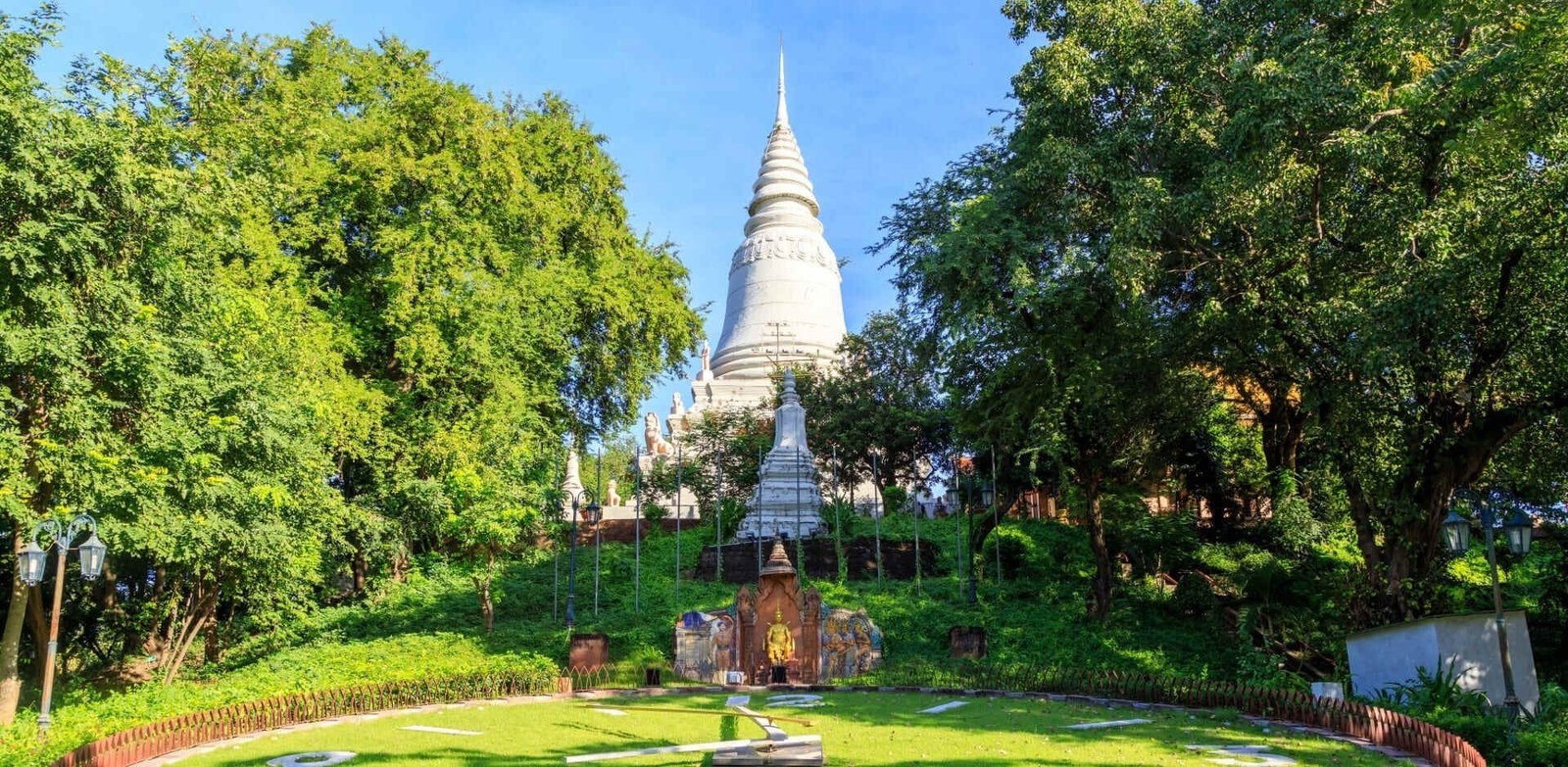
  • Wat Phnom — The hilltop temple the city is named after, small in scale but a good orientation point and quietly active with local worshippers.

Two full days is enough to cover these sites without rushing, though pairing the Genocide Museum and Killing Fields on the same morning, followed by something lighter in the afternoon, tends to sit better emotionally than saving them both for one heavy day.

Beyond the Landmarks: A City Finding Its Own Voice

Phnom Penh’s Central Market (Phsar Thmey), an Art Deco building shaped like a yellow-domed cross, is where the city’s daily commerce plays out — gold jewelry stalls under the dome, clothing and electronics in the wings, and a lower level that turns into a proper wet market by mid-morning.

The riverside strip along Sisowath Quay has long been the tourist-facing face of the city, but the more interesting shift has happened a few streets back, around Street 240 and the BKK1 neighborhood, where French colonial shophouses have been converted into independent boutiques, design studios, and small galleries run largely by young Cambodian entrepreneurs rather than the NGO-adjacent shops that once defined the scene.

For an evening that captures the city’s cultural resilience, catch a performance at Sovanna Phum Arts Association, where traditional Cambodian shadow puppetry (sbek thom) and dance are kept alive by artists who are often direct successors of performers who survived the Khmer Rouge period — the puppetry alone, carved from cowhide and lit against a screen, is unlike anything else in the region.

Where to Eat in Phnom Penh

Phnom Penh’s food scene punches well above what its reputation suggests, blending Khmer staples with a wave of ambitious new kitchens.

Dishes to look for:

  • Kuy teav — a pork or beef broth noodle soup, usually eaten for breakfast, topped with bean sprouts, herbs, and fried garlic.
  • Bai sach chrouk — grilled pork over broken rice, served with pickled vegetables and a light ginger-vinegar broth, sold from carts every morning across the city.
  • Prahok ktis — a dip made from fermented fish paste, coconut milk, and minced pork, eaten with raw vegetables and rice — an acquired taste that rewards the adventurous.
  • Num ansom chek — sticky rice and banana steamed in banana leaf, a common street snack and a good introduction to Khmer desserts.

Fine dining: Malis serves refined, plated versions of Khmer classics in a garden courtyard setting and is often the first stop for visitors wanting an elevated introduction to the cuisine. Topaz leans French-Cambodian, popular for special occasions.

Mid-range and social-enterprise spots: Friends the Restaurant, run by the same organization behind Siem Reap’s Marum and Haven, trains marginalized youth in hospitality while serving a globally-inflected tapas menu. Romdeng, its sister restaurant, is known for a menu that includes deep-fried tarantula — a genuine Cambodian delicacy, not a gimmick.

Street food and markets: The stalls around Central Market and along Street 174 near the riverside are reliable for kuy teav and bai sach chrouk at local prices. The night market near the riverfront is a good option for grilled skewers and fresh coconut.

Coffee and cafes: Feel Good Coffee and Brown Coffee (a homegrown Cambodian chain) are dependable for a proper espresso and workspace, while Sisters Kitchen near the riverside is popular for all-day breakfast alongside its coffee.

Where to Stay in Phnom Penh

Luxury: Rosewood Phnom Penh, occupying the top floors of the city’s tallest building, pairs sweeping river views with a design language rooted in Khmer craftsmanship. Raffles Hotel Le Royal is the historic choice — a 1920s colonial-era property with a storied guest list and a famously good “Femme Fatale” cocktail bar.

Boutique and mid-range: Plantation – Urban Resort & Spa offers a quiet, palm-shaded courtyard escape close to the riverside without the price tag of the five-star towers. Villa Langka is well-located in BKK1, within walking distance of the neighborhood’s better restaurants and cafes.

Budget: Onederz Phnom Penh and Mad Monkey Phnom Penh cater to the backpacker crowd with pools and social common areas. Smaller guesthouses around Street 172 offer simple, clean rooms at low cost, close to the riverside action.

Where to base yourself: BKK1 is the best base for restaurants, cafes, and a quieter residential feel, while the riverside/Sisowath Quay area keeps you closer to the main historical sites and nightlife, at the cost of more noise and tourist density.

What to Do in Phnom Penh

  • Sunset river cruise — A slow boat along the Tonlé Sap and Mekong confluence at dusk, with the Royal Palace and riverside skyline lit up behind you.
  • Koh Dach (Silk Island) — A short ferry ride from the city center to a rural island still home to traditional silk-weaving villages.
  • Cambodian cooking class — Several schools in the city teach kuy teav, prahok ktis, and other dishes rarely found on tourist-focused menus elsewhere in the country.
  • Cyclo tour of the old French quarter — A slower way to see the colonial-era architecture around Wat Phnom and the riverside, led by local cyclo drivers.
  • Traditional Khmer massage — Widely available and inexpensive throughout the city, a good way to recover after a day of walking between sites.
  • Sovanna Phum shadow puppet performance — A living connection to a Cambodian art form that nearly disappeared during the Khmer Rouge period.
  • Day trip to Udong — The former royal capital before Phnom Penh, with hilltop stupas and a much quieter, more rural version of Cambodian religious life.
  • Rooftop bar hopping — The city’s skyline has grown quickly in the past decade, and a handful of rooftop bars now offer views that didn’t exist a few years ago.

When to Go to Phnom Penh

  • November to February — Cool(er) and dry, the most comfortable window for walking between sites. Also the busiest tourist season.
  • March to May — Hot season, with temperatures regularly climbing above 35°C (95°F) and high humidity. Fewer crowds, but plan around the heat with early starts.
  • June to October — Wet season, with rain generally arriving in short afternoon bursts rather than lasting all day. The Mekong swells dramatically, and the countryside around the city turns a deep green.

Practical Notes for the Trip

  • Getting there: Phnom Penh International Airport connects to regional hubs including Bangkok, Singapore, Kuala Lumpur, and Ho Chi Minh City, with a growing number of direct international routes.
  • Getting around: Tuk-tuks and ride-hailing apps like Grab are the easiest way to move around the spread-out city; walking is workable within neighborhoods like BKK1 or the riverside but less practical between them.
  • Visas: Most nationalities can obtain a Cambodian e-visa online in advance or a visa on arrival at the airport — check current requirements before travel.
  • Dress code and etiquette: Modest dress (shoulders and knees covered) is expected at the Royal Palace and temples; a respectful, quiet demeanor is appropriate at Tuol Sleng and Choeung Ek.
  • Currency: US dollars are widely accepted and often quoted directly for larger purchases; Cambodian riel is used for small change.

A Final Thought

Phnom Penh doesn’t offer the immediate, postcard clarity of Angkor’s temples, and it isn’t trying to. It’s a city still in the process of becoming — carrying its history openly rather than smoothing it over, while a new generation builds galleries, restaurants, and design studios in the spaces between. Spend a couple of unhurried days here, and the city stops feeling like a layover and starts feeling like the place where Cambodia’s next chapter is actually being written.