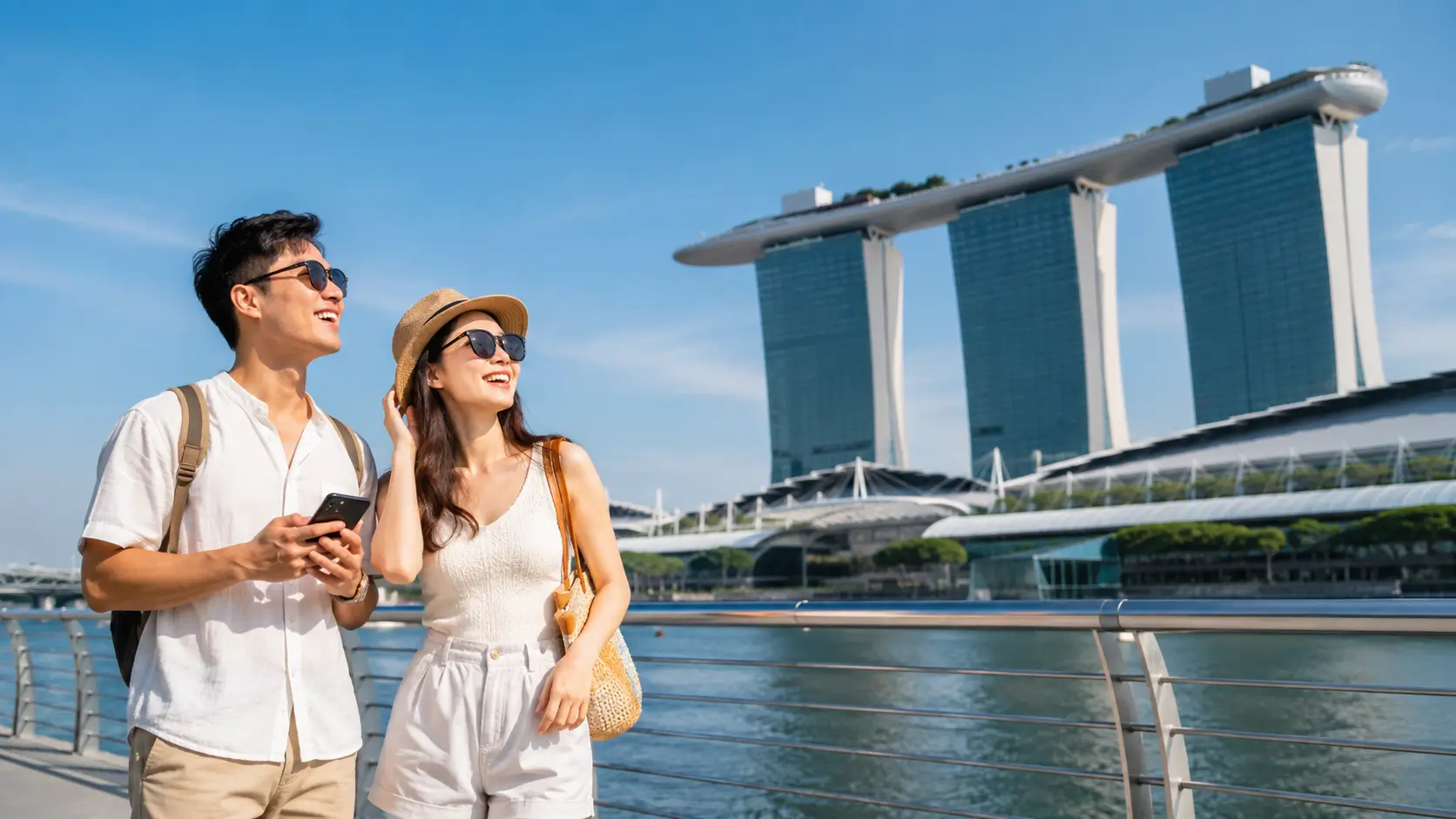
Best Time to Visit Singapore: Weather, Festivals and Prices

Singapore is a year-round destination, but the experience changes with rainfall, school holidays, major events and hotel demand. The city stays warm and humid in every month, so there is no completely cool or rain-free season. Choosing well means matching your priorities—lighter crowds, outdoor sightseeing, festivals or better-value rooms—to the calendar.

For many travellers, the best time to visit Singapore is from February to April, when the wet phase of the Northeast Monsoon is usually easing and major outdoor attractions are comfortable to plan with flexible breaks. June to August can also work well for events and shopping, while November to January brings more frequent rain and strong festive demand.

Singapore weather at a glance

Singapore has a tropical climate with high humidity, warm nights and rain throughout the year. Short, intense showers are normal even in relatively drier months. The Meteorological Service Singapore explains that the country experiences two main monsoon seasons separated by inter-monsoon periods: the Northeast Monsoon generally runs from December to early March, while the Southwest Monsoon usually occurs from June to September.

Weather varies from year to year. In its latest annual summary, the Meteorological Service Singapore reported that 2025 was unusually wet overall and included record rainfall in March. This is a useful reminder that monthly averages are guides, not guarantees.

Best time to visit Singapore by travel priority

Best overall balance: February to April

Late February, March and April often offer a useful balance between weather and sightseeing. February can be relatively breezy and drier, although Lunar New Year dates can increase demand. March and April are hot and can bring afternoon thunderstorms, but they work well if you start early, plan indoor stops at midday and keep an umbrella nearby.

Best for major events: July to October

Singapore’s event calendar becomes a major reason to travel in the second half of the year. National Day celebrations take place around 9 August, the Grand Prix season brings entertainment and higher demand, and food, arts and cultural events appear across the city. Dates vary annually, so check the official Visit Singapore events calendar before booking.

Best for festive atmosphere: November to January

Christmas displays, New Year celebrations and preparations for Lunar New Year make this period visually exciting. It is also one of the wetter times, especially during Northeast Monsoon surges. Hotels near Marina Bay, Orchard Road and major celebration areas can become expensive, so reserve early and expect crowds on key nights.

Best for lower prices: selected weekdays and shoulder periods

Singapore does not have a single low season because business travel, school holidays and events affect demand throughout the year. Better rates often appear on non-event weekdays or during quieter weeks between major celebrations. Compare refundable rooms, check the event calendar and avoid assuming that the rainiest month will automatically be cheapest.

Singapore month by month

January

January sits in the wetter phase of the Northeast Monsoon. Rain can be widespread and occasionally persistent rather than a short afternoon shower. New Year travel and changing Lunar New Year dates can increase prices. Pack a compact umbrella, quick-drying shoes and a light layer for strongly air-conditioned interiors.

February

February is often breezier and can be drier than January, making it popular for outdoor sightseeing. Lunar New Year may fall in late January or February, bringing decorations, family travel, public-holiday closures and busy Chinatown celebrations. Book well ahead if the festival is your main reason to visit.

March

March becomes hotter as Singapore approaches an inter-monsoon period. Afternoon thunderstorms are common, and individual years can be much wetter than average. It remains practical for sightseeing because rain often leaves clear intervals, but keep daily plans flexible.

April

April is hot, humid and prone to thunderstorms, sometimes with intense lightning. Schedule Gardens by the Bay, Marina Bay and neighbourhood walks in the morning or late afternoon. Museums, shopping centres and indoor attractions provide easy weather backups.

May

May can feel especially warm with light winds and high humidity. Thunderstorms remain possible. Hydrate regularly, use sun protection and avoid packing too many outdoor sights into the middle of the day.

June

The Southwest Monsoon period begins around June. Showers may arrive in the morning, and Sumatra squalls can bring sudden wind and heavy rain. Regional school holidays can lift family demand, while shopping promotions and indoor attractions make the city easy to enjoy in mixed weather.

July

July is warm with passing showers and occasional hazy conditions depending on regional weather. Cultural and food events can add energy to the city. Book restaurants and special exhibitions ahead if you are travelling for a festival.

August

National Day on 9 August brings flags, rehearsals and celebrations, especially around Marina Bay. Accommodation near the centre can be more expensive around event dates. Weather remains hot and changeable, with showers still possible.

September

September is still influenced by the Southwest Monsoon and can bring short showers or squalls. Major sporting or entertainment events may significantly raise hotel prices. Check exact dates before confirming a flexible-budget trip.

October

October is an inter-monsoon month, often hot with afternoon and evening thunderstorms. Deepavali may fall in October or November, lighting up Little India with decorations and cultural activity. Festival dates move each year.

November

Rainfall generally increases as the Northeast Monsoon approaches. Christmas installations begin appearing in shopping and entertainment districts. The combination of rain and strong event demand makes advance restaurant and hotel planning useful.

December

December is festive, busy and often wet. Orchard Road decorations, Marina Bay celebrations and year-end holidays attract visitors despite the rain. Bring weather protection and reserve central accommodation early, especially for New Year’s Eve.

Festivals and events that affect your trip

  • Lunar New Year: usually January or February, with celebrations centred on Chinatown and public-holiday closures.
  • Hari Raya Puasa: dates follow the Islamic calendar; Geylang Serai is known for seasonal lights and markets.
  • Vesak Day: Buddhist observances take place at temples across the city.
  • National Day: 9 August, with ceremonies, rehearsals and celebrations.
  • Deepavali: usually October or November, with festive lighting in Little India.
  • Grand Prix season: typically brings entertainment, road changes and high hotel demand around the race period.
  • Christmas and New Year: late November through December, especially lively around Orchard Road and Marina Bay.

Festival dates, programmes and access arrangements can change. Confirm details through organisers and the official tourism calendar rather than relying on last year’s schedule.

How seasons affect Singapore prices

Hotel prices respond more to events, conventions, weekends and school holidays than to temperature. A rainy weekday without a major event may offer good value, while a hot September weekend during a major event can be expensive. Flights also rise around regional holidays and year-end travel.

  • Compare the official event calendar before choosing dates.
  • Book refundable accommodation if travelling during a weather-sensitive period.
  • Stay near an MRT station rather than paying only for a famous district.
  • Reserve headline attractions online when visiting during holidays.
  • Budget extra for central hotels around National Day, major races and New Year.

What to pack in every season

Light, breathable clothing works throughout the year. Add a compact umbrella or lightweight rain jacket, comfortable quick-drying shoes, sunscreen and a reusable water bottle. A thin layer helps in cold indoor spaces. Electronics and travel documents should stay in a water-resistant pouch during heavy showers.

Planning your Singapore itinerary

Weather rarely prevents an enjoyable Singapore visit because indoor and outdoor attractions are closely connected. Our 3-day Singapore itinerary balances Marina Bay, heritage districts, gardens and food stops. Use the Singapore trip-cost guide to estimate daily spending, and browse the Singapore travel collection for more planning ideas.

Final advice

The best time to visit Singapore depends less on finding perfect weather and more on avoiding the wrong dates for your budget and interests. February to April offers a strong overall balance, July to October suits event-focused travellers, and year-end visits deliver a festive atmosphere with more rain and higher demand. Check the forecast shortly before each day, keep one indoor alternative ready and enjoy the city at a flexible pace.
Thailand Without the Crowds: 15 Quieter Places to Visit in 2026

Thailand’s famous islands, temples and cities deserve their reputation, but they are only part of the country’s story. Travellers who slow down and look beyond Bangkok, Chiang Mai and Phuket can find historic towns, mountain landscapes, quiet beaches and community-based experiences with far fewer tour groups.

This guide to Thailand without the crowds introduces 15 quieter places worth considering in 2026. None is completely undiscovered, and local holidays can still bring busy periods, but each offers a calmer alternative to the country’s best-known routes. Use the list to add two or three slower stops to a longer journey rather than trying to see everything at once.

Why explore quieter places in Thailand?

Secondary destinations reward travellers with more space, longer conversations and a better sense of regional life. Your spending can also reach family-run guesthouses, guides, restaurants and transport providers outside the busiest tourism centres. The trade-off is that English may be less widely spoken, public transport may run less frequently and advance planning matters more.

Before choosing a destination, compare the season, road access and local events. Some islands close businesses during the monsoon, mountain visibility changes with weather and national parks may restrict access for safety or conservation. The official Tourism Authority of Thailand website is a useful final check.

15 quieter places to visit in Thailand in 2026

1. Nan: temples, art and northern slow travel

Nan is a small northern city surrounded by green hills and rural communities. The compact centre has traditional temples, local cafés and a relaxed evening atmosphere. Wat Phumin is known for its distinctive murals, while Wat Phra That Khao Noi offers a wide view over the valley. The official Nan destination page also highlights Doi Phukha National Park and the Nan National Museum.

Allow two or three nights in town and longer if you want to explore the province by private car. The cooler, drier months are comfortable for outdoor travel, while the green season brings lush scenery and occasional transport delays.

2. Chiang Khan: a gentle Mekong riverside stay

Chiang Khan in Loei province is an attractive choice for wooden architecture, cycling and sunrise views along the Mekong. The walking street becomes lively on weekends, but mornings and weekdays remain calm. Spend time outside the main street, visit nearby viewpoints and support locally owned accommodation instead of treating the town as a photo stop.

3. Phu Ruea and Loei: cool air and mountain scenery

Loei combines national parks, rural landscapes and distinctive festivals. Phu Ruea is more accessible than some trekking-focused parks, and Chiang Khan can be included in the same regional journey. According to the Tourism Authority of Thailand’s Loei guide, key highlights include Phu Ruea, Phu Kradueng and the Phi Ta Khon Festival. Festival dates bring crowds, so visit outside the celebration if peace is your priority.

4. Sukhothai’s quieter corners

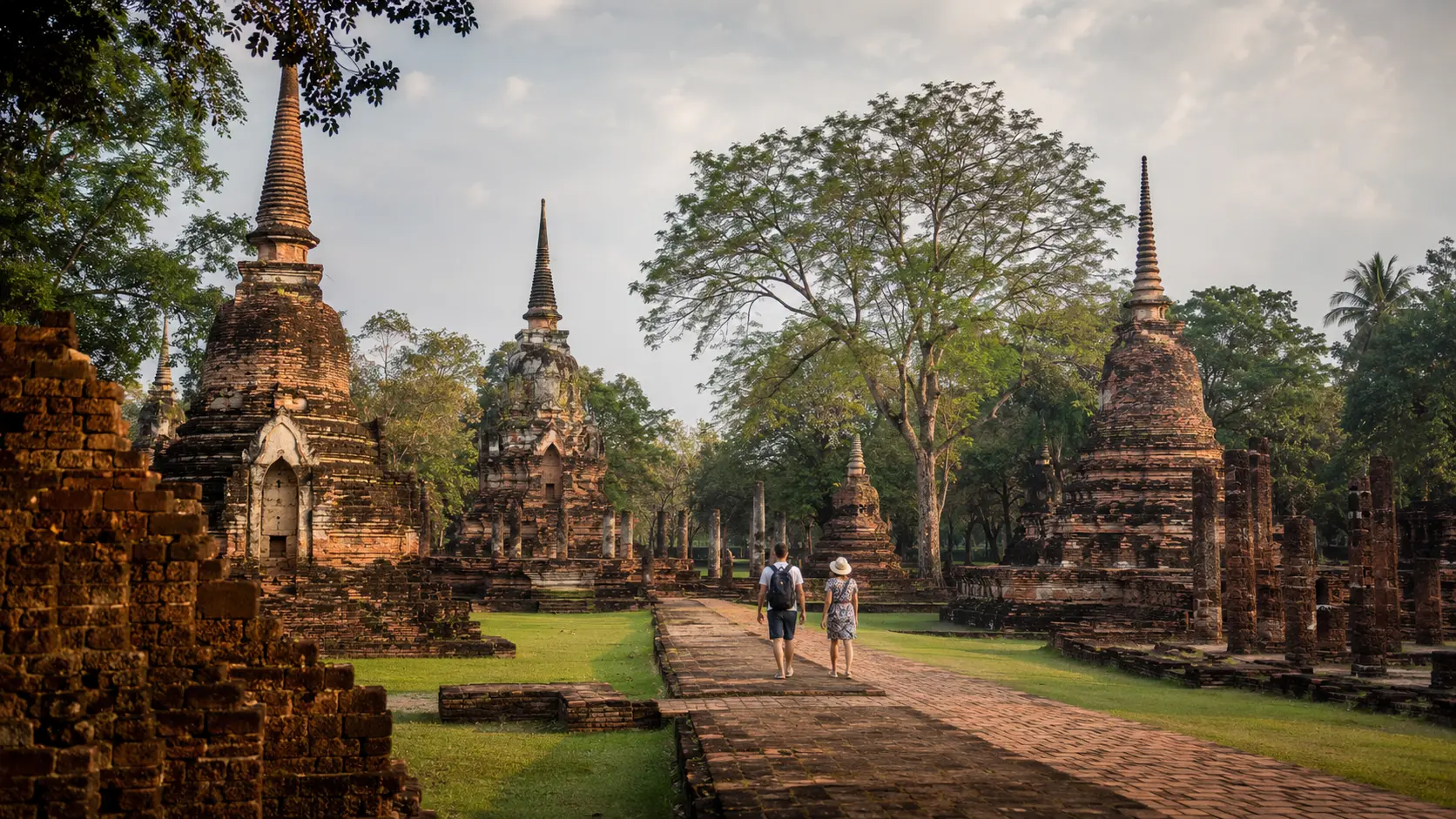
Sukhothai Historical Park is well known, yet it often feels far calmer than Thailand’s major city attractions. Rent a bicycle early in the morning and continue beyond the central zone to less-visited temple groups. Stay two nights so you can explore without rushing and add Si Satchanalai, another historic park with atmospheric ruins and fewer visitors.

5. Lampang: heritage streets and local neighbourhoods

Lampang is an easy rail stop between Bangkok and Chiang Mai. Its riverside neighbourhoods, teak houses, temples and weekend market make it suitable for travellers who enjoy architecture and everyday city life. Walk rather than rushing between attractions, and choose an ethical animal experience only after checking current welfare practices carefully.

6. Phrae: teak mansions and northern culture

Phrae receives fewer international visitors than neighbouring Chiang Mai or Chiang Rai. The old town contains teak mansions, temples and small museums, while nearby countryside adds caves and forest scenery. A private driver is useful for day trips, but the centre itself is manageable by bicycle or short local transfers.

7. Uthai Thani: riverside life and forest access

Uthai Thani offers a quiet riverside atmosphere within reach of Bangkok. Wat Tha Sung is the best-known sight, but the destination becomes more rewarding when paired with local markets, boat travel and nature around Huai Kha Khaeng Wildlife Sanctuary. Wildlife access requires responsible planning: use authorised guides, follow park rules and never expect guaranteed sightings.

8. Phetchabun: mountain viewpoints and temples

Phetchabun is popular with Thai travellers but remains outside many international itineraries. Khao Kho has mountain views and cool-season mist, while Wat Pha Sorn Kaew is known for colourful mosaic decoration. Weekends and public holidays can be busy, so book a weekday stay for quieter roads and viewpoints.

9. Nakhon Phanom: Mekong promenades and multicultural history

Nakhon Phanom sits beside the Mekong in northeastern Thailand. Its promenade, historic buildings and Vietnamese-influenced food culture create a relaxed stay with a strong sense of place. Rent a bicycle, visit local temples and allow unplanned time by the river. It also pairs well with other Isan destinations for travellers who prefer overland journeys.

10. Chanthaburi: old-town food and fruit country

Chanthaburi is a practical quieter alternative east of Bangkok. The riverside community has heritage buildings, cafés and a cathedral, while the wider province offers orchards, waterfalls and coastal scenery. Fruit season is especially interesting, but weather and harvest dates vary. Avoid buying wildlife products or coral souvenirs.

11. Prachuap Khiri Khan town

Many travellers pass through the province on the way to busier resorts, but Prachuap Khiri Khan town has a peaceful bay, local seafood and a slower rhythm. Ao Manao is the main beach, and nearby viewpoints reward active visitors. The town works well as a rail stop and feels very different from a resort-focused holiday.

12. Khanom: a low-key Gulf coast break

Khanom in Nakhon Si Thammarat province offers long beaches and a quieter alternative to the Gulf’s famous islands. Development is spread out, so a scooter or private car is helpful for confident travellers. Pink dolphin tours are promoted locally, but choose operators that keep a respectful distance, avoid feeding wildlife and limit disturbance.

13. Nakhon Si Thammarat: culture beyond the beaches

Nakhon Si Thammarat combines an important temple city with waterfalls, villages and coastal routes. The Tourism Authority’s official province overview notes undeveloped beaches and national parks in the forested interior. Base yourself in town for food and history, then explore Kiriwong or the coast with enough time for changing weather.

14. Trang islands: quieter Andaman alternatives

Trang’s islands—including Ko Muk, Ko Kradan and Ko Libong—can feel calmer than Phuket or the busiest Phi Phi routes. The official Trang guide highlights Emerald Cave, white-sand beaches and seagrass habitat used by dugongs. Visit in the appropriate Andaman season, respect marine-park rules and avoid touching coral.

15. Satun mainland and lesser-known islands

Satun is often treated only as a gateway to Ko Lipe, but the mainland has caves, geopark landscapes and community tourism. Travellers with additional time can explore beyond the main ferry route, using licensed boats and local guides. Island schedules are highly seasonal, so confirm transfers and accommodation before travelling.

How to plan Thailand without the crowds

Choose destinations that fit naturally into your route. Nan and Phrae work with a northern journey; Loei and Nakhon Phanom suit an Isan itinerary; Chanthaburi is convenient from Bangkok; and Trang, Satun or Nakhon Si Thammarat fit a southern route. A quieter place can become stressful if you spend most of the trip changing vehicles.

  • Travel on weekdays and avoid Thai public-holiday weekends.
  • Stay at least two nights rather than arriving for a rushed day trip.
  • Check seasonal park, ferry and trail access before booking.
  • Use local guides where language, wildlife or remote access requires expertise.
  • Carry cash in small towns while keeping a backup payment option.
  • Dress respectfully at temples and ask before photographing people.

When should you go?

November to February is generally comfortable for northern and central travel, but it is also Thailand’s busiest season. March and April can be very hot, and smoke can affect parts of the north. The rainy season brings green landscapes and lower demand, although downpours, rough seas and temporary closures can disrupt plans. Southern coasts have different rainfall patterns, so check the specific side of the peninsula rather than applying one national forecast.

Build a balanced Thailand itinerary

For a first trip, combine one major gateway with one quieter region. Our 14-day Thailand itinerary provides a practical route framework, while the Thailand trip-cost guide helps you estimate transport and accommodation. You can also explore the wider Thailand travel collection before choosing your stops.

Final thoughts

Seeing Thailand without the crowds does not require finding a secret place. It means travelling at a better pace, choosing secondary destinations thoughtfully and respecting the communities that make them special. Pick two or three places that match your interests, allow enough time for local transport and leave space for the unexpected. The result can be a more personal and rewarding Thailand journey in 2026.

Malaysia Entry Requirements 2026: Visa, MDAC and Arrival Rules

Malaysia is one of Southeast Asia’s easiest countries to visit, but travellers still need to check visa eligibility, passport validity and the Malaysia Digital Arrival Card before departure. Entry rules depend on nationality, length of stay and purpose of travel, so a rule that applies to one traveller may not apply to another.

This Malaysia entry requirements 2026 guide explains the main planning steps for ordinary tourism: checking whether you need a visa, completing the MDAC, preparing arrival documents and understanding what immigration officers may request. Rules can change, so use the official links in this article for a final check before travel.

Malaysia entry requirements at a glance

  • A passport or recognised travel document with sufficient validity
  • A visa or eVisa if your nationality and planned stay require one
  • A Malaysia Digital Arrival Card, unless you fall under an official exemption
  • Evidence of onward or return travel when requested
  • Accommodation details and proof that you can support your stay
  • Compliance with customs, health and immigration instructions at the border

Malaysia’s Immigration Department makes the final decision at the port of entry. A visa or completed arrival card allows you to present yourself for immigration inspection; it does not guarantee admission.

Passport validity for Malaysia

Travellers should normally hold a passport valid for more than six months beyond the relevant travel date. Official Malaysian diplomatic and immigration guidance repeatedly uses a six-month validity requirement. Your passport should also be in good condition and contain enough space for any required endorsement.

If your passport is close to expiry, renew it before applying for a visa, buying inflexible tickets or submitting the arrival card. The passport number on your visa, MDAC and airline booking should match the document you carry. Travelling on a newly issued passport after applying with an old one may require you to update or repeat parts of the process.

Children need their own valid travel documents. Families travelling without both parents should also check whether their airline or home-country authorities recommend consent documents, especially when surnames differ.

Do you need a visa for Malaysia in 2026?

Visa requirements depend on nationality, travel purpose and intended length of stay. Many nationalities receive visa-free entry for short social visits, while others must obtain an eVisa or another visa before travel.

Do not rely on a general blog list or a friend’s previous trip. Check your passport country directly on the official Malaysia Immigration visa-requirement page. The official list also includes nationality-specific notes and temporary arrangements that may have an end date.

For example, Malaysian Immigration states that ASEAN nationals generally do not need a visa for social visits of less than one month, with an exception noted for Myanmar nationals. Longer stays and non-tourist purposes follow different rules. Some nationalities have special visa exemptions valid only until a stated date, so verify the rule again near departure.

Visa-free entry

Visa-free entry does not mean travelling without conditions. You still need a valid passport, may need to complete the MDAC and should be able to show a genuine short-term visit. The permitted period is decided at immigration and can vary by nationality.

Malaysia eVisa

Travellers who require a visa may be eligible to apply online through Malaysia’s official visa system. Use only the official Malaysia eVisa portal. Third-party services may charge additional fees and cannot change the immigration decision.

Apply early enough to correct document problems, but follow the portal’s stated application window. Prepare a clear passport scan, suitable photograph, travel details and any supporting documents requested for your nationality. Names and passport numbers must be entered exactly.

Malaysia Digital Arrival Card: what is the MDAC?

The Malaysia Digital Arrival Card is an online pre-arrival declaration for foreign visitors. It is separate from a visa. A traveller who needs a visa may need both an approved visa and an MDAC, while a visa-exempt traveller may still need the MDAC.

The Malaysian government’s official service describes the MDAC as a pre-arrival form introduced under the Visa Liberalisation Plan. Most foreign visitors should submit it within the three-day period before arriving. Use the official Malaysia government MDAC service or follow the link published by Malaysian Immigration.

Information needed for the MDAC

  • Full name and passport details
  • Date of birth, nationality and contact information
  • Expected arrival and departure dates
  • Mode of travel and arrival point
  • Accommodation or address in Malaysia

Enter the information exactly as it appears in your passport and confirmed booking. Save the confirmation in a form you can access offline. Airlines or immigration officers may ask to see it, although procedures can differ by airport and entry point.

Who may be exempt from MDAC?

Official exemptions can apply to specific categories, such as Singapore citizens, diplomatic or official passport holders, Malaysian permanent residents or long-term pass holders, and certain border-pass users. The exact list can change. Check the current Malaysian Immigration notice rather than assuming an exemption from an older article.

Documents to keep ready at check-in and arrival

Airlines check whether passengers appear to meet destination requirements because they may be responsible for carrying inadmissible travellers back. Keep essential evidence easy to access rather than buried in checked luggage.

  • Passport used for the booking and any application
  • Approved visa or eVisa, when required
  • MDAC confirmation
  • Return or onward ticket
  • First accommodation booking or host address
  • Travel insurance details
  • Proof of sufficient funds if requested
  • Documents supporting any onward destination requirements

A phone copy is convenient, but a printed backup can help if your battery, internet access or airport Wi-Fi fails. Make sure your onward ticket is realistic within the permitted stay.

What happens at Malaysian immigration?

On arrival, follow signs for foreign passports and prepare your travel documents. An officer may ask why you are visiting, how long you plan to stay, where you will sleep and when you will leave. Answer clearly and consistently with your bookings.

Some travellers may use automated gates when eligible, while others complete a staffed inspection. Eligibility and registration procedures can change, so follow airport signs and official instructions. Keep your arrival record or passport endorsement in mind when confirming the permitted stay.

Arriving by land, air or sea

The same basic immigration requirements apply whether you arrive at Kuala Lumpur International Airport, another airport, a land border or a seaport. However, opening hours, transport availability and processing arrangements vary.

For land crossings from Thailand, Singapore, Brunei or Indonesia, confirm that the checkpoint accepts your document and is open for your planned transport. Do not assume every local border point handles all foreign travellers or visa types. Cruise passengers who intend to disembark should also verify visa rules before sailing.

Customs, medication and prohibited items

Immigration permission and customs clearance are separate. Declare goods when required and do not carry prohibited substances or items for another person. Malaysia has strict drug laws, and travellers should take medication rules seriously.

If you carry prescription medicine, keep it in original packaging with a copy of the prescription or doctor’s letter. For controlled medicine, contact the relevant Malaysian authority or embassy before travel. Do not rely solely on the fact that a medicine is legal in your home country.

Common entry mistakes to avoid

  • Using an unofficial website and paying unnecessary service fees
  • Submitting the MDAC too early or with incorrect travel dates
  • Assuming the MDAC replaces a required visa
  • Booking travel with a passport that has less than six months’ validity
  • Entering a nickname instead of the passport name
  • Arriving without an onward ticket or accommodation details
  • Relying on screenshots of old visa rules
  • Ignoring special rules for work, study or long stays

A simple pre-departure checklist

Two to eight weeks before travel

  • Check passport validity and condition
  • Confirm visa requirements for your nationality
  • Apply for an eVisa if required
  • Book realistic onward travel and initial accommodation
  • Review insurance and medication requirements

Within three days before arrival

  • Complete the MDAC through the official government service
  • Check that passport, visa and booking details match
  • Save confirmations online and offline
  • Recheck airline notices and entry updates

At the airport or border

  • Keep documents in hand luggage
  • Answer immigration questions simply and honestly
  • Confirm the permitted stay recorded by immigration
  • Follow customs instructions and declare items when required

Plan the rest of your Malaysia trip

Once the entry requirements are organised, compare regions and transport before fixing the route. Start with our Malaysia travel collection and Kuala Lumpur destination guide for practical ideas.

Malaysia combines modern cities, historic neighbourhoods, food-focused stops, beaches and rainforest. A simple first itinerary often connects Kuala Lumpur with Malacca or George Town, then adds an island or nature destination according to the season.

Final advice

Malaysia’s arrival process is straightforward when you separate the requirements correctly. First check whether your passport nationality needs a visa. Then confirm passport validity, complete the MDAC in the official time window and keep onward travel and accommodation evidence ready.

Because immigration policies can change without matching every third-party article immediately, make the Malaysian Immigration Department and official government portals your final sources. A ten-minute official check before departure can prevent an expensive airport problem.

Bangkok, Chiang Mai or Phuket: Where Should You Go First?

Bangkok, Chiang Mai and Phuket offer three very different versions of Thailand. Bangkok is fast, energetic and packed with temples, markets, food and nightlife. Chiang Mai is calmer, greener and shaped by northern Lanna culture. Phuket is the easiest choice for beaches, resorts and island day trips.

If you are planning a first trip and cannot decide between Bangkok, Chiang Mai or Phuket, the right choice depends on your travel style, season and available time. This guide compares the three destinations honestly so you can choose one, combine two, or build a balanced route through all three.

Bangkok, Chiang Mai or Phuket at a glance

  • Choose Bangkok for iconic temples, street food, shopping, nightlife and the widest transport connections.
  • Choose Chiang Mai for northern culture, a slower pace, mountain scenery, cafés and hands-on experiences.
  • Choose Phuket for beaches, resorts, island excursions, water activities and an easy tropical finish.

There is no single winner. Bangkok is usually the strongest first stop because most international routes arrive there and the city introduces Thailand’s contrasts immediately. Chiang Mai suits travellers who value culture and atmosphere over nightlife. Phuket works best when relaxation and the sea are the main priorities.

Bangkok: best for energy, food and first-time landmarks

Bangkok is Thailand’s largest city and transport hub. It can feel intense at first, but its variety is exactly why many visitors should begin here. In a single day you can visit a royal temple complex, take a river boat, explore a creative neighbourhood, eat at a street stall and finish at a rooftop bar.

The historic heart includes the Grand Palace, Wat Phra Kaew, Wat Pho and Wat Arun. The Chao Phraya River links many of these sights and gives you a useful break from road traffic. Chinatown, Talat Noi and local markets reveal a more everyday side of the capital, while Siam and Sukhumvit provide air-conditioned shopping, restaurants and convenient rail connections.

The official Tourism Authority of Thailand Bangkok guide highlights temples, museums, parks, markets and shopping areas. Opening hours and ceremonial closures can change, so check official attraction information close to your visit.

Who will enjoy Bangkok most?

  • First-time visitors who want Thailand’s most famous cultural sights
  • Food lovers who enjoy markets, local restaurants and modern dining
  • Travellers who want nightlife, shopping or museums
  • People connecting to other parts of Thailand or Southeast Asia
  • Visitors who prefer a large choice of hotels at every price level

Possible drawbacks

Bangkok is hot, busy and sometimes tiring. Traffic can turn a short distance into a long journey, and the city rewards travellers who organise each day by neighbourhood rather than chasing attractions across town. If you dislike crowds or large cities, two or three nights may feel sufficient.

Chiang Mai: best for culture, mountains and a slower pace

Chiang Mai feels more manageable than Bangkok. The old city contains historic temples, guesthouses and cafés within a compact area, while the wider province opens into mountains, national parks, craft communities and rural landscapes.

Wat Chedi Luang and Wat Phra Singh are natural starting points. Doi Suthep adds mountain views and an important religious site, while markets introduce northern food and local crafts. Cooking classes, cycling trips and workshops can make the visit more participatory than a standard sightseeing schedule.

The official Tourism Authority of Thailand Chiang Mai guide recommends Doi Suthep, walking streets, Doi Inthanon and local cultural experiences. Mountain outings should be chosen according to weather, air quality and your fitness level.

Who will enjoy Chiang Mai most?

  • Travellers interested in temples, Lanna culture and traditional crafts
  • Couples and solo travellers who prefer a relaxed city
  • Visitors who enjoy cafés, markets, cooking and creative neighbourhoods
  • People who want access to mountains and gentle outdoor experiences
  • Longer-stay travellers seeking better value and a slower rhythm

Possible drawbacks

Chiang Mai has no beach, and some mountain attractions require private transport or a full-day tour. The annual smoky season can affect northern Thailand, especially around late February through April, although timing and severity vary each year. Check current air-quality information before committing to outdoor plans.

Phuket: best for beaches, resorts and island trips

Phuket is Thailand’s most convenient major beach destination. Its international airport, large hotel inventory and extensive tour network make it easy to add a seaside stay without complex logistics. However, Phuket is a large island rather than one small beach town, and each area creates a different experience.

Patong has the busiest nightlife and widest tourist services. Kata and Karon offer popular beaches with a more balanced atmosphere. Quieter northern and southern areas suit resort stays, while Phuket Old Town provides colourful architecture, cafés and local food away from the sand.

Boat excursions can reach Phang Nga Bay, Phi Phi and other islands, but sea conditions, route rules and crowd levels matter. Choose a licensed operator, follow marine-park guidance and do not treat every advertised trip as suitable in every season.

Who will enjoy Phuket most?

  • Travellers whose main goal is beach time and warm-weather relaxation
  • Families wanting resorts, pools and organised activities
  • Couples looking for a comfortable tropical finish
  • Visitors interested in boat trips, snorkelling or coastal scenery
  • People who want direct flights and a broad hotel selection

Possible drawbacks

Phuket is usually more expensive than Chiang Mai and can feel highly developed. Travel between beaches takes time, and taxis or private transfers can add significantly to the budget. During rough-sea periods, swimming warnings and boat cancellations must be taken seriously.

Which destination is best for your travel style?

For culture and history

Choose Bangkok for royal landmarks, major museums and the widest range of historic sites. Choose Chiang Mai if you prefer living northern traditions, smaller temples and craft culture. Phuket has heritage in its old town, but culture is usually secondary to its coastal appeal.

For food

Bangkok has the broadest food scene, from street stalls to fine dining. Chiang Mai is ideal for northern dishes such as khao soi and sai ua in a more relaxed setting. Phuket adds southern flavours and seafood, though restaurants in resort zones can cost more.

For nightlife

Bangkok offers the greatest variety, including night markets, live music, cocktail bars and clubs. Phuket’s Patong area is lively and tourism-focused. Chiang Mai has night markets and bars but generally feels quieter.

For families

Phuket can be easiest for families who want a resort base, pool and beach. Bangkok works well for families comfortable with urban transport and shorter sightseeing days. Chiang Mai is attractive for cooking, crafts and nature, but responsible selection of animal-related activities is essential.

For budget-conscious travellers

Chiang Mai usually offers the strongest value for accommodation and meals. Bangkok covers every budget but transport and attractions accumulate. Phuket can be affordable away from premium beachfront zones, although transfers and boat tours increase spending. Review our Thailand trip cost guide before setting your daily budget.

Which destination is best by season?

November to February is generally comfortable for Bangkok and Chiang Mai, with cooler northern mornings. It is also a popular period for Phuket’s Andaman coast, so hotel prices and visitor numbers rise.

March and April are hot across all three destinations. Chiang Mai may also experience poor air quality during the burning season. Bangkok remains practical if you balance outdoor sights with indoor breaks, while Phuket provides sea breezes but intense midday sun.

From roughly May to October, Bangkok and Chiang Mai receive seasonal rain, often in heavy bursts rather than continuous all-day downpours. Phuket’s sea can be rougher during the southwest monsoon. Lower prices may be attractive, but beach travellers need flexible plans and should respect red flags.

How many nights should you spend?

  • Bangkok: three to four nights for first-time highlights and one neighbourhood-focused day.
  • Chiang Mai: three to five nights, depending on mountain trips and activities.
  • Phuket: three to five nights for beach time plus one or two excursions.

If you only have four or five nights in Thailand, choose Bangkok plus one other destination only when flight times are efficient. With seven to ten nights, Bangkok and Chiang Mai make a strong cultural trip, while Bangkok and Phuket combine city energy with the beach. With two weeks, all three fit comfortably. Our 14-day Thailand itinerary shows how to connect them without changing hotels too often.

So, where should you go first?

For most first-time visitors, start in Bangkok. It is the country’s main gateway, gives immediate access to landmark temples and food culture, and makes onward flights or trains straightforward. Continue to Chiang Mai if culture, markets and mountains matter most. Continue to Phuket if your priority is beach relaxation.

If you dislike large cities, fly onward after two nights and give more time to Chiang Mai or Phuket. If your trip is mainly a beach holiday, Phuket can be the first and only base. The best choice is the one that matches your pace rather than the destination that appears most often on social media.

Bangkok, Chiang Mai and Phuket are complementary rather than interchangeable. Bangkok delivers intensity and variety, Chiang Mai offers cultural depth and breathing room, and Phuket provides the easiest tropical escape. Choose one for a short break, combine two for a week, or connect all three for a balanced first journey through Thailand.

The Perfect 3-Day Singapore Itinerary for First-Time Visitors

Three days in Singapore is enough to experience the city’s essential contrasts without turning the trip into a race. You can move from futuristic gardens and the Marina Bay skyline to historic neighbourhoods, hawker centres, museums and tropical green spaces in minutes.

This Singapore itinerary is designed for first-time visitors who want a balanced introduction. It keeps nearby attractions together, uses the MRT efficiently and leaves room for food, rest and Singapore’s evening atmosphere. Opening hours, admission prices and events can change, so confirm priority attractions before departure.

How to use this 3-day Singapore itinerary

The route assumes three full sightseeing days and a hotel near an MRT station. Day one focuses on Marina Bay, day two explores Singapore’s cultural districts and civic centre, and day three combines nature with a final neighbourhood or island choice.

  • Day 1: Marina Bay, Gardens by the Bay and the waterfront at night.
  • Day 2: Chinatown, Kampong Gelam, Little India and the civic district.
  • Day 3: Singapore Botanic Gardens, Orchard or Tiong Bahru, then Sentosa or a relaxed city finale.

If your flight arrives during the morning, begin gently rather than forcing the complete first day. Changi Airport is an attraction in its own right, but immigration, luggage and hotel check-in still consume time.

Before you start: transport, tickets and timing

Singapore’s MRT and public buses cover nearly every stop in this plan. The Land Transport Authority states that visitors can use stored-value cards, eligible contactless bank cards and mobile wallets on public transport. It also lists a one-, two- or three-day Singapore Tourist Pass for unlimited travel on standard buses, MRT and LRT services. Check the latest details through the official LTA journey-planning page.

A tourist pass is convenient, but it is not automatically the cheapest choice. Visitors who take only a few rides may spend less using contactless payment. Use the same card or device for tapping in and out, and avoid mixing a physical card with its mobile-wallet version during one journey.

Pre-book only the attractions that matter most to you. Gardens by the Bay conservatories, museums, observation decks and major events can sell out at busy times. Leave free public areas flexible so weather and energy can guide the day.

Day 1: Marina Bay and Singapore’s modern skyline

Morning: Merlion Park and the waterfront

Begin at Raffles Place or City Hall and walk toward the Singapore River and Marina Bay. Early morning gives you softer light, lower temperatures and a calmer view of the waterfront. Merlion Park is a quick first stop rather than a half-day attraction, but its position introduces the skyline and the shape of the bay.

Continue along the promenade toward Esplanade. From here, you can see Marina Bay Sands, the ArtScience Museum and the city’s mix of colonial, commercial and contemporary architecture. Pause for breakfast or coffee instead of rushing directly into ticketed sights.

Late morning: ArtScience Museum or National Gallery

Choose one major indoor attraction. The ArtScience Museum suits visitors interested in immersive exhibitions, design and technology. The National Gallery Singapore is stronger for Southeast Asian art and sits within the former City Hall and Supreme Court buildings.

Trying to visit both on the same morning weakens the experience. Give the selected museum approximately two hours and check current exhibitions before choosing.

Lunch: a hawker-centre introduction

For an accessible first hawker meal, consider Lau Pa Sat in the business district or a food court near Marina Bay. Look beyond the most photographed stall and choose a dish you genuinely want to eat. Chicken rice, laksa, fishball noodles, satay, roti prata and vegetarian Indian meals offer different entry points.

Return trays to the designated station and watch local ordering patterns before joining a queue. Busy hawker centres work efficiently when diners share tables and keep possessions close.

Afternoon: Gardens by the Bay

Walk or take the MRT to Gardens by the Bay. The outdoor gardens and Supertree Grove are different from the ticketed conservatories. The Flower Dome focuses on plants from several world regions, while Cloud Forest creates a cooler mountain environment around a dramatic indoor waterfall.

The official Visit Singapore Gardens by the Bay guide provides an overview, but confirm current opening times and maintenance closures on the attraction’s own website.

Allow two to three hours for both conservatories, or spend less if you prefer the free outdoor landscape. Mid-afternoon is comfortable inside the cooled domes and positions you well for sunset.

Evening: Supertrees and Marina Bay lights

Stay for the Supertree light show when it is operating, then walk back toward Marina Bay Sands. The bay looks completely different after dark. The free Spectra light-and-water show runs on selected evenings; check the current schedule rather than assuming a performance.

For a paid city view, choose either the Sands SkyPark Observation Deck or another rooftop experience, not several. Visit Singapore’s Marina Bay Sands overview summarises the area’s major attractions.

End with dinner around Marina Bay, the river, or a hawker centre. A quiet waterfront walk is often more memorable than squeezing in another ticket.

Day 2: neighbourhoods, heritage and food

Morning: Chinatown

Start before the streets become busy. Visit the Buddha Tooth Relic Temple respectfully, explore shophouse lanes and learn about early migrant communities at a museum or heritage centre if time allows.

Chinatown rewards visitors who look above the souvenir shops. Upper floors, five-foot ways and religious buildings reveal how commerce, housing and worship developed in a compact district. Dress modestly for active temples and follow photography signs.

For breakfast, try kaya toast and coffee or visit a hawker centre for noodles, rice dishes or local snacks. Chinatown Complex offers enormous choice but can feel overwhelming at peak lunchtime.

Late morning: the civic district

Travel or walk toward City Hall. The Padang, St Andrew’s Cathedral, Victoria Theatre, Asian Civilisations Museum and National Gallery sit within a relatively small area. Choose one interior visit based on interest, then spend the rest of the time walking.

The Asian Civilisations Museum is particularly useful for understanding Singapore’s position within regional trade, religion and migration. The river outside provides context for the city’s development as a port.

Afternoon: Kampong Gelam

Take the MRT toward Bugis and walk to Kampong Gelam. Sultan Mosque anchors the neighbourhood, while nearby streets mix textile shops, traditional businesses, cafes and murals. Haji Lane is colourful but small; explore beyond it to avoid reducing the district to one photo stop.

Have lunch around Arab Street or nearby Bugis. Ask before photographing people or inside places of worship, and avoid entering prayer areas during services unless visitors are invited.

Late afternoon: Little India

Continue to Little India by MRT or bus. Browse Tekka Centre, spice and flower shops, religious sites and streets filled with everyday commerce. Sri Veeramakaliamman Temple can be visited when open, but observe dress requirements and leave shoes where directed.

Little India is excellent for an early dinner. South Indian vegetarian meals, biryani, dosa and regional sweets can be outstanding value. If you prefer a slower pace, finish here and return to the hotel.

Evening alternative: Singapore River

Visitors with energy can end at Clarke Quay or Robertson Quay. The river is atmospheric after dark, but nightlife prices can be high. A walk and dessert may be more satisfying than an expensive bar when the next morning starts early.

Day 3: tropical nature and your preferred finale

Morning: Singapore Botanic Gardens

Begin at the Singapore Botanic Gardens while temperatures are lower. The main landscape is free and provides a different view of Singapore from the dense city centre. Paths pass lakes, rainforest fragments, heritage trees and themed gardens.

The National Orchid Garden is the major ticketed area. Allow extra time if orchids and garden design interest you. Bring water, insect repellent and light rain protection, and avoid treating a midday tropical downpour as a disaster—move indoors and adjust.

Lunch and early afternoon: choose one neighbourhood

Select one option based on your interests:

  • Orchard Road: convenient for shopping, air-conditioned breaks and a polished urban finish.
  • Tiong Bahru: better for art-deco housing, independent cafes and a neighbourhood market.
  • Dempsey Hill: relaxed dining and greenery, although less convenient by MRT.
  • Joo Chiat and Katong: Peranakan architecture and excellent food, but allow more transport time.

Do not choose all four. A useful three-day itinerary creates focus rather than collecting neighbourhood names.

Late afternoon and evening: Sentosa or a relaxed city finish

Sentosa works for travellers who want beaches, family attractions or a resort atmosphere. Choose one main activity and allow for transport. Universal Studios requires a separate full-day strategy, so it does not fit comfortably into this mixed city itinerary.

Travellers who are not drawn to Sentosa can return to Chinatown, shop on Orchard Road, explore Jewel Changi before an evening flight, or enjoy one last waterfront meal. The best final choice depends on departure time and energy.

Where to stay for three days in Singapore

Location matters more than a large hotel room. City Hall and Bugis are central and versatile. Chinatown provides food and character with strong transport links. Little India can offer better-value rooms near the MRT. Marina Bay is convenient for luxury stays but usually costs more.

For a short visit, avoid saving a small amount on a room that requires repeated long transfers. Compare the hotel with the wider collection of Southeast Asian places on our destinations page when planning a Singapore stopover within a longer regional trip.

How much should you budget?

Singapore can be expensive, but the itinerary mixes free landmarks, public transport, hawker meals and selected paid attractions. Accommodation will usually be the largest cost. Set a daily allowance for meals, transport and admissions, then add the hotel separately.

  • Use hawker centres for affordable, varied meals.
  • Choose one or two major paid attractions per day.
  • Walk between sights that are genuinely close.
  • Compare contactless fares with the Tourist Pass.
  • Reserve popular attractions directly and review cancellation terms.

Practical tips for a smoother first visit

  • Carry water and plan indoor breaks during the hottest hours.
  • Pack a compact umbrella for sun and sudden rain.
  • Dress respectfully for mosques, temples and churches.
  • Follow local rules on littering, smoking and public transport.
  • Check the last MRT timing when staying out late.
  • Allow airport time even though transport is efficient.
  • Use official sources for entry requirements and attraction schedules.

Is three days enough for Singapore?

Three days is ideal for a first overview. You can experience the skyline, several cultural neighbourhoods, major food traditions and tropical greenery without needing a rushed day trip. Four or five days makes room for museums, family attractions, Pulau Ubin, MacRitchie, more neighbourhoods or a slower pace.

If Singapore is a stopover, protect the essentials: one Marina Bay evening, one heritage-and-food day and one nature or neighbourhood experience. That combination gives the trip shape while leaving reasons to return.

Final thoughts

The perfect first Singapore itinerary is not the one with the most attractions. It is the one that moves logically, makes time for meals and lets each district feel distinct. Use this three-day plan as a framework, then adjust it for weather, opening hours, mobility and your own interests.

How to Travel Around Cambodia by Bus, Boat, Train and Private Car

Cambodia looks compact on a map, but choosing the right transport can shape the entire trip. A journey that feels simple in kilometres may take longer than expected because of road conditions, city traffic, ferry connections or seasonal weather. The good news is that most visitor routes can be organised comfortably once you understand where buses, trains, boats and private cars work best.

This guide explains how to travel around Cambodia in 2026, with practical advice for first-time visitors, families and travellers combining Phnom Penh, Siem Reap, Battambang, Kampot, the coast and the northeast. Timetables and routes can change, so confirm the final departure with the operator shortly before travel.

Choosing the best transport in Cambodia

There is no single best way to cross the country. Buses and minivans are economical and cover the widest network. Trains are slower but comfortable on the limited routes they serve. Boats can turn a transfer into an experience, although many services are seasonal or destination-specific. A private car costs more but gives the greatest control over stops, departure time and comfort.

  • Choose a bus for affordable travel between major cities.
  • Choose a train for an unhurried journey between Phnom Penh and selected western or southern destinations.
  • Choose a boat when the water route is part of the experience or the destination requires it.
  • Choose a private car for families, small groups, remote areas or a flexible multi-stop day.

Travellers with limited time often combine methods: an intercity bus to Siem Reap, a private car through Battambang, a train to Kampot and a shared speedboat to an island.

Travelling around Cambodia by bus

Long-distance buses and minivans form the backbone of Cambodia’s visitor transport network. Frequent routes connect Phnom Penh with Siem Reap, Battambang, Kampot, Kep, Sihanoukville, Kratie and other provincial centres. Services range from larger coaches to faster vans with fewer seats.

When buses are the right choice

Buses are usually best for solo travellers and couples who want a reasonable fare without arranging a private transfer. Major routes have several departures per day, allowing useful flexibility. A larger coach generally offers more luggage space and a smoother ride, while a minivan may be quicker but feel tighter.

Reserve popular routes at least a day ahead during weekends, Khmer New Year, Pchum Ben, Water Festival and major international holidays. Use the operator’s official booking channel or a reputable agent, and check the exact boarding point because different companies use different terminals and offices.

Realistic journey planning

Do not build an international flight, cruise departure or expensive activity immediately after a long road journey. Phnom Penh traffic can add time at either end, and construction, rain or holiday traffic may delay intercity travel. A sensible buffer is part of good planning, not wasted holiday time.

For Phnom Penh to Siem Reap, allow most of a day once hotel transfers and breaks are included. Phnom Penh to Kampot is shorter and often works as a morning transfer. Siem Reap to Battambang is a practical overland connection for travellers continuing through western Cambodia. Before booking, compare your wider route with our Siem Reap travel guide and the Phnom Penh travel guide.

Bus safety and comfort tips

  • Keep passports, money, medication and electronics in your hand luggage.
  • Photograph your luggage tag and the vehicle number.
  • Bring a light layer because air conditioning can be strong.
  • Choose daytime services when unfamiliar with the route.
  • Wear the seat belt whenever one is available.
  • Confirm whether the vehicle is a full-size coach or minivan before paying.
  • Download your hotel address in Khmer and English for the final transfer.

The Cambodian Ministry of Tourism maintains a broad transport operator directory, but listings and schedules should still be checked directly.

Travelling around Cambodia by train

Rail travel is not the fastest way to see Cambodia, but it offers space, scenery and a break from highway traffic. Passenger services operate on a limited network from Phnom Penh toward southern destinations and toward the northwest. Frequencies are far lower than buses, so the train must fit your itinerary rather than the other way around.

Where the train works well

The southern line can be useful for journeys toward Takeo, Kampot and Sihanoukville. Kampot is the most natural stop for many visitors because it combines riverfront atmosphere, countryside excursions and access to Kep. The northern line links Phnom Penh with places including Pursat and Battambang when passenger services are running on suitable days.

Train times may be concentrated around weekends or holidays and can change. Check the current timetable before booking hotels around a rail plan. Arrive early, carry water and snacks, and keep expectations relaxed. Railway stations may be outside the most convenient tourist area, so include a tuk-tuk or car transfer in the total time and cost.

Train versus bus

Choose the train for the experience, extra space and a slower view of the countryside. Choose the bus when you need more departure choices, a shorter total journey or a route that rail does not serve. Families sometimes prefer the train because children can settle more easily, but the limited schedule can be a disadvantage.

Travelling around Cambodia by boat

Cambodia’s rivers, Tonle Sap Lake and southern islands make boat travel memorable, but boat services are less consistent than road transport. Some classic routes are seasonal, some depend on water levels, and others operate mainly for local crossings, excursions or island transfers.

Tonle Sap and inland boat routes

The Siem Reap–Battambang boat has long appealed to travellers because it crosses lake and river communities. It can be scenic in higher-water months, but journey times vary greatly and service may be uncomfortable or impractical when water is low. Treat it as a full-day experience rather than a precise transfer.

Before booking, ask whether the service is operating, what type of boat is used, whether there is shade, where luggage is stored and how passengers reach the pier. If reliability matters more than scenery, travel overland.

Mekong journeys and local ferries

Boat excursions from Phnom Penh, Kratie and Stung Treng can reveal river life, islands and sunsets. These are usually experiences rather than the fastest intercity transport. Local ferries also connect communities across the Mekong and other rivers. They can be useful during a private driving itinerary, but schedules may be informal.

In Kratie, responsible excursions may focus on the Mekong landscape and Irrawaddy dolphin habitat. Choose an operator that respects wildlife-viewing distances and avoids aggressive approaches.

Boats to Cambodia’s islands

For Koh Rong, Koh Rong Samloem and other islands, scheduled ferries or speedboats normally depart from the Sihanoukville area. Confirm the correct pier, island drop-off and return time. Two beaches on the same island may require different services or an additional local boat.

Weather can disrupt crossings, especially in the wetter months. Keep valuables protected from spray, use a waterproof cover for important documents and avoid a same-day connection from an island ferry to an international flight. A Cambodia trip that includes history and the coast can be compared with our 13-day Cambodia historical and relaxing tour.

Boat safety checklist

  • Use a life jacket and make sure children have correctly sized jackets.
  • Avoid visibly overloaded boats.
  • Protect phones, passports and cameras from water.
  • Ask about the cancellation and rebooking policy.
  • Check weather conditions before a long or open-sea crossing.
  • Tell your hotel which boat you expect to take when travelling to a remote island.

Travelling by private car and driver

A private car with driver is the easiest option for travellers who value flexibility. It is especially useful for airport transfers, families, older travellers, groups of three or four, remote provinces and routes that include sightseeing stops between cities.

Advantages of a private transfer

You can leave at a suitable time, stop for meals and restrooms, carry more luggage and travel directly between hotels. On routes such as Phnom Penh to Siem Reap, a private transfer can include a planned stop without forcing the group to follow a bus timetable. Between Siem Reap and Battambang, a car also makes it easier to add countryside or temple visits.

For Mondulkiri, Ratanakiri, Koh Kong and the Cardamom region, private transport can simplify journeys where public options are limited or arrival points are inconvenient. It does not remove the need for realistic timing: rural roads and wet-season conditions still matter.

What to confirm before booking

  • Total price and whether fuel, tolls, parking and driver expenses are included.
  • Vehicle type, seat count and luggage capacity.
  • Air conditioning and working seat belts.
  • Exact pickup time and hotel entrance.
  • Planned stops and any overtime charge.
  • Whether the driver speaks English or a guide is separate.
  • Cancellation terms and emergency contact details.

A driver transports you safely; a licensed guide explains history, culture and the significance of sites. For temple touring and complex heritage visits, the two roles should not be treated as interchangeable.

Getting around cities and towns

Tuk-tuks are convenient for short journeys in Phnom Penh, Siem Reap and provincial towns. Agree on the fare and destination before departure unless using an app that displays the price. Ride-hailing apps can reduce language confusion in larger cities, although coverage becomes thinner outside urban areas.

Walking works well in selected neighbourhoods but heat, uneven pavements and traffic require care. Cross roads patiently and do not assume vehicles will yield. Bicycles suit quieter areas around Battambang, Kampot and Siem Reap, while cycling in dense city traffic is better left to confident riders.

Motorbike rental carries meaningful risk. Check licence requirements, insurance exclusions and road conditions. A standard travel policy may not cover an unlicensed rider, a high-capacity motorcycle or failure to wear a helmet.

Suggested transport combinations

Seven days: Phnom Penh and Siem Reap

Use an airport transfer on arrival, local tuk-tuks or a private car in Phnom Penh, then a day bus or private transfer to Siem Reap. Hire a car and licensed guide for Angkor if comfort and historical context matter.

Ten days: Phnom Penh, Kampot and the coast

Travel by train or private car to Kampot, use a tuk-tuk or car for countryside touring, continue by road to Sihanoukville and take a scheduled ferry to the chosen island. Return to the mainland one day before a fixed flight whenever possible.

Two weeks: Phnom Penh, Battambang and Siem Reap

Take a bus, train when the schedule works, or private car from Phnom Penh to Battambang. Continue overland to Siem Reap. The seasonal boat is an alternative only when current water levels and your tolerance for a long journey make it suitable.

Final planning advice

Book the transport that matches the weakest point in your plan. If a missed connection would be expensive, choose the more reliable option and add a buffer. If the journey itself is part of the holiday, a train or boat may be worth the extra time. If comfort, accessibility or flexible stops matter most, a private car is usually the strongest choice.

Cambodia is rewarding precisely because travel is not always polished or predictable. Confirm current schedules, keep plans realistic and leave enough space to enjoy the places between the headline attractions.

Laos Travel Guide 2026: Everything You Need to Know

Laos rewards travellers who slow down. The country’s most memorable moments are rarely rushed: dawn light over the Mekong, a quiet temple courtyard in Luang Prabang, limestone cliffs beside Vang Vieng or a long coffee stop on the Bolaven Plateau.

This Laos travel guide 2026 covers the essentials for a first trip, including entry planning, weather, transport, costs, destinations, culture and realistic routes. Regulations and schedules can change, so confirm important details with official sources before departure.

Why visit Laos in 2026?

Laos offers a gentler contrast to the region’s busiest destinations. It combines Buddhist heritage, river landscapes, mountain scenery and communities where tourism still feels relatively small-scale. The north suits temples, rail journeys and outdoor activities; the south brings waterfalls, coffee country, Khmer-era ruins and Mekong islands.

The Laos–China Railway has made the Vientiane, Vang Vieng and Luang Prabang corridor easier to combine. Better access does not mean every journey is quick, however. Rural roads, river travel and remote provinces still require patience and schedule buffers.

Laos travel essentials at a glance

  • Capital: Vientiane
  • Currency: Lao kip
  • Main visitor route: Vientiane, Vang Vieng and Luang Prabang
  • Popular southern route: Pakse, Bolaven Plateau, Vat Phou and Si Phan Don
  • Typical first trip: 7–10 days
  • Best broad weather window: November to February
  • Languages: Lao; English is common in established tourism businesses

Entry requirements and visas

Visa rules depend on nationality, passport type and entry point. Some travellers receive visa-free entry, while others use an eVisa, visa on arrival or a visa arranged through a Lao embassy or consulate. Do not assume that every land border accepts every visa method.

Start with the Lao Department of Immigration’s official visa information and verify the status of your intended checkpoint. Carry a passport with adequate validity, spare passport photos when advised, confirmation documents and enough clean cash for fees or incidental border costs.

Laos also operates a digital arrival and departure registration system. Requirements can evolve, so check the Department of Immigration shortly before travel rather than relying on an old screenshot or travel forum.

Best time to visit Laos

November to February: cooler and drier

This is the easiest period for most first-time visitors. Days are generally dry, and northern mornings can be surprisingly cool. It is also the busiest season, so reserve popular Luang Prabang hotels, rail tickets and holiday-period transport in advance.

March to May: hot and hazy

Temperatures rise sharply before the rains. Agricultural burning and regional smoke can affect air quality, especially in northern Laos. Check current conditions if you have respiratory concerns or plan mountain viewpoints and outdoor activities.

June to October: green season

Rain turns the landscape vivid green and strengthens waterfalls. Showers do not always last all day, but heavy rain can disrupt roads, river trips and remote excursions. Build extra time into the itinerary and avoid making tight connections after overland travel.

Where to go in Laos

Luang Prabang

Luang Prabang is the country’s cultural anchor, set between the Mekong and Nam Khan rivers. Temples, traditional houses and colonial-era buildings create a compact historic centre recognised by UNESCO. The city works best over three nights, allowing time for Wat Xieng Thong, markets, museums and a day trip to Kuang Si Falls.

The dawn alms-giving ceremony is a living religious practice, not a staged performance. Observe from a respectful distance, dress modestly and avoid flash photography or blocking the monks. Our Luang Prabang travel guide covers neighbourhoods and planning in more depth.

Vang Vieng

Vang Vieng has matured beyond its old party-town image. Limestone karsts, the Nam Song River, lagoons and viewpoints now support kayaking, cycling, hiking and relaxed countryside stays. Choose activities according to weather and fitness rather than trying to complete every famous viewpoint.

The railway makes Vang Vieng a practical stop between Luang Prabang and Vientiane. Two nights is enough for a first visit; three allows a slower day and protection against rain.

Vientiane

Vientiane is one of Southeast Asia’s most relaxed capitals. Pha That Luang, Wat Sisaket, Patuxai and the Mekong riverfront can be explored without an exhausting schedule. The city is useful for arrivals, departures and understanding modern Laos, but it rewards curiosity more than landmark collecting.

Spend one or two nights and use our Vientiane travel guide to compare temples, markets and neighbourhoods.

Pakse and the Bolaven Plateau

Pakse is the gateway to southern Laos. The surrounding Bolaven Plateau is known for coffee farms, waterfalls, cooler elevations and multi-day road loops. A car with driver is the easiest choice for travellers who want flexible stops; experienced motorcyclists should assess roads and insurance carefully.

Two or three days allows a useful circuit without constant packing. Ask before entering farms or photographing workers and buy coffee directly from responsible producers where practical.

Champasak and Vat Phou

Vat Phou is a Khmer temple complex arranged along a symbolic mountain-to-river axis. It predates many of Angkor’s best-known monuments and provides valuable context for regional history. Combine it with Champasak’s quiet riverside atmosphere rather than treating it as a rushed stop from Pakse.

Laos has three long-established UNESCO cultural properties—Luang Prabang, Vat Phou and the Plain of Jars—listed on UNESCO’s Lao PDR World Heritage page.

Si Phan Don, the 4,000 Islands

In the far south, the Mekong spreads around islands and sandbars. Don Khon and Don Det are familiar bases, but the mood varies by village and accommodation. Days revolve around cycling, river views and an intentionally slower pace.

Transport connections can take longer than expected. Avoid scheduling an international departure immediately after a boat-and-road combination from the islands.

Plain of Jars

Near Phonsavan, ancient stone jars sit across plateau landscapes. UNESCO describes more than 2,100 megalithic jars associated with Iron Age funerary practices. Visit only officially cleared sites and remain on marked paths because unexploded ordnance remains a serious danger in parts of Laos.

A knowledgeable local guide helps explain archaeology and the modern history of the province. Two nights gives enough time for principal jar sites and a museum or UXO-focused educational visit.

Nong Khiaw and northern river country

Nong Khiaw sits beneath steep limestone mountains beside the Nam Ou. It attracts travellers interested in viewpoints, village walks and river landscapes. The journey is slower than the railway corridor, which is part of its appeal.

Use registered guides for remote hikes, stay on established routes and never handle unfamiliar metal objects. Weather can make trails difficult during the green season.

How many days do you need in Laos?

Seven days can cover Luang Prabang, Vang Vieng and Vientiane. Ten days allows a slower northern route or an additional southern section. Two weeks is better if you want both north and south without turning the trip into a chain of transfers.

  • 7 days: Luang Prabang 3 nights, Vang Vieng 2, Vientiane 2.
  • 10 days: add Nong Khiaw, the Plain of Jars or extra countryside time.
  • 14 days: combine the northern rail corridor with Pakse, Vat Phou and Si Phan Don.

For a regional route, our 14-day Cambodia and Laos highlights tour shows how Phnom Penh, Siem Reap, Luang Prabang, Vang Vieng and Vientiane can connect.

Getting around Laos

Rail

The Laos–China Railway is the fastest link between Vientiane, Vang Vieng, Luang Prabang and northern stations. Tickets can sell out, especially around weekends and holidays. Passengers usually need passport details, and station security procedures require arriving early.

Buses and minivans

Buses reach more places than the railway but journey times are variable. Minivans can be faster yet cramped. Choose reputable operators, avoid very tight onward connections and expect different comfort levels from route to route.

Private car

A private vehicle is practical for families, small groups and countryside itineraries. It costs more but allows photo stops, breaks and door-to-door transfers. Confirm whether the quoted price includes fuel, tolls, driver accommodation and waiting time.

Flights and boats

Domestic flights can connect distant regions when schedules align. Boats remain part of the travel experience on the Mekong and Nam Ou, but routes and water levels change. Treat river transport as a journey, not a guaranteed high-speed connection.

Money and daily costs

The Lao kip is the official currency. Cash remains important outside larger hotels and established tourism businesses. ATMs are available in main towns, but withdrawal limits and fees vary, and machines can be unreliable in remote areas.

Carry smaller notes for markets, tuk-tuks and village stops. Keep emergency money separately. Cards are more accepted in better hotels and urban restaurants, but a cashless plan is risky.

Laos can be affordable, though rail tickets, private transport, quality hotels and guided nature experiences raise the total. Budget travellers can save with guesthouses and local food; mid-range travellers should prioritise transport reliability and well-located accommodation.

Food and drinking water

Lao meals are often shared. Sticky rice, laap, grilled meats, river fish, herbs, soups and jeow dips appear frequently. Regional cooking varies, and Luang Prabang has dishes that differ from southern food.

Eat at busy stalls with good turnover, use bottled or properly filtered water and be cautious with ice in remote areas. Tell cooks clearly about serious allergies; language differences can make complex dietary explanations difficult.

Culture and etiquette

Dress modestly at temples, remove shoes where required and avoid touching sacred objects. The head is culturally sensitive, and feet should not point toward people or Buddha images. Ask before photographing monks, ceremonies or residents.

Public anger and confrontation are poorly received. A calm, patient approach works better when plans change. Learn simple Lao greetings and support local guides, craftspeople and family-run businesses.

Health, safety and unexploded ordnance

Travel insurance should cover medical treatment, evacuation and planned activities. Heat, dehydration, mosquito-borne illness, road accidents and food-related sickness are more common concerns than dramatic travel emergencies.

Unexploded ordnance is a real risk in rural and formerly bombed areas. Stay on marked paths, follow local warnings and never pick up metal objects. This is especially important around the Plain of Jars and remote eastern provinces.

Road standards and driving behaviour vary. Wear helmets, avoid unnecessary night travel and do not operate a motorbike unless licensed, insured and experienced.

Connectivity and practical planning

Local SIM cards and eSIM options make basic mobile data straightforward in cities and main tourism corridors, but remote coverage can drop. Download maps, tickets and hotel details for offline use.

Power cuts and schedule changes happen. Keep a charged power bank, some cash and a flexible mindset. During festivals and national holidays, book transport earlier and confirm opening hours.

Responsible travel in Laos

Choose experiences that respect community privacy and keep economic benefits local. Avoid wildlife attractions that encourage touching, feeding or performances. Do not buy antiques, protected wildlife products or objects that may be culturally important.

In Luang Prabang, treat Buddhist ceremonies as worship rather than entertainment. In villages, ask before entering homes or photographing children. Refuse single-use plastics when practical and refill water at trusted stations.

Final planning advice

A strong first Laos trip combines one cultural centre, one landscape-focused stop and enough unstructured time to enjoy the country’s slower rhythm. Luang Prabang, Vang Vieng and Vientiane form the easiest route, while the south deserves a separate extension.

Verify visa and arrival procedures, reserve key rail journeys, and avoid an itinerary that depends on perfect road or river timing. Laos is most rewarding when the schedule leaves room for the journey itself.

Cambodia Beyond Angkor Wat: 15 Places Worth Discovering

Angkor Wat deserves its reputation, but it is only one chapter of Cambodia. Travel beyond the famous temple complex and the country opens into river towns, rainforest, quiet islands, pre-Angkorian ruins, wildlife landscapes and communities where tourism still feels personal.

This guide brings together 15 places that reward travellers who give Cambodia more time. Some are easy additions to a classic route; others require long road journeys, boats or flexible plans. Together, they show why Cambodia beyond Angkor Wat is much richer than a short Siem Reap stop.

Why explore Cambodia beyond Angkor Wat?

Leaving the most familiar route spreads visitor spending to more communities and creates a better-paced journey. It also reveals the country’s regional differences: the Mekong shapes the east, the Cardamom Mountains dominate the southwest, and the southern coast moves at a completely different rhythm from the capital.

You do not need to skip Angkor. A strong first trip can combine three nights in Siem Reap with Phnom Penh and one less-visited region. Travellers with two weeks can build a broader circuit using our 13-day Cambodia historical and relaxing tour as inspiration.

1. Phnom Penh: history, food and a changing riverfront

Cambodia’s capital is more than a transit point. The Royal Palace, National Museum and riverside introduce the country’s royal and artistic heritage, while Tuol Sleng and Choeung Ek require a respectful, emotionally prepared visit. Modern Phnom Penh adds independent cafés, galleries and a confident Khmer dining scene.

Allow at least two full days. Explore central sights early, pause during the hottest hours and use an experienced guide for difficult historical sites. Our Phnom Penh travel guide covers neighbourhoods, food and practical planning.

2. Battambang: architecture, art and countryside

Battambang combines faded colonial-era streets with one of Cambodia’s strongest contemporary art communities. The city centre is compact, but the surrounding countryside provides the real contrast: rice fields, small workshops, village pagodas and low-key local food stops.

Phnom Sampeau is known for its hilltop complex, difficult wartime history and evening bat spectacle. The bamboo train is commercial but still entertaining when approached as a short experience rather than the reason for visiting. Two nights gives the city room to breathe.

3. Kampot: a slow riverside base

Kampot suits travellers who want to reduce the pace. Its riverfront, old shop houses and mountain backdrop create an easy base for café mornings, sunset boats and excursions into the countryside. Nearby farms explain why Kampot pepper has become internationally recognised.

Bokor National Park offers cooler air, wide coastal views and layers of history, although development has changed parts of the plateau. Choose a guide who can explain the landscape rather than treating the trip as a series of photo stops.

4. Kep: seafood, forest walks and quiet coast

Kep is smaller and quieter than Cambodia’s main beach centres. The crab market remains its best-known experience, especially when seafood is cooked simply with local pepper. Kep National Park has accessible trails above town, with sea views when conditions are clear.

The town works well as a day trip from Kampot, but an overnight stay delivers its calmest hours. Travellers interested in architecture can also look for the surviving modernist villas that hint at Kep’s mid-century resort history.

5. Koh Rong: clear water and island time

Koh Rong offers long beaches, warm water and a range of experiences from lively villages to quieter stretches of coast. Your choice of beach matters more than the island name: ferry access, road connections, nightlife and electricity vary by area.

Stay at least three nights to make the ferry journey worthwhile and to protect against weather disruption. Avoid single-use plastics where possible, choose accommodation with credible waste practices and never touch coral or marine animals. Beach time fits naturally into a longer route such as our 14-day Cambodia adventure and beach tour.

6. Koh Rong Samloem: a gentler island alternative

Koh Rong Samloem has changed in recent years, yet it can still feel quieter than its larger neighbour when you select the right bay. It suits swimming, reading, short coastal walks and unhurried evenings rather than packed sightseeing.

Check current ferry stops carefully because boats do not serve every beach equally. Bring enough cash, download essential information before arrival and accept that island infrastructure may be less predictable than in Phnom Penh or Siem Reap.

7. Chi Phat: community tourism in the Cardamoms

Chi Phat is one of the most established community-based ecotourism gateways in the Cardamom Mountains. Activities can include forest walks, cycling, boat travel, birdwatching and simple village stays. The experience is about landscape and local participation, not luxury.

Book through a responsible community operator, be honest about fitness and allow buffer time. Rain can make trails muddy and transport slower. Cambodia’s official tourism information highlights a growing network of community-based ecotourism destinations.

8. Tatai and the western Cardamoms

Around Tatai, wide rivers, waterfalls and forested hills create one of Cambodia’s most atmospheric nature escapes. Boat-access lodges can feel remote despite being reachable from Koh Kong town. This is a strong choice for couples and travellers who want comfort alongside nature.

Water levels and waterfall conditions change by season. Ask operators about conservation work, community employment and how excursions manage wildlife disturbance. A responsible stay should do more than place a luxury room beside a forest.

9. Kratie: Mekong life and Irrawaddy dolphins

Kratie is a relaxed Mekong town with old architecture, river sunsets and easy access to nearby islands. North of town, Kampi is the main area for observing the Mekong’s critically endangered Irrawaddy dolphins.

Choose a boat operator who keeps a respectful distance, reduces engine noise and never guarantees a sighting. The experience is valuable precisely because the animals are wild. An extra day allows cycling on Koh Trong, where village roads pass orchards, wooden homes and farmland.

10. Mondulkiri: highland scenery and Bunong culture

Mondulkiri feels different from lowland Cambodia. Rolling hills, cooler evenings, waterfalls and red-earth roads define the province. Sen Monorom is the main base, but the most meaningful experiences usually take place outside town.

Evaluate elephant experiences carefully. Avoid riding, performances and forced bathing; credible programmes prioritise observation, animal choice and transparent welfare practices. Community-led activities can also introduce Bunong culture without turning residents into a staged attraction.

11. Ratanakiri: volcanic lake and remote northeast

Ratanakiri rewards travellers comfortable with long transfers and simpler infrastructure. Yeak Laom, a near-circular volcanic lake surrounded by forest, is the province’s most accessible highlight. Waterfalls, markets and journeys toward Virachey National Park add variety.

Road conditions can change dramatically in the wet season, so build flexibility into the plan. Use local guides for remote areas and ask before photographing people. This is not an efficient weekend detour; it works best as part of a dedicated northeastern journey.

12. Preah Vihear Temple: a dramatic mountain sanctuary

Preah Vihear Temple stretches along a mountaintop axis near the Thai border. Its setting is completely different from Angkor’s plains, with long stairways, successive courtyards and expansive views. The monument was inscribed on the UNESCO World Heritage List for its architecture and exceptional landscape relationship.

Check current access conditions before travelling because border circumstances can affect routes. The temple is remote, so combine it with another northern site rather than rushing from Siem Reap and back in a single exhausting day. Read UNESCO’s official Preah Vihear listing for historical context.

13. Koh Ker: Cambodia’s pyramid temple

Koh Ker served briefly as an imperial capital in the tenth century. Its most recognisable structure, Prasat Thom, rises in a stepped pyramid form unlike Angkor Wat. The wider archaeological landscape includes sanctuaries, reservoirs and forested remains spread over a large area.

Koh Ker became a UNESCO World Heritage site in 2023. It can be paired with Beng Mealea, but an early start is essential. Stay on marked paths because Cambodia’s remote archaeological areas have a history of landmine contamination, even where principal visitor routes are cleared.

14. Sambor Prei Kuk: temples beneath the forest canopy

Near Kampong Thom, Sambor Prei Kuk preserves brick sanctuaries from the pre-Angkorian Chenla period. The forest setting, smaller visitor numbers and distinctive octagonal temples make the site feel intimate. It helps travellers understand that sophisticated Khmer architecture existed centuries before Angkor Wat.

A local guide can explain carvings and conservation that are easy to miss. The site is a practical stop between Phnom Penh and Siem Reap and is officially recognised as the Temple Zone of Sambor Prei Kuk.

15. Banteay Chhmar: remote ruins and village life

Banteay Chhmar is a vast temple complex in northwestern Cambodia, known for face towers, galleries and remarkable bas-reliefs. Its remote location keeps visitor numbers low, but it also means transport and accommodation require more planning.

A community homestay can turn the journey into a deeper experience by keeping more spending in the village. Expect modest facilities and arrange transport in advance. The reward is time to study the ruins without the pace of a major tourism hub.

How to build a realistic Cambodia route

For seven days, combine Siem Reap, Phnom Penh and either Battambang or Kampot. With ten days, add the coast, Kratie or a Cardamom experience. Two weeks makes room for a beach stay or the northeast without turning the trip into constant driving.

  • Culture-focused: Phnom Penh, Sambor Prei Kuk, Siem Reap, Koh Ker and Battambang.
  • Nature-focused: Phnom Penh, Chi Phat or Tatai, Kampot and the islands.
  • Wildlife and highlands: Phnom Penh, Kratie, Mondulkiri and Siem Reap.
  • Slow first trip: Phnom Penh, Kampot, Kep, Siem Reap and Battambang.

Distances that look short on a map can take most of a day. Private vehicles offer flexibility on complex routes, while buses and shared vans are more economical between major towns. Boats and ferries are weather-dependent, especially in the green season.

Responsible travel beyond the main sights

Ask before photographing people, dress respectfully at pagodas and avoid giving money directly to children. Do not visit orphanages. Choose community-based enterprises, locally owned guides and smaller accommodations where practical.

Wildlife experiences should prioritise distance and natural behaviour. Never buy wildlife products or souvenirs made from protected species. In forests and archaeological zones, stay on designated routes and follow local safety advice.

Final thoughts

The best Cambodia trips do not treat the country as a single monument. Angkor may be the beginning, but Phnom Penh’s stories, Battambang’s creative energy, the Cardamoms, the Mekong and the southern islands create the fuller picture.

Choose two or three places that match your interests instead of racing through all 15. Travelling more slowly gives you better conversations, fewer transfer days and a more honest understanding of Cambodia beyond Angkor Wat.

The Perfect 14-Day Thailand Itinerary for First-Time Visitors

Two weeks is an excellent length for a first Thailand trip. It gives you time for Bangkok’s temples and neighbourhoods, northern culture in Chiang Mai and a proper beach finish without turning every other day into a transfer.

This 14-day Thailand itinerary balances essential sights with free time. It follows Bangkok to Chiang Mai and then the Andaman coast, but the beach section can be adapted to the Gulf islands when weather or flight schedules make them a better choice.

14-day Thailand itinerary at a glance

  • Days 1–4: Bangkok, including temples, canals, food and a flexible day trip
  • Days 5–8: Chiang Mai, with old-city culture, food and a responsible nature experience
  • Days 9–13: Phuket or Krabi for beaches, islands and recovery time
  • Day 14: Departure or onward travel

The route works because each region feels distinct. Bangkok is energetic and layered, Chiang Mai is calmer and culturally different, and the south gives you space to slow down. For destination ideas, compare our Bangkok guide and Chiang Mai guide.

Days 1–4: Bangkok

Day 1: Arrive and settle in

Keep arrival day light. Check in, walk around your neighbourhood and have an early dinner. Riverside areas suit travellers who prioritise temples and views; Sukhumvit offers transport and dining convenience; the old city places you near historic landmarks but farther from the main BTS network.

Do not plan a major tour immediately after a long flight. Bangkok’s heat, traffic and time-zone change can make a simple evening more enjoyable than a rushed attraction.

Day 2: Grand Palace, Wat Pho and the river

Start early at the Grand Palace and Wat Phra Kaew, then continue to Wat Pho. Dress respectfully with shoulders and knees covered. Cross the river for Wat Arun when energy and weather allow, and finish with a public river boat or sunset by the Chao Phraya.

Temple opening arrangements can change for ceremonies, so verify details close to your visit. The Tourism Authority of Thailand is a useful official starting point for destination information.

Day 3: Neighbourhoods and Bangkok food

Explore a different side of the capital through Chinatown, Talat Noi or a canal-side community. A small guided food walk helps first-time visitors understand ingredients and ordering customs. Leave enough appetite for grilled skewers, noodles, curries, fruit and a traditional dessert rather than trying everything at one stop.

Day 4: Ayutthaya or a flexible Bangkok day

Choose a day trip to Ayutthaya if ancient capitals are a priority. The temple ruins are reachable by train, organised tour or private car. If you prefer less transport, stay in Bangkok for museums, markets, contemporary art or a slower canal excursion.

Days 5–8: Chiang Mai

Day 5: Travel north

A morning flight is the most efficient choice for this itinerary. The overnight train can be memorable and saves a hotel night, but it uses more schedule time and may not deliver deep sleep. After arrival, explore the old city walls, a local café and an evening market.

Day 6: Old City temples and northern cuisine

Visit a small selection of temples rather than racing through every famous name. Wat Chedi Luang and Wat Phra Singh are natural anchors. Break for khao soi or another northern dish, then explore craft shops and neighbourhood streets. The official Chiang Mai destination page provides additional ideas.

Day 7: Doi Suthep and mountain scenery

Go early to Wat Phra That Doi Suthep for cooler weather and wider views. Continue to a botanical garden, mountain community or nature trail only if it suits your fitness and interests. Private transport offers flexibility; shared vehicles are cheaper but require patience.

Day 8: Choose a responsible experience

Use this day for a cooking class, craft workshop, cycling route or carefully assessed elephant sanctuary. Avoid venues that promote riding, performances, forced bathing or constant touching. A credible operator should explain animal welfare practices clearly and allow observation without manufacturing interaction.

Days 9–13: Southern Thailand

Day 9: Fly to Phuket or Krabi

Direct flights from Chiang Mai are the simplest when available. Phuket has the widest hotel and dining range, a busy airport and many organised excursions. Krabi offers dramatic limestone scenery and easy access to Railay. Choose one base instead of changing hotels repeatedly.

Day 10: Beach and recovery day

After several sightseeing days, protect one unstructured day. Swim, rest, explore your beach area and watch sunset. This pause is not wasted time; it makes the remaining excursions more enjoyable.

Day 11: Island or marine park excursion

Select a boat trip based on sea conditions, group size and environmental standards. Popular options include Phi Phi, Phang Nga Bay and Hong Islands, depending on your base. Early departures may reduce heat and crowds. Wear reef-conscious sun protection and follow local rules around marine life.

Day 12: Local culture beyond the beach

In Phuket, consider the old town, local food and viewpoints. From Krabi, explore inland communities, a market or gentle nature experience. Keeping a land-based day between boat trips also provides a useful weather buffer.

Day 13: Final free day

Leave the final full day open. Return to a favourite beach, book a spa treatment, enjoy a long lunch or take a short excursion only if the forecast is good. Pack before dinner and confirm the airport transfer time.

Day 14: Departure

Fly home from Phuket or Krabi when your airline offers a practical connection. If the international ticket departs Bangkok, allow a safe connection rather than relying on a tight self-transfer. Separate tickets require extra time for delays, baggage collection and check-in.

When to use the Gulf islands instead

Thailand’s coasts do not share identical weather. Phuket and Krabi are often strongest in the drier months from roughly November to April, while Koh Samui, Koh Phangan and Koh Tao follow a different rainfall pattern. Use current forecasts and seasonal ferry schedules before locking the beach section.

How much will this itinerary cost?

Your total depends on hotel level, domestic flights, private guiding and island tours. Bangkok and Chiang Mai can offer excellent value, while beachfront hotels and boat excursions increase the average. Our Thailand trip cost guide explains realistic budget ranges.

Transport tips for a smoother route

  • Use Bangkok’s BTS, MRT and river services when they fit the route; road journeys can be slow at peak time.
  • Book domestic flights with enough baggage allowance for your actual luggage.
  • Keep passports and essential medicine in hand luggage.
  • Use licensed taxis, recognised ride services or pre-arranged transfers.
  • Leave a weather buffer before important international connections.

For travellers who prefer private planning, the 16-day Vietnam and Thailand highlights tour shows how Thailand can also fit into a longer regional journey.

Final planning advice

The perfect two-week Thailand itinerary is balanced, not packed. Four nights in Bangkok, four in Chiang Mai and five in the south creates variety without constant movement. Adjust the route for weather, flight times and personal interests, but resist adding another city simply because it appears close on a map.

Book the first nights and major transport in advance, then preserve some flexibility for food, neighbourhood walks and weather changes. Those unscripted hours are often what make a first Thailand trip feel personal.

Is Cambodia Worth Visiting in 2026?

Cambodia is absolutely worth visiting in 2026 for travellers who want monumental history, welcoming communities, excellent food and a trip that can still be planned at a sensible cost. Angkor Wat may be the headline, but the country becomes more rewarding when you also give time to Phnom Penh, Battambang, the Mekong and the southern islands.

The more useful question is not simply whether Cambodia is worth visiting, but whether its pace, climate and travel style suit you. This guide explains what makes the country special, where expectations should be realistic and how to plan a thoughtful first trip.

Why Cambodia is worth visiting in 2026

Cambodia offers an unusually strong mix of world-famous heritage and everyday experiences. You can watch sunrise over a twelfth-century temple, eat fragrant fish amok at lunch, cross a village by remork in the afternoon and finish the day beside a river or rice field. Travel distances are manageable, English is widely used in the main visitor centres, and local guides can add essential context to the places you see.

It also fits naturally into a wider Southeast Asia journey. Direct regional flights and overland routes connect Cambodia with Thailand, Vietnam and Laos. However, it deserves more than a quick border stop. A focused five- to ten-day visit usually feels more satisfying than squeezing Siem Reap into a rushed multi-country itinerary.

Angkor is genuinely extraordinary

Some famous sights disappoint after years of hype. Angkor rarely does. The archaeological park is not one monument but a vast cultural landscape containing temples, reservoirs, roads and forest. Angkor Wat is the best-known structure, while the stone faces of Bayon, the roots around Ta Prohm and the quieter outer temples create very different experiences.

Plan at least two full temple days if your schedule allows. A licensed guide helps explain the Khmer Empire, religious changes and architectural details that are easy to miss. Buy passes only through the official Angkor Enterprise information, and follow the visitor code of conduct at sacred sites.

There is far more than Angkor Wat

Phnom Penh combines the Royal Palace, riverfront life, contemporary Khmer restaurants and difficult but important twentieth-century history. Battambang has colonial-era streets, countryside excursions and a relaxed creative scene. Kampot and Kep offer pepper farms, mountain views and a slower southern rhythm, while the Cardamom Mountains appeal to travellers interested in conservation and nature.

For beach time, Koh Rong and neighbouring islands can finish a cultural itinerary with clear water, sandy bays and small resorts. Infrastructure varies by beach, so choose accommodation for the atmosphere you want rather than assuming every part of an island has the same level of development.

Who will enjoy Cambodia most?

  • Culture and history travellers: Angkor, pre-Angkorian sites, museums and living traditions provide depth well beyond a checklist.
  • Food lovers: Khmer cuisine is subtle, herb-driven and still underrepresented internationally. Markets, family restaurants and modern Cambodian kitchens are all worth exploring.
  • Photographers: Temple stone, monsoon-green countryside, floating communities and river sunsets offer varied subjects.
  • Slow travellers: Cambodia rewards unhurried mornings, local conversations and time outside the major attractions.
  • Value-conscious travellers: Accommodation and meals cover a broad price range, although responsible tours and good private transport should not be chosen on price alone.

When Cambodia may not be the right choice

No destination suits everyone. Cambodia can feel hot and humid, pavements are uneven or absent in many places, and long road journeys may be slower than the distance suggests. Public transport between cities has improved, but it does not offer the seamless network found in Singapore or parts of Thailand.

Travellers expecting polished luxury everywhere may need to adjust their expectations outside the main centres. Likewise, anyone uncomfortable engaging with difficult history should understand that Phnom Penh’s most significant memorial sites are emotionally demanding. They are optional, but approaching the country’s recent past respectfully makes the present easier to understand.

The best places for a first Cambodia trip

Siem Reap: temples and an easy introduction

Siem Reap is the logical first stop for most visitors. Spend two days at Angkor, then leave space for a food tour, artisan workshop, countryside experience or Tonlé Sap excursion chosen with care. Our Siem Reap destination guide explains how the town works beyond the sunrise crowds.

Phnom Penh: history, food and river life

The capital deserves at least two nights. Visit the Royal Palace area, explore markets, try both traditional and contemporary Khmer cooking, and allow time for the riverfront in the early evening. Read our Phnom Penh guide before deciding which historical sites fit your trip.

Battambang: rural Cambodia at a gentler pace

Battambang works well between Phnom Penh and Siem Reap. Its appeal comes from the surrounding countryside, small-scale attractions and atmosphere rather than one blockbuster landmark. Two nights gives you time for a guided rural excursion without turning the visit into another transit stop.

The south: Kampot, Kep and Koh Rong

Add the south if you have ten days or more. Kampot is a good base for pepper farms and Bokor landscapes; Kep is known for seafood and a quiet coast; Koh Rong provides a proper beach finish. The 13-day Cambodia historical and relaxing tour shows how these contrasting regions can fit into one route.

How long should you spend?

Three days is enough for a focused Siem Reap visit, but not for Cambodia as a country. Five to seven days can combine Siem Reap and Phnom Penh. Eight to ten days allows a third stop such as Battambang or Kampot. With twelve to fourteen days, you can add the islands or a nature-based experience without rushing.

For detailed route options, see how many days you need in Cambodia. The best itinerary is not the one with the most stops; it is the one that leaves enough energy to appreciate each place.

Best time to visit Cambodia

November to February is generally the most comfortable period, with lower humidity and less rain. It is also the busiest season around Angkor. March to May is hot, so start sightseeing early and protect the middle of the day. June to October brings the green season: showers become more frequent, landscapes brighten and visitor numbers can be lower.

Rain does not usually mean every day is lost, but coastal and forest regions can receive heavier weather than the central plains. Our Cambodia weather-by-region guide gives a month-by-month comparison.

What does a Cambodia trip cost?

Cambodia remains flexible for different budgets, but the cheapest option is not always the best value. Simple local meals and comfortable guesthouses can be affordable, while private guides, quality vehicles, conservation experiences and island resorts raise the daily total. Angkor admission, domestic transport and responsible excursions should be budgeted separately.

Use the figures in our Cambodia trip cost guide as a planning range, then price your actual route. A short temple trip and a two-week private journey have very different cost structures.

Practical planning for 2026

  • Check entry rules before departure. Visa eligibility can depend on nationality and entry point. Use Cambodia’s official eVisa website, not an imitation service.
  • Carry a mix of payment options. US dollars are widely accepted, while Cambodian riel is common for smaller purchases. Keep clean notes and use reputable ATMs.
  • Dress respectfully. Cover shoulders and knees at active religious sites, speak quietly and never climb restricted structures.
  • Protect yourself from heat. Start early, drink water, use sun protection and schedule breaks instead of forcing a full midday programme.
  • Choose ethical wildlife and community experiences. Avoid attractions involving direct handling, forced performances or exploitative interactions with children.
  • Allow realistic road time. A private car offers flexibility, while scheduled buses are useful on popular routes. Do not stack a long transfer and major sightseeing on the same day.

Is Cambodia safe and easy for first-time visitors?

Most trips are straightforward with ordinary precautions. Secure your phone and bag in busy streets, use reputable transport, keep digital copies of important documents and check current official advice before travelling. Traffic is one of the more practical everyday risks, so cross roads carefully and wear a helmet on motorbikes.

First-time visitors often find Siem Reap especially manageable because tourism services are well established. Phnom Penh is busier and requires more street awareness. Rural areas may have limited medical facilities, making suitable travel insurance important for longer or more adventurous routes.

How to make the trip more meaningful

Hire Cambodian guides, eat at locally owned restaurants and buy directly from credible artisans when possible. Learn a few Khmer greetings, ask before photographing people and remember that villages are homes rather than open-air exhibits. At memorial sites, follow posted rules and give other visitors space.

It is also worth questioning experiences that market poverty, orphanages or wildlife contact as entertainment. Responsible spending will not solve every issue, but it helps direct more tourism value toward the people and places that create the experience.

Final verdict: is Cambodia worth visiting?

Yes. Cambodia is worth visiting in 2026 for far more than Angkor Wat. Its strongest trips combine major heritage with contemporary cities, rural landscapes, local food and enough time to understand the country beyond a single image.

Come with realistic expectations about heat, transport and infrastructure, and plan with respect for local culture. Give Cambodia at least five to seven days if you can. The result is likely to feel less like a quick temple stop and more like one of Southeast Asia’s most memorable journeys.